Vineland Elite Roofing has more than 20 years behind it, and on roofing in Victory Lakes the first thing we ask is how old the roof is. That one answer changes the whole visit. A house that has been reroofed more than once needs a different conversation than one whose builder handed over the keys only recently, and treating them the same is how owners end up paying for the wrong work.
On an older roof, the job starts in the attic as well as on the shingles, because tracing water from underneath is the only reliable way to know where it actually enters before anyone prices a fix. We tell you plainly whether the roof can be repaired, and only then talk about replacing it. If replacement is the right call, the written scope breaks out each part of the job on its own line.
A newer roof is handled in a different order. If the house is new construction and the roof is leaking in its first years, the builder’s warranty and the shingle manufacturer’s coverage come before any repair we might do, and we will say so rather than start work that muddies a claim. The sections below walk through both situations and the house shapes we see around the lakes.
Old Roofs and New Roofs on the Same Victory Lakes Street
A Neighborhood Built Mostly Between 1950 and 1979
Victory Lakes is a census-designated place inside Monroe Township, Gloucester County, and its homes carry Williamstown 08094 mailing addresses. The Census Bureau’s 2024 five-year estimates count 602 of its 745 housing units as built between 1950 and 1979, with 357 of those from the 1970s alone. Those estimates carry wide margins, but the shape they describe is a mostly mid-century neighborhood.
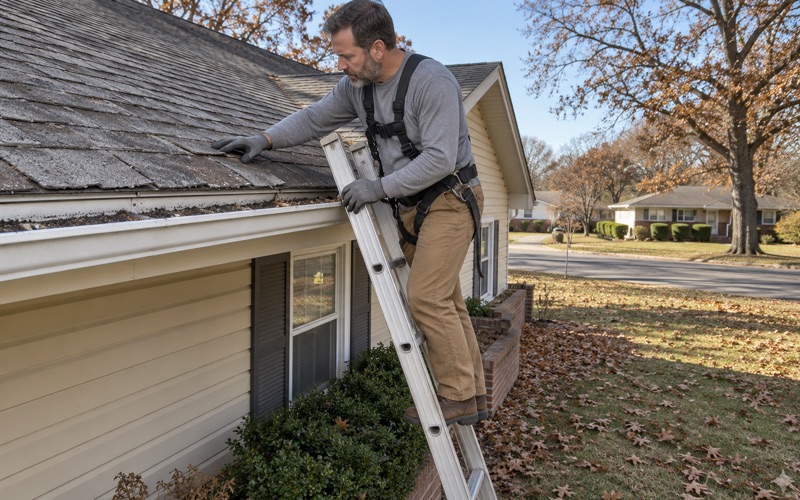
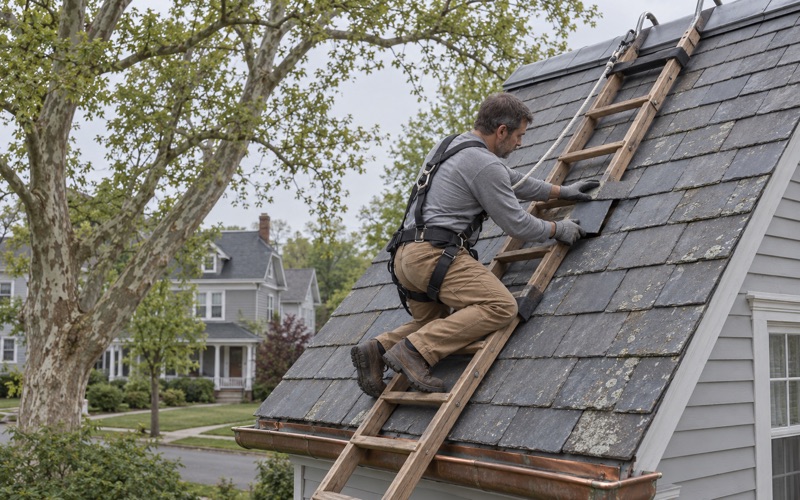
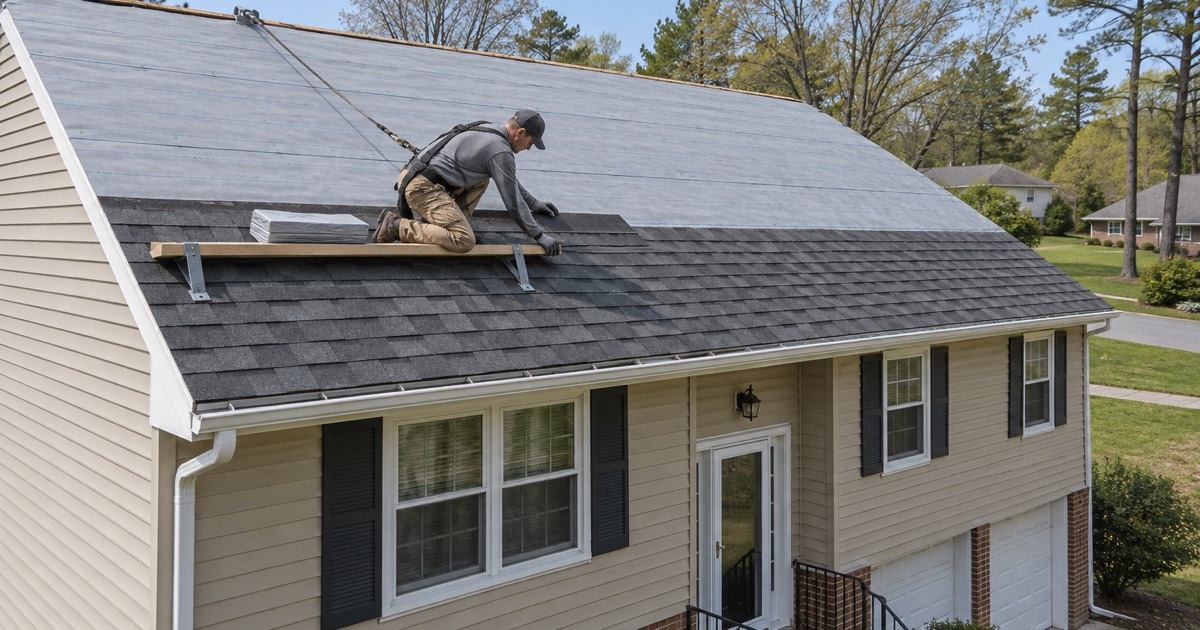
On a house built in the 1950s, 1960s or 1970s, the roof on top today may be its second or third covering. Some owners know that history; others bought long after the last reroof and have no record of it. We check at the eaves and rakes, where layers show at the edge, and from the attic, where the decking and the nail pattern tell their own story.
The township itself is older than any of these houses. Monroe Township was formed on March 3, 1859 from parts of Washington Township while it was still in Camden County, and it moved to Gloucester County in 1871. Victory Lakes first appeared as a census-designated place in the 1990 census and covers 2.54 square miles, a little of it water.
New Construction Still Going Up
The neighborhood is not finished. The same estimates show houses built in 2020 or later, though that count carries a margin of plus or minus 60 and is better read as a sign of activity than as a tally. Current listings make the point more concretely, with new raised ranches offered on the numbered-avenue lots.
One example is a new-construction raised rancher listed at 1431 11th Ave: three bedrooms, one and a half baths and 1,576 square feet on a private lot, marketed for quick delivery. A house like that goes up as a permitted new building with its own inspections, and its roof is the builder’s first one, handed over with whatever warranty paperwork the builder and the shingle maker provide.
Why the Roof’s Age Comes First
Put those two houses on the same street and the right first step diverges. On the 1970s house, a leak is a repair-or-replace question we can answer from the roof and the attic. On the new one, a leak is first a question of who is responsible for it, and the answer is usually written down in papers the owner already has.
That is why we ask about purchase dates and closing documents before we climb a ladder. It costs nothing to check, and it keeps an owner from paying out of pocket for work that someone else may owe them. If the papers point to a builder or a manufacturer, we tell you that before we quote anything.
Looking for roofing closer to Mauricetown? See Roofing in Mauricetown.
Re-Roofing a 1970s House in Monroe Township
Layers, Tear-Off and the State Rule
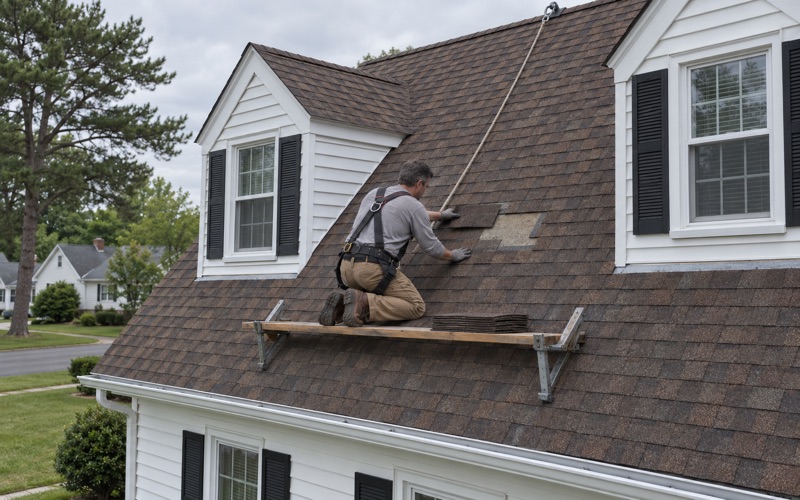
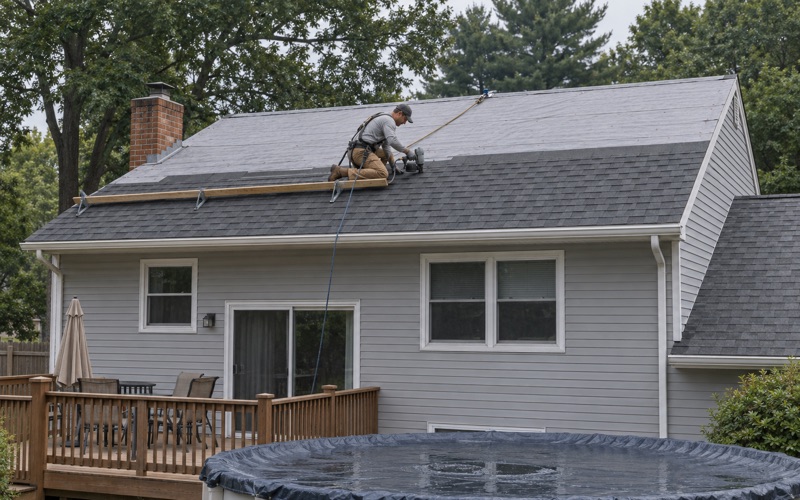
Replacing the roof covering on a detached one- or two-family house is ordinary maintenance under New Jersey’s construction code, N.J.A.C. 5:23-2.7. That is a statewide rule rather than anything particular to Monroe Township, and it does not lower the standard the work has to meet. On an older house carrying more than one layer, we price a full tear-off so the new roof sits on decking we have actually seen.
Our written scope lists tear-off, decking, underlayment, flashing, ventilation and gutters as separate lines. When you collect a second estimate, you can lay the two side by side and see whether the other contractor left a layer in place or skipped the underlayment, instead of guessing from a single total at the bottom of the page.
Decking Under Decades of Coverings
Once the old layers are off a 1970s roof, the boards or sheathing underneath show what years of slow leaks and stacked coverings did to them. Soft or delaminated sections cannot hold new nails properly, and putting fresh shingles over them only moves the problem a few years down the road.
We photograph any damaged decking and show it to you before a single sheet is replaced. The price per sheet is fixed in the contract ahead of time, so a bad section found on the day is a known cost rather than a surprise added to the final bill. You see the wood, you see the number, and the work goes on.
Flashing, Vents and the Ice Barrier
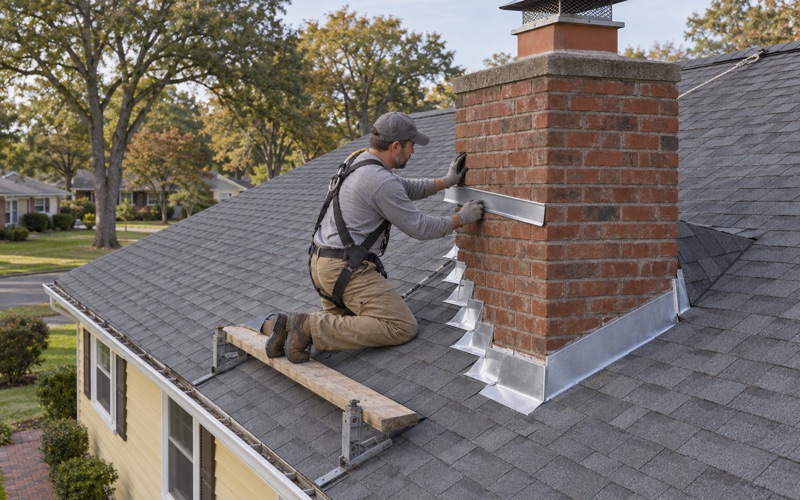
An older house may carry flashing that has been patched with caulk at the chimney or where an addition meets the main roof. When we redo the roof, step flashing, counter flashing and any chimney cricket are replaced rather than sealed over again, and apron and kick-out flashing go in where a wall ends above a roof line.
We also look at how the attic breathes. A ridge vent only works with soffit intake to match it, and a mid-century house may have been built with little of either, so we size the net free area as part of the job. At the eaves and in the valleys, a self-adhering ice and water barrier meeting ASTM D1970 goes down before the synthetic underlayment.
A Leak in a New House: Warranty Before Repair
Start With the Builder
If your house is new construction and water shows up on a ceiling in its first years, call the builder before you call us. The builder installed that roof, and the terms you signed at closing govern who fixes what and how quickly. A different roofer working on it first can hand the builder a reason to step back from the problem.
We are glad to come out when an owner wants an independent read, and the attic-and-roof inspection works the same way on a new house as on an old one. What we will not do is start repairs on a new roof without telling you plainly that the warranty question comes first. We offer no warranty of our own on another company’s installation, and we cannot speak for a builder’s terms.
Manufacturer Coverage and Registration
Behind the builder sits the shingle manufacturer. Lines such as GAF Timberline HDZ, Owens Corning Duration and CertainTeed Landmark come with a limited warranty, and the longer coverage those makers advertise depends on the roof being registered and installed by their approved method. Terms vary by manufacturer and by product, so the paperwork matters more than the brand name on the bundle.
Ask the builder which shingle went on, whether the warranty was registered, and in whose name. If registration was never completed, it is worth asking the manufacturer directly what can still be done. An owner who knows those three answers can have a much shorter conversation with everyone involved, including us.
When It Does Become a Repair
Sometimes the answer comes back that the leak falls outside the coverage, or that the warranty period has already passed. Then it is an ordinary repair, and we treat it like any other: we trace the water from the attic, find where it enters, and tell you whether a targeted fix will hold.
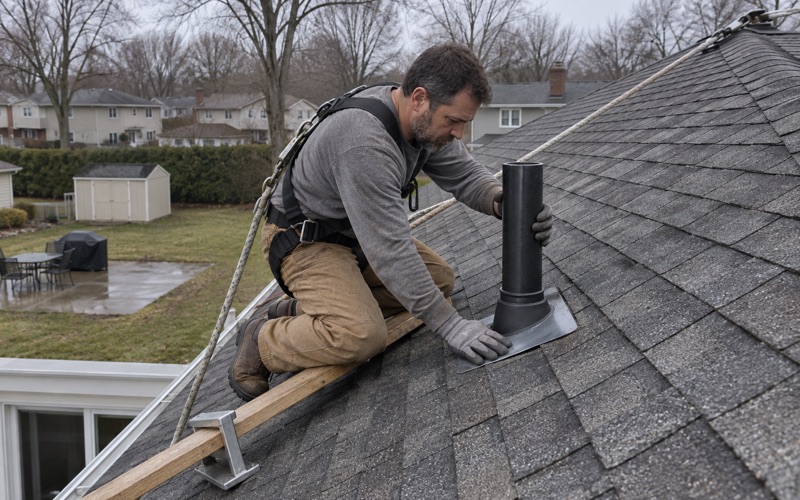
On a newer roof, the likely causes are small ones: a pipe boot that split, a missing kick-out where a wall meets the roof, or drip edge that was never lapped correctly. Fixing one of those is a short job, and we will not suggest replacing a young roof to solve a problem that a few feet of flashing can.
Raised Ranches and Ranches Around the Lakes
The Raised-Ranch Roof
The raised rancher is the shape newer Victory Lakes listings advertise, and it puts a single gable roof over a split-entry house. The roof itself is plain, but the details decide how it performs: the long eaves need straight, properly lapped drip edge, and the rakes need it too. Where wind resistance is the concern, we use architectural shingles rated to ASTM D3161 Class F or ASTM D7158 Class H.
The front entry on a raised ranch may have its own small roof or overhang tied into the main wall. That joint is a common place for water to work behind the siding, so we flash it with step flashing and a kick-out at the bottom rather than relying on a bead of sealant that will dry and crack.
Older Ranches, Additions and Outbuildings
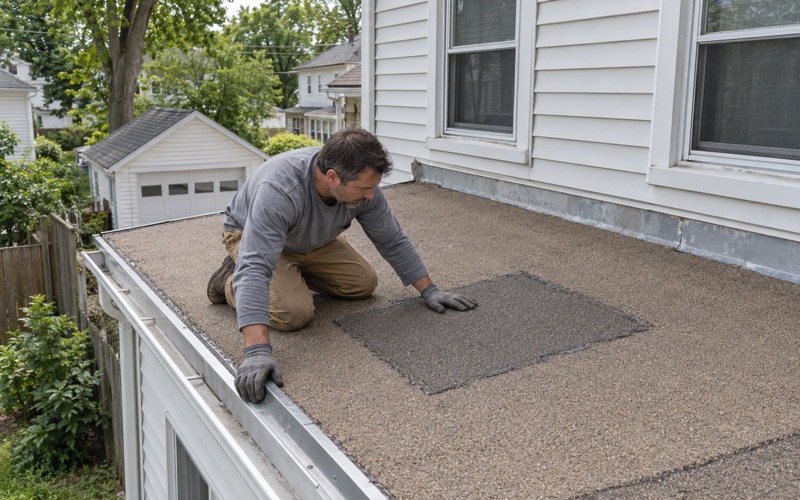
Where an older single-story house has gained an addition, the valley or wall where the two roofs meet is the first place we check on a leak call. Pitch and materials may not match from one section to the next, and a re-roof is the chance to tie them together under one underlayment system with properly lapped valleys.
Private lots here can also hold a detached garage, a shed or another outbuilding with a tired roof of its own. We quote those alongside the house or on their own, and we schedule them around how you use the building. Owners with solar panels on the house get one more step planned in: the panel removal and reinstall go into the schedule from the first meeting, not on tear-off day.
Color, Cleanup and the Finished Job
A ranch or raised ranch shows a lot of roof from the street, so shingle color matters more than owners expect. We bring full samples and hold them against the actual siding, brick or stone on your house, in daylight, instead of choosing from a small swatch at the kitchen table.
At the end of each work day, the yard, driveway and gutters are cleaned and a magnet sweep picks up loose roofing nails. Our contracts follow New Jersey’s home improvement rules, including the written contract and the three-day cancellation notice, so you know exactly what was agreed before the first shingle comes off.
- 20+ Years in Roofing
- Attic-First Leak Checks
- Line-Item Written Scopes