Vineland Elite Roofing has handled roofing in Upper Township for owners who want a clear answer before they spend money, and we bring more than 20 years in the trade to every visit. The work starts with one practical question: is this a house someone lives in all year, or one that sits closed for part of it? That answer changes how a leak gets noticed, how quickly a repair matters and how a replacement gets scheduled.
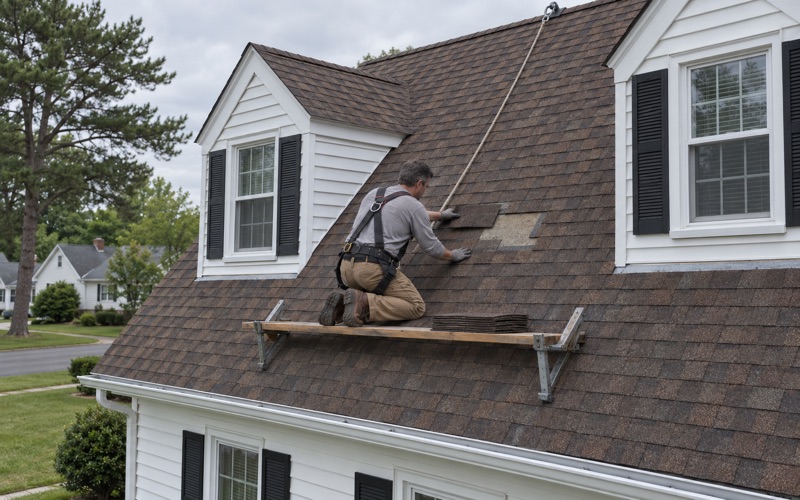
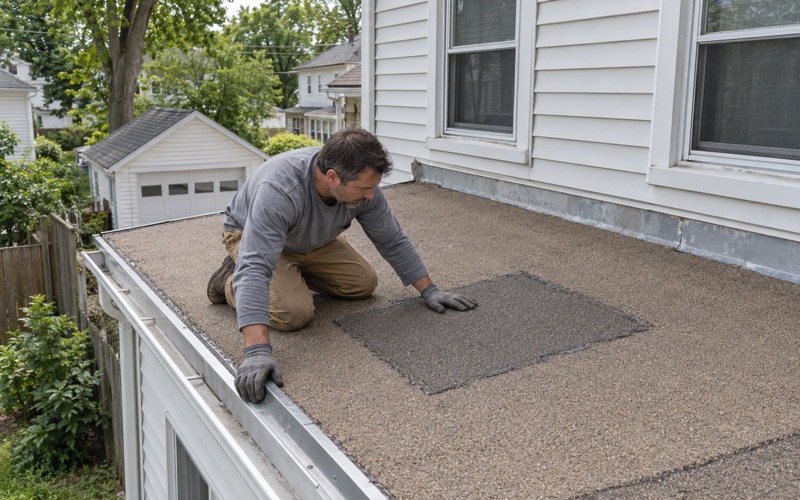
Our first stop on a leak call is two places, not one: the roof surface and the attic directly under it. Water can run along a rafter or the top of a ceiling a long way before it shows as a stain, so we trace it back to the spot where it actually enters before anything is priced. If a repair will hold, we tell you that plainly and leave replacement out of the conversation.
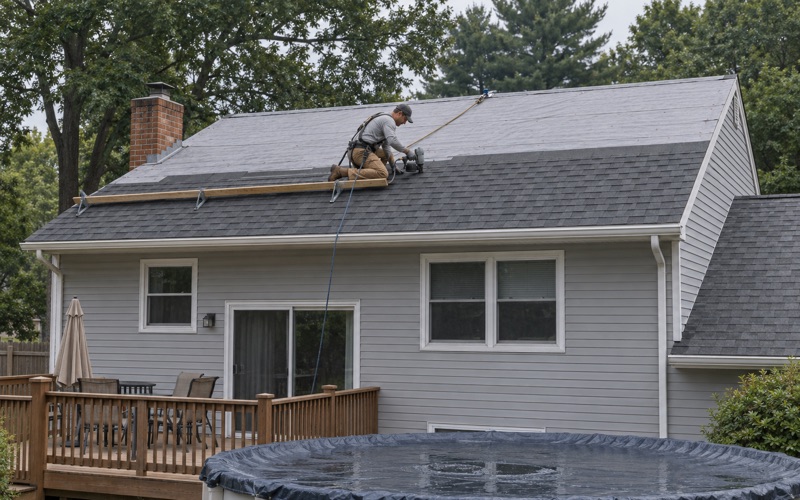
When a full roof is the right call, our written scope separates tear-off, decking, underlayment, flashing, ventilation and gutters into their own lines. That lets you set our estimate beside another contractor’s and compare the two item by item, instead of guessing what a single lump-sum figure includes or leaves out.
Mainland Villages and One Island Section
A Township Spread Across the Mainland
Most of Upper Township is mainland, spread across Marmora, Palermo, Seaville, Beesley’s Point, Tuckahoe, Petersburg and Marshallville. The township covers 68.68 square miles, 62.03 of them land, so a single roofing day here can mean real driving between villages that each have their own streets and housing. We plan crews and material deliveries around that distance rather than pretending the township is one compact neighborhood.
Palermo and Marmora are the largest of the census-designated places, with 3,183 and 2,413 residents in the 2020 count. Seaville, Beesley’s Point and Tuckahoe are smaller, and much of the housing along Route 9 and the side roads off it is detached and lived in by the people who own it. Those are the roofs that make up most of our work in the township.
Strathmere Across Corson Inlet
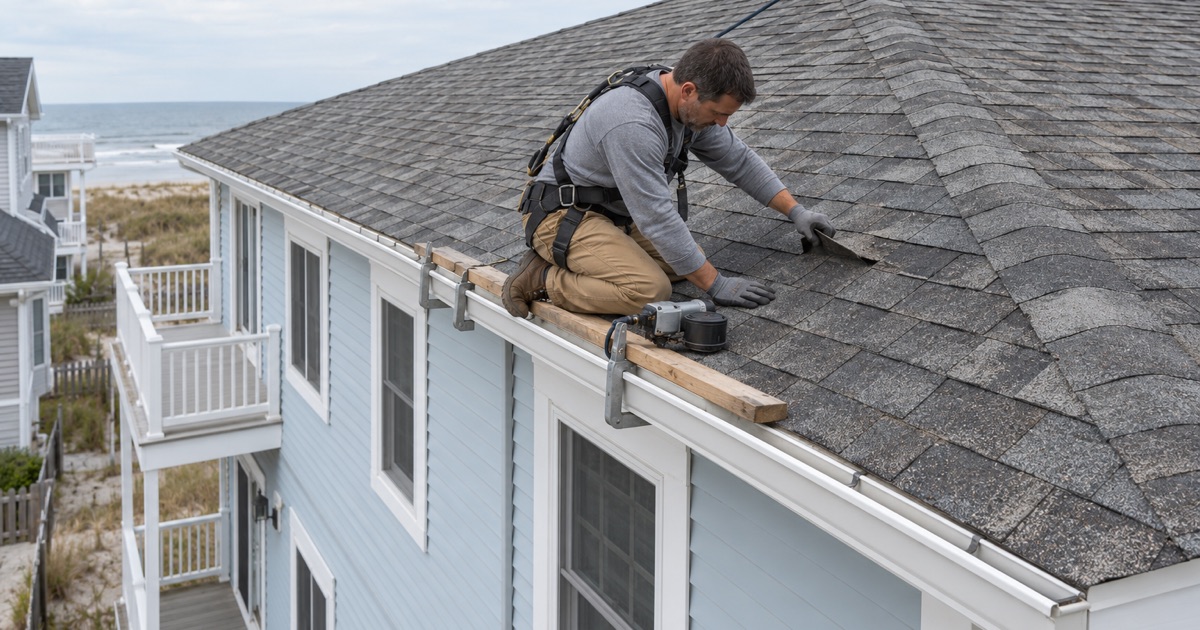
Strathmere is the one part of the township that sits on a barrier island. It sits on Ludlam Island, separated from Ocean City by Corson Inlet, and it remains an unincorporated community within Upper Township. A 2007 petition to leave the township for Sea Isle City failed in court in 2010, and the state Supreme Court declined the appeal in January 2013, so local questions still run through Upper Township.
The 2020 census counted 137 residents in Strathmere, and the 2010 count found 447 housing units there. For a roofing contractor, that small, distinct community is a different job from a house on a mainland side street. Island houses sit closer to open water and salt air, and access, parking and material staging on a narrow island street all take more planning than a mainland driveway does.
One Forecast Zone, Two Settings
The National Weather Service office in Mount Holly places both a Marmora point and a Strathmere point in the same forecast zone, NJZ024, Atlantic Coastal Cape May. That is a forecast zone rather than a climate record, but it means the same coastal warnings reach the whole township at once, on both sides of the inlet.
We treat that as a scheduling fact. When a warning goes out for the zone, mainland owners and island owners are often calling about the same storm, and we sort the calls by what is actually leaking into a living space first. A loose ridge cap on a closed house waits behind water coming through a bedroom ceiling, and we tell each owner where they stand.
Looking for roofing closer to Harrison Township? See Roofing Services in Harrison Township.
Owner-Occupied Houses in Marmora, Palermo and Seaville
What a 95 Percent Owner Rate Means
The Census Bureau’s 2024 five-year estimates count 5,258 occupied homes in Upper Township, and 4,998 of them, or 95.1 percent, are lived in by their owners. Only 260 households rent. Of those owner-occupied homes, 4,550 are detached houses, which is the kind of roof we spend most of our time on here.
That pattern shapes the job. The person who meets us in the driveway is usually the person who will live under the new roof and pay for it, so the conversation is about long-term choices: underlayment, ventilation, which flashing gets replaced. Our contracts follow New Jersey’s home improvement rules, including a written contract and the three-day cancellation notice, so an owner has time to read before work begins.
Re-Roofing a Detached House in New Jersey
Repairing or replacing the roof covering on a detached one- or two-family house counts as ordinary maintenance under N.J.A.C. 5:23-2.7(c)1.x, and that rule needs no permit for the covering itself. Structural changes, new framing or work on other building types can follow a different path, and we say so at the estimate if a job crosses that line.
Wind design is the other point we handle at the address level. The state’s DCA Bulletin 19-1 treats design wind speed as specific to each property, so we do not quote a single figure for the township. Instead we choose shingles with published wind ratings, such as those tested to ASTM D3161 Class F or ASTM D7158 Class H, and install them to the manufacturer’s nailing pattern.
Color, Cleanup and Living Through the Work
Because most owners are home while we work, the details around the roof matter as much as the roof. We hold shingle samples up against the actual siding, brick or stone on the house before you choose a color, since a swatch in a showroom rarely matches what it looks like next to your trim in daylight.
At the end of each work day the yard, driveway and gutters are cleaned, and a magnet sweep picks up loose roofing nails before cars and children are back on the driveway. If the house carries solar panels, removal and reinstallation go into the schedule from the start, so the panels are planned for rather than discovered on the morning tear-off begins.
Roofs From the 1970s and 1980s Build-Out
Half the Housing From Two Decades
Of the 6,619 housing units the Census counts in Upper Township, 1,786 were built in the 1980s and 1,525 in the 1970s. Together those two decades account for half of the township’s housing. By comparison, 625 units date from 2000 to 2009, 233 from the 2010s and 111 from 2020 on.
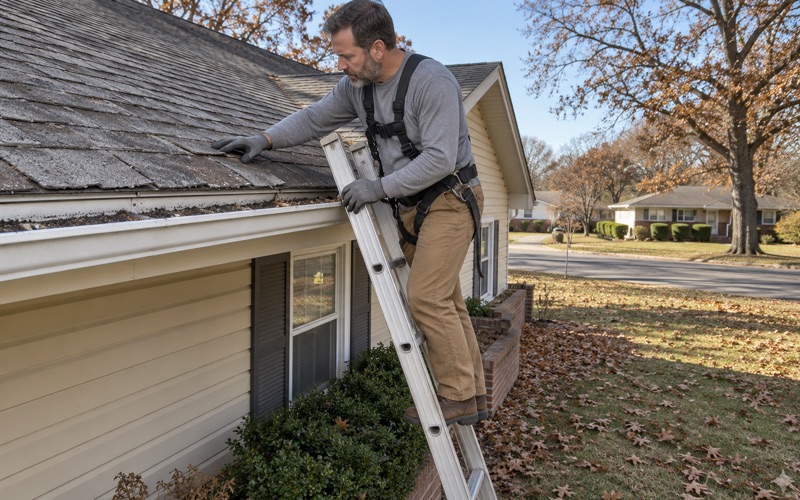
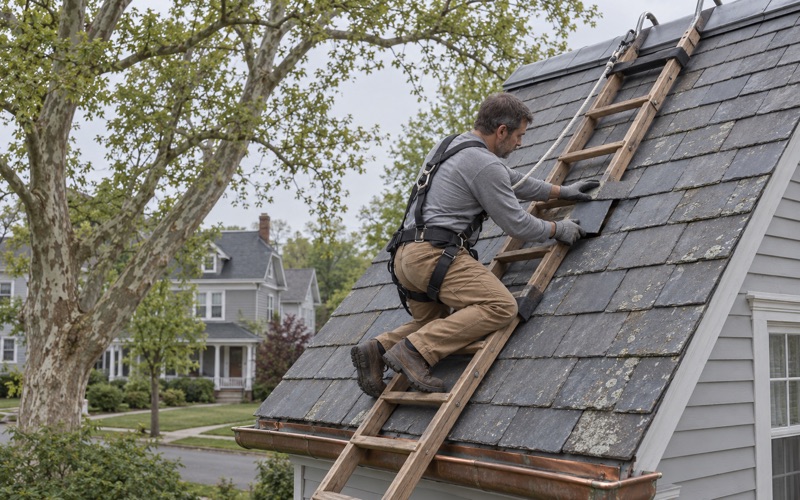
A house from that build-out has been standing for decades, and many are no longer on their original covering. Some carry a newer layer over an older one, and some have had repairs patched in by several different hands. We look at the eaves, the rakes and the attic before we write anything, because what is under the visible shingles decides the scope more than what is on top.
Decking Found Once the Old Roof Is Off
Older framing often hides soft or delaminated sheathing that nobody can see until the old roof is stripped. When we find damaged decking, we photograph it and show it to you before a single sheet is replaced. The per-sheet price is already written into the contract, so the number on the final invoice does not depend on what we find that morning.
That practice protects both sides. You see the actual rot or water staining for yourself, and we are not left guessing how much to allow for decking in the original estimate. On a house from the 1970s or 1980s, that line item is often where two estimates differ the most, and the per-sheet figure makes the difference easy to read.
Flashing and Ventilation on Older Houses
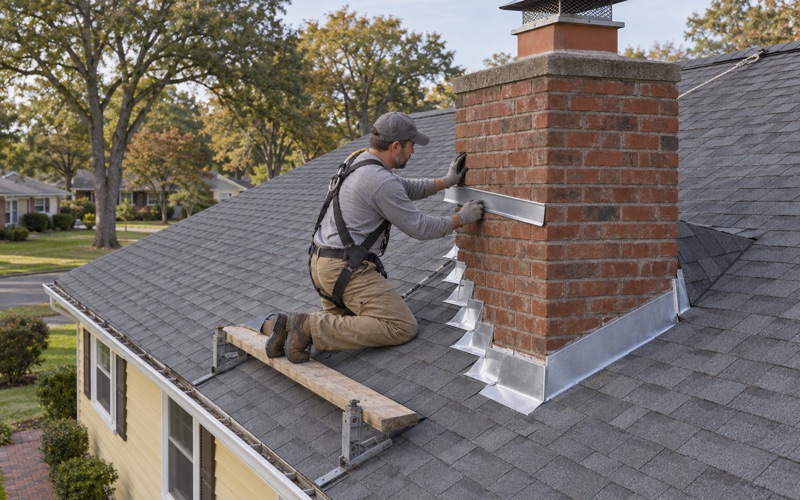
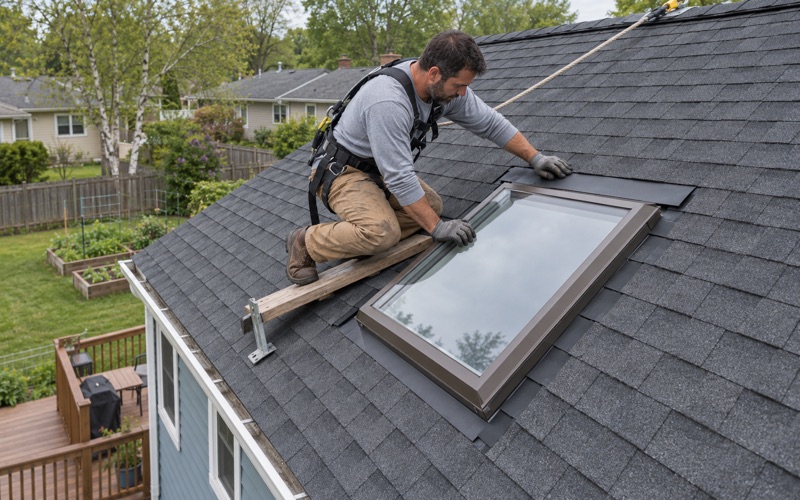
When we redo a roof, the flashing at chimneys, sidewalls, skylights and valleys where two roofs meet is replaced, not caulked over. That usually means new step flashing and counter flashing set into a reglet, apron and kick-out flashing where a roof edge meets a wall, and a chimney cricket where a wide chimney sits below the ridge and holds water behind it.
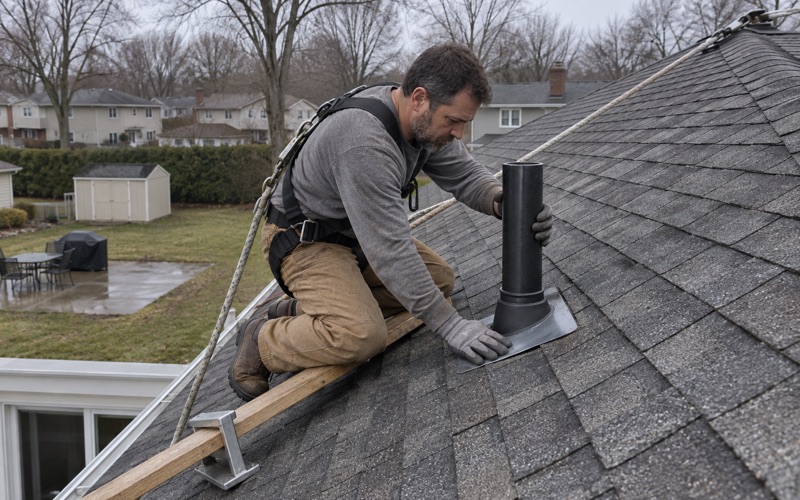
Ventilation on older houses is often a mix of gable vents, a few box vents and soffits that were painted shut years ago. We balance ridge vent exhaust against soffit intake using net free area, so the attic actually moves air. Pipe boots, drip edge at the eaves and rakes, and a self-adhering ice and water barrier at vulnerable edges round out the scope.
Strathmere, Salt Air and Coastal Fasteners
The Dune Reports From 2025
Strathmere relies on its dune system to protect homes. After the 2025 storms, including Hurricane Erin, news reports described the dunes as largely gone, with township officials calling the situation an emergency. The next beach replenishment was reported as slated for 2027, subject to federal funding, and that timeline comes from news coverage rather than a township document.
We do not claim to know what a stripped dune line will mean for any one roof. What we can do is inspect after a storm, photograph any damage and write it up for the owner’s own insurance claim. When asked, our crew meets the adjuster on site and walks the roof with them, so the claim rests on the same photos and notes you already have.
Fasteners and Metal Near Salt Water
On island houses, the nails and metal matter as much as the shingles. Salt air works on exposed steel, so we use corrosion-resistant fasteners and flashing metals suited to a coastal setting, and we check gutters, drip edge and vent hardware for rust rather than reinstalling tired pieces. Seamless aluminum gutters and leaders are a common choice on these homes for that reason.
Some shingle manufacturers set specific nail types and fastening patterns as a condition of their warranty for homes near salt water. We read the current warranty terms for the product you choose before materials are ordered, so the installation matches what the manufacturer requires. A warranty voided by the wrong nail is a problem you only discover after a claim is denied.
Seasonal Homes and the Flood Map
The Census counts 1,222 homes across Upper Township held for seasonal, recreational or occasional use. For an owner who is not on site, a small leak can run for weeks before anyone sees it. We send photos of what we find and what we fix, so an absent owner can make a decision from a phone without driving down first.
Upper Township’s floodplain is administered under FEMA NFIP community 340159A, with a current effective flood map dated October 5, 2017. The township has held Community Rating System class 5 since May 2017, which carries a 25 percent premium discount. That status bears on flood insurance rather than roofing, but owners often ask about it while planning a roof, and we point them to the right source.
- 20+ Years in Roofing
- Attic-First Leak Checks
- Line-Item Written Scopes