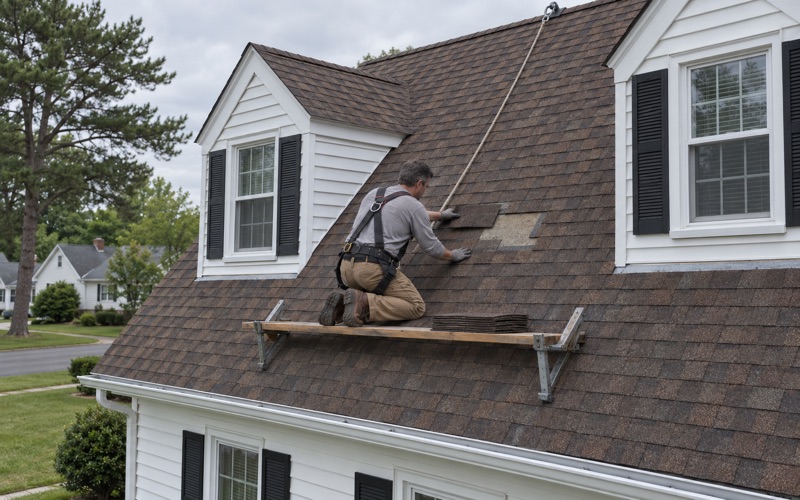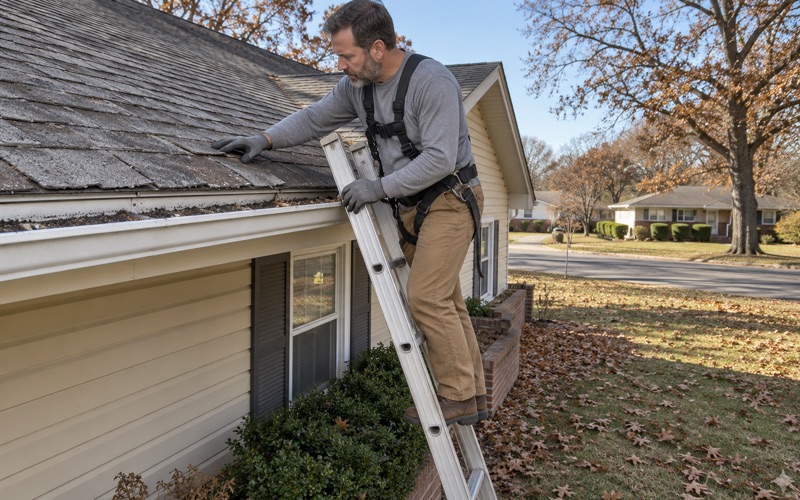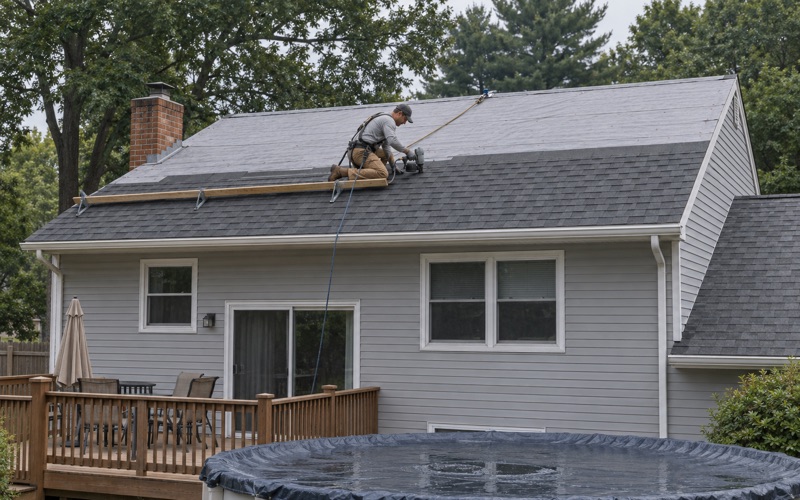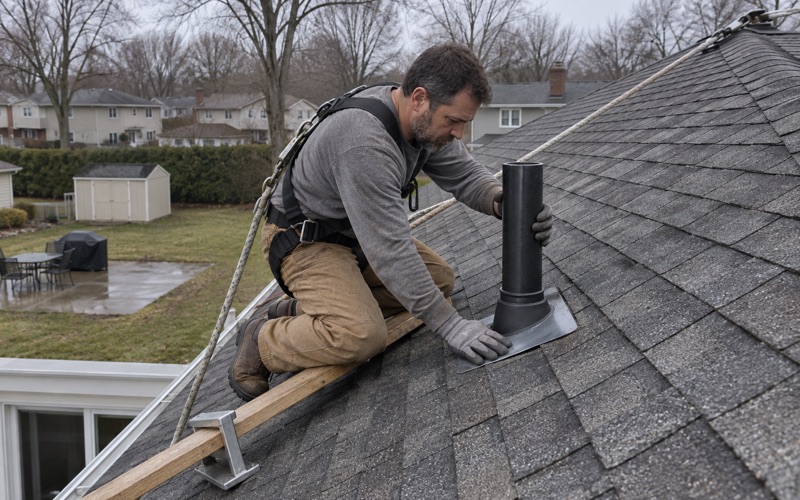
Vineland Elite Roofing handles roofing in Somers Point with more than 20 years in the trade behind each estimate, and many of the calls we take for this city come from someone who does not sleep under the roof in question. A property owner, a manager or a board member is often the one asking, while the people living below simply want the dripping to stop.
That changes how we write a proposal. Our scopes break tear-off, decking, underlayment, flashing, ventilation and gutters into separate lines, so a board or an owner can set our number beside another contractor’s and compare item by item instead of guessing at one lump sum. A straight answer on whether the roof can be repaired comes first, before anyone talks about replacement.
The rest of this page covers the practical side of the work here: who signs off on a building’s roof, how we keep a job moving while tenants are home, how condominium arrangements shape the decision, and what changes when the roof belongs to a single detached house rather than a block of units.
Roofs Over Somers Point’s Apartment Buildings
A city that rents nearly as much as it owns
Census figures make the point plainly. The American Community Survey five-year estimates for 2024 count 4,644 occupied homes in Somers Point, and 2,211 of them are rented, which is 47.6 percent. Owner-occupied homes number 2,433, only slightly more. For a roofer, that split means the person who calls us is about as likely to be a landlord as a resident.
The building stock follows the same pattern. Of 5,695 housing units in the city, 1,476 sit in buildings of ten or more units, roughly a quarter of the total, and another 456 are in buildings of five to nine units. When one of those roofs needs work, the decision covers every household under it at once.
What one roof decision covers
The renter figures underline it. The same survey counts 1,377 renter households living in buildings of five or more units, including 581 in buildings of ten to nineteen units and 312 in buildings of fifty or more. A leak over one of those buildings is rarely a single family’s problem, and a replacement schedule touches parking, trash pickup and daily routines for everyone inside.
We plan for that from the first visit. Every leak call includes a look in the attic as well as on the roof, so the water is traced to where it actually gets in before anything is priced. On a multi-unit building that often means coordinating access with a manager, since the stain may show in one unit while the entry point sits over another.
Permits on multifamily re-roofing
New Jersey’s ordinary-maintenance clause for roof covering, N.J.A.C. 5:23-2.7, is written for detached one- and two-family dwellings. Apartment buildings and other multifamily structures fall outside it, so the owner of a garden complex or a condominium building should not assume a homeowner’s rule applies to them.
We confirm the permit path for a multifamily job with the construction office before a start date goes on the calendar, and we build that time into the schedule we hand the owner. A board that knows the sequence up front can plan its notices to residents around real dates instead of hopeful ones.
Looking for roofing closer to Ocean City? See Roofing in Ocean City.
Who Decides on a Building’s Roof
Owners, managers and associations
On an apartment building the roof belongs to the owner, and in practice the conversation often runs through a management company. In a condominium, who handles the roof depends on that association’s own governing documents. Tenants and unit owners notice the problem first, but they are rarely the ones who can approve a scope or sign a contract.
We write for whoever holds that authority. Because each item is named separately, a manager can forward one document to an owner, or a board can circulate it to members, without anyone needing us on the phone to explain what is included. Photographs of the conditions we found travel with the estimate.
Reading the condominium documents first
Condominium terms vary from building to building, and we do not assume them. One sale listing for a unit at 11 Shore Road, for example, states that its condo fee covers heat, water, insurance, exterior maintenance and trash removal. That is one building’s arrangement, and it says nothing about how any other association in the city divides its costs.
When a unit owner calls about a leak, we ask early whether the association handles exterior maintenance at that address. If it does, the board or its manager needs to be part of the visit, and our written findings go to them. If the owner is responsible, we work with the owner directly and keep the association informed when shared roof areas are involved.
Contracts and paperwork
Our contracts follow New Jersey’s home improvement rules, including the written contract and the three-day cancellation notice where they apply. On an association or investor-owned building, the person signing may be acting for many others, so clear paperwork matters even more. Scope, price, schedule and the per-sheet decking rate all appear in writing before work begins.
Garden-Style Complexes Along Shore Road
Buildings at the scale of The Gates
Shore Road carries some of the city’s larger rental properties. The Gates at Somers Point, at 555 Shore Road, is a garden-style complex of 202 units in five buildings on five acres, according to a 2015 REBusinessOnline report on its sale. A property at that scale turns one roofing project into five buildings’ worth of planning, access and scheduling.
We approach a multi-building property one structure at a time. Each building gets its own inspection notes, its own decking count once the old covering is off, and its own line items, so an owner can phase the work over a season or a budget cycle rather than committing to every roof at once.
Working on a building while tenants are home
Roof work on an occupied rental building means people are inside the entire time. We set start times and daily work zones with the manager in advance, so residents know which entrances and parking areas will be affected and when. Dumpster placement and debris routes are chosen to keep walkways clear.
At the end of each work day, the crew cleans the grounds, driveways and gutters, and runs a magnet sweep for roofing nails. On a complex where children, pets and dozens of cars move through the lot every evening, that daily cleanup is not a courtesy. It is part of keeping the property usable while the job is underway.
Decking surprises on large roofs
The condition of the decking stays unknown until the old roof comes off, and on a long building that can mean a handful of damaged sheets or a whole run of them. We photograph any damaged decking and show it to the owner or manager before it is replaced, at the per-sheet price already written into the contract. Nobody receives a surprise invoice after the crew leaves.
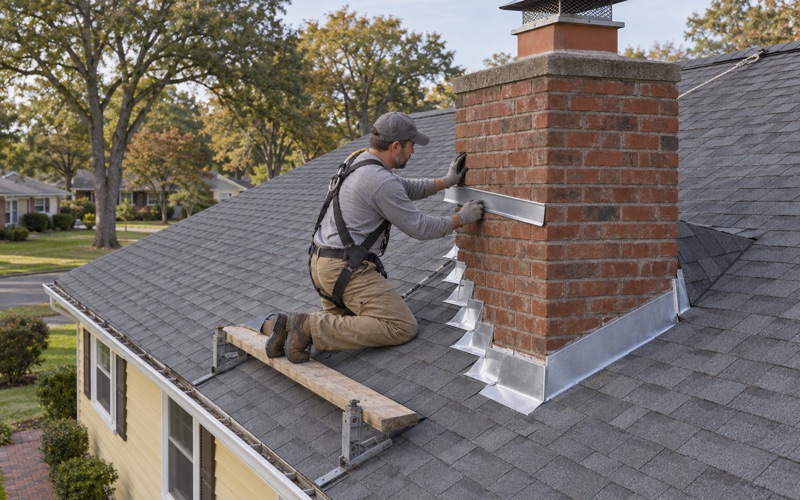
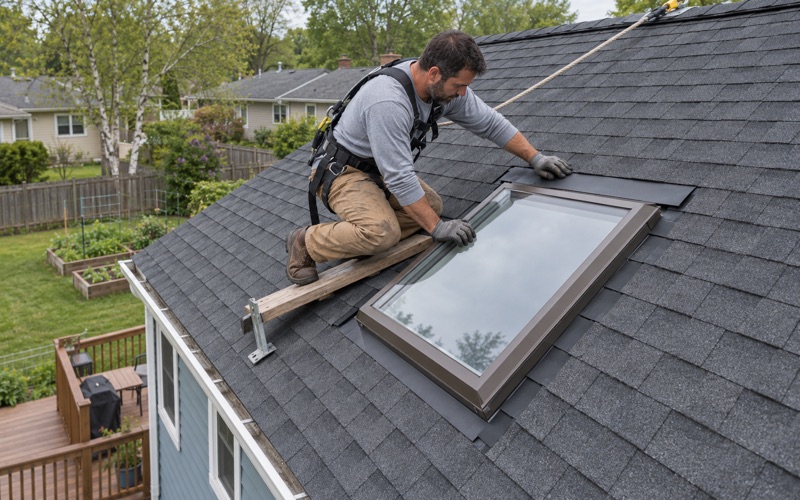
Flashing gets the same treatment. Where a roof meets a wall, a chimney, a skylight or another roof plane, we replace the flashing when the roof is redone rather than caulking over the old metal. On buildings with many units and many penetrations, those transitions are where leaks tend to come back.
Detached Houses and Smaller Rentals
The single-family side of the city
Apartments are only part of the picture. The same Census estimates count 2,829 detached houses in Somers Point and 399 attached units, and 2,007 owner-occupied homes are detached houses. For those owners the roof is their own decision, and the conversation with us is usually direct.
On a detached house, we hold shingle samples up against the actual brick, stone or siding before a color is chosen, since a swatch in a catalog reads differently against a real wall. Architectural shingles such as GAF Timberline HDZ, Owens Corning Duration and CertainTeed Landmark are common choices, and we walk through how each one looks on the house itself.
Small landlords and two-to-four-unit buildings
Between the single-family house and the large complex sits a group of smaller rentals. The survey counts 382 renter households in detached houses, 188 in two-unit buildings and 125 in buildings of three or four units. Many of those owners manage a property or two themselves, without a management company between them and the tenant.
For a small landlord, a straight answer on repair versus replacement matters, because the budget is often personal. We say plainly when a roof can keep working with targeted repairs, and when patching would only postpone a replacement. If solar panels sit on the roof, their removal and reinstall go into the schedule from the start rather than being discovered on the day.
Storm damage and insurance claims
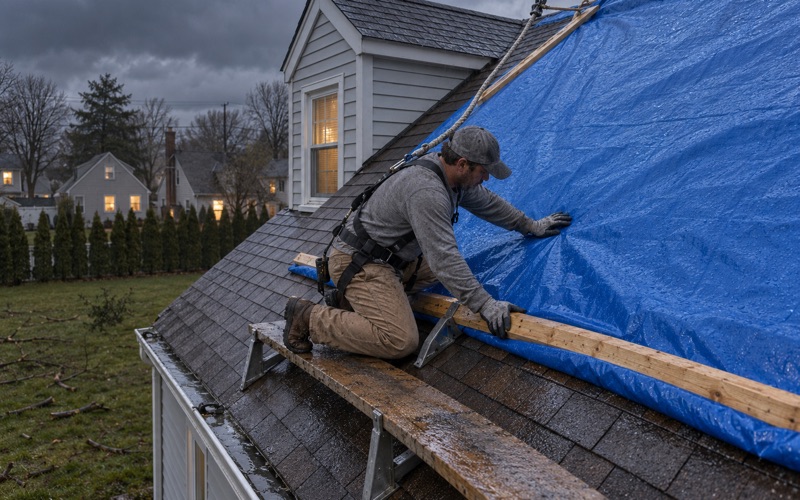
Somers Point sits in the National Weather Service’s Coastal Atlantic forecast zone, NJZ025, served by the Mount Holly office. When a storm passes through and shingles lift or flashing pulls loose, we photograph the damage and write it up for the owner’s own claim. If asked, our crew will meet the insurance adjuster on site.
That applies to a homeowner, a landlord or an association alike. A board handling a claim for a whole building benefits from documentation organized by building and roof area, and we prepare our write-up that way. The claim itself stays the owner’s, and we stick to describing the conditions we found.
- 20+ Years in Roofing
- Attic-First Leak Checks
- Line-Item Written Scopes