
Vineland Elite Roofing provides slate roof repair in Vineland, NJ, serving surrounding cities including Buena, Millville, Buena Vista, Rosenhayn and Pittsgrove. In more than 20 years of roofing, we have seen many slate roofs replaced that only needed repair. Natural slate can outlast several asphalt roofs, and what usually fails first is not the stone but the nails, the flashing and the occasional broken piece.
Our approach is to keep sound slate on the roof. That means replacing broken or slipped slates individually with slate hooks and matched stone, and renewing flashing at chimneys, valleys and walls, rather than tearing off a roof with years left in it. You get a straight answer on whether the roof can be repaired before replacement is ever discussed.
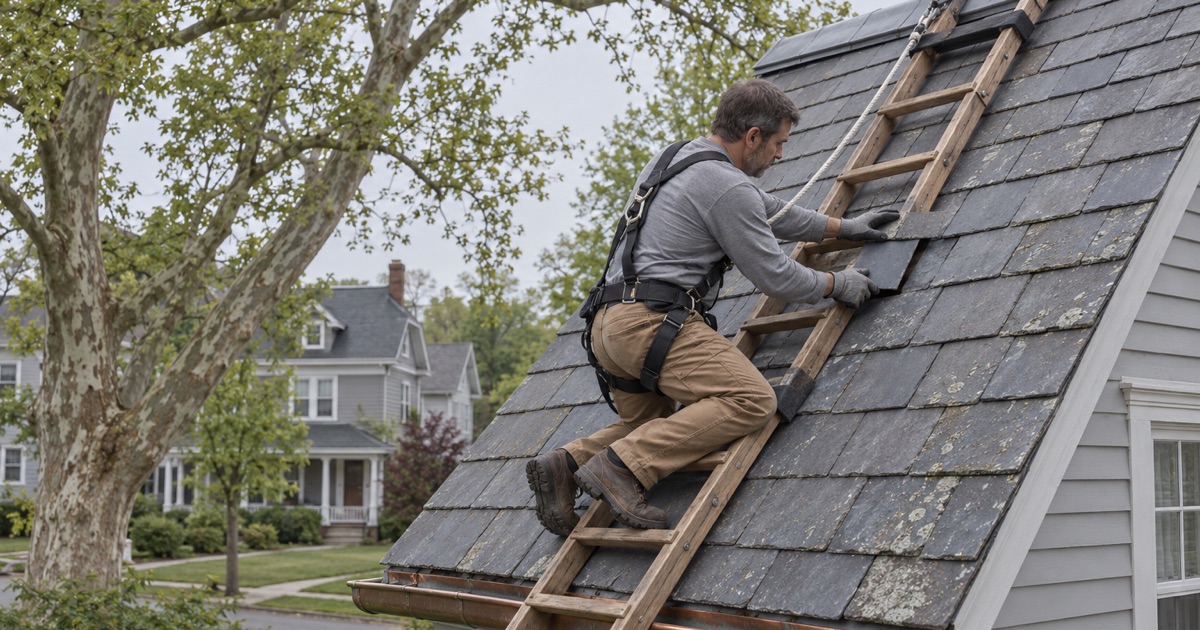
Slate work also needs a different way of working. Slate cracks underfoot, so we use ladders, roof brackets and hooks to reach the work without walking on the slates. Every leak call includes a look in the attic, where the underside of the roof shows where water is getting through.
Repairing Slate the Right Way
Replacing Broken and Slipped Slates
Individual slates break from falling branches, ice, foot traffic and age. Others slip out of place when the nails holding them corrode and fail. A missing or slipped slate leaves a gap that lets water reach the felt and deck below.
To replace one, we remove the broken pieces and cut the old nails with a slate ripper, then fasten a slate hook to the deck in the gap. The new slate slides up under the course above and rests on the hook. This lets us replace one slate without lifting or breaking the ones around it.
Matching the Stone
Slate comes in different colors, sizes and thicknesses depending on where it was quarried. A replacement needs to match the size and thickness so it lies flat in the course, and the color so it does not stand out. We use new slate or salvaged slate from other roofs to get the closest match.
Slate weathers over time, so even a good match may look slightly different when first installed. On a visible slope, we show you the replacement slate beforehand and tell you how close it will look. On less visible slopes, a close match in size and thickness matters more than an exact color.
Avoiding Damage While Working
Many slate roofs are damaged by the people working on them. Walking directly on slate can crack it, and setting ladders against slate edges can break them. Using roof cement to stick slates back in place makes later repairs harder.
We work from ladders and roof brackets, use hooks to spread weight, and avoid standing on the slates wherever possible. Old roof cement is removed rather than added to. The goal is to leave the roof with fewer broken slates than we found, not more.
Flashing on Slate Roofs
Chimneys and Walls
Slate roofs often outlive their original flashing. Step and counter flashing at chimneys and sidewalls corrode or crack, and later repairs sometimes replaced proper metal with caulk or roof cement. Leaks around chimneys on slate roofs are common for that reason.
We remove slates around the chimney or wall carefully, install new step flashing with each course and set new counter flashing into a cut reglet or mortar joint. The slates are then reinstalled, with any broken pieces replaced. The flashing is replaced, not caulked over.
Valleys and Ridges
Valleys on slate roofs are usually lined with metal, and after many decades that metal can wear through. A leaking valley may need to be rebuilt, which means removing the slates along each side, replacing the valley metal and resetting the slates.
Ridges are capped with slate or metal, and the joints there can open over time. We repair ridge slates and ridge flashing as needed. On both valleys and ridges, we explain the scope before work begins, because these repairs involve more slates than a single replacement.
When Slate Needs More Than Repair
Signs a Slate Roof Is Failing
A slate roof reaches the end of its life when the stone itself starts to fail. Slates that flake, crumble at the edges, sound dull when tapped instead of ringing, or break easily during repairs show that the slate is softening. When many slates on the roof look like that, repairs only buy short periods.
We check a sample of slates across the roof, not just around the leak, so the answer reflects the whole roof. If most of the stone is still sound, we recommend repair. If much of it is failing, we tell you plainly and explain the options.
Options When Replacement Is Needed
Replacing a slate roof can mean installing new slate, which keeps the look and longevity of the original, or moving to another material such as architectural shingles or standing seam metal. Each option has a different cost and appearance, and the right one depends on the house and your plans for it.
We price the options side by side in writing, listing tear-off, decking, underlayment, flashing and the roofing material separately. Our contracts follow New Jersey’s home improvement rules, including the written contract and the three-day cancellation notice.
Keeping the Site Clean
Slate repairs leave broken pieces of stone, old nails and debris on the ground. At the end of every work day we clean the yard, driveway and gutters and run a magnet across the ground for nails. Sharp slate fragments are collected so they do not end up in lawns or garden beds.
- 20+ Years in Roofing
- Attic-First Leak Checks
- Line-Item Written Scopes