
Vineland Elite Roofing handles skylight installation in Vineland, NJ, serving surrounding cities including Buena, Millville, Buena Vista, Rosenhayn and Pittsgrove. As roofers for more than 20 years, we approach skylights from the roof side, which is where most of their problems start. A skylight is a hole in the roof with glass in it, and how well it is flashed decides whether it brings in light or water.
We install new skylights, replace old units, reflash skylights that are leaking and close up openings that are no longer wanted. Every leak call includes a look in the attic or the light shaft as well as on the roof, so we can tell whether water is coming through the flashing, the unit or condensation on the glass before anything is priced.
When a roof is replaced, the skylight flashing is replaced too, not caulked around or reused. If the unit itself is near the end of its life, we tell you, because replacing it during the re-roof avoids disturbing new shingles later.
Skylight Types and Flashing
Curb-Mounted Skylights
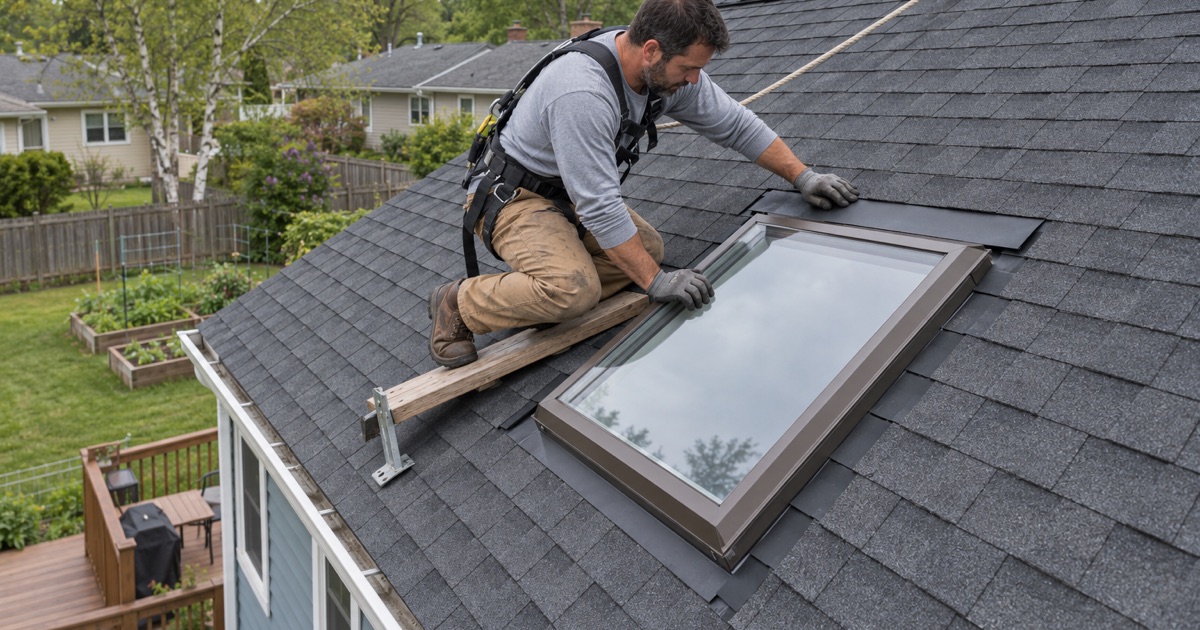
A curb-mounted skylight sits on a raised wooden frame, the curb, built on top of the roof deck. The flashing wraps up the sides of the curb, with step flashing woven into the shingle courses along each side, a head flashing at the top and an apron at the bottom. The skylight unit then sits over the top of the curb.
Curb-mounted units are common on older houses and on low-slope roofs. When we replace one, we check that the curb is sound and tall enough, rebuild it if the wood has rotted, and install new flashing around it before setting the new unit.
Deck-Mounted Skylights
A deck-mounted skylight fastens directly to the roof deck, without a separate curb, and uses a flashing kit designed by the manufacturer for that unit. The kit includes pieces that lap under and over the shingles in a set order. Installing it correctly depends on following that order exactly.
Deck-mounted units sit lower on the roof and look neater from the ground. We use the matching flashing kit for the unit, along with ice and water barrier around the opening, and work the shingles into the flashing as the instructions require.
Ice Barrier and Underlayment Around the Opening
Before any skylight flashing goes on, the area around the opening is lined with ASTM D1970 self-adhering ice and water barrier, turned up the sides of the curb or frame. That layer is the second line of defense if water gets past the flashing in wind-driven rain or during melting snow.
The rest of the roof’s underlayment laps correctly into that barrier, so water running down the roof is carried around the skylight. Cutting corners on this layer is invisible once the shingles are on, which is why we name it in the written scope.
Leaking Skylights
Flashing Leaks
Most skylight leaks are flashing leaks. Step flashing that was not replaced during an earlier re-roof, a head flashing that lets water in at the top, or flashing sealed with caulk instead of lapped properly into the shingles can all let water past. Leaks at the top of the skylight are especially common because that is where water from the roof above collects.
We lift the shingles around the skylight, remove the old flashing and install new flashing suited to the unit. If the skylight itself is sound, reflashing is often the whole repair. We tell you that plainly rather than recommending a new unit you do not need.
Failed Units and Condensation
Sometimes the unit is the problem. A glass seal that has failed shows fogging between the panes, and a cracked frame or broken glass lets water straight through. Those units need replacing rather than reflashing.
Condensation is another common cause of water around skylights. Warm, moist air from the house meets cold glass and drips down the light shaft, which can look exactly like a leak. We check for it, and if condensation is the cause, we explain it rather than selling a roof repair that will not help.
New Skylights and Removals
Adding a New Skylight
Adding a skylight starts with checking the roof framing and the attic or ceiling space below. Many skylights fit between rafters without cutting any framing. Larger units, or ones that need to sit in a particular spot, may require cutting a rafter and framing the opening with headers, which is structural work.
We explain what your chosen location involves before any price is given. The light shaft and ceiling finish inside the house are typically handled by an interior contractor, and we coordinate with them so the opening lines up from roof to ceiling.
Removing a Skylight
Some owners decide they no longer want a skylight, often because it has leaked repeatedly or makes a room too hot. We remove the unit, frame in the opening, install new decking and underlayment, and shingle over it to blend with the surrounding roof.
On an older roof, the new shingles may not match perfectly, and we tell you how close the match will be beforehand. The ceiling patch inside is a separate job for a drywall contractor.
Skylights During a Roof Replacement
A roof replacement is the best time to deal with skylights. The flashing is always replaced, and older units can be replaced at the same time with little extra disruption. Replacing a skylight a few years after a new roof means cutting into new shingles.
We list skylight work as its own line in the roof scope, separate from the rest of the job. Our contracts follow New Jersey’s home improvement rules, including the written contract and the three-day cancellation notice, and the site is cleaned at the end of each day with a magnet sweep for nails.
- 20+ Years in Roofing
- Attic-First Leak Checks
- Line-Item Written Scopes