Vineland Elite Roofing brings more than 20 years in the trade to roofing in Port Elizabeth, where the work divides into two kinds of job that are permitted and warrantied differently. One is the small detached house. The other is a congregation, a library board or a hall committee looking after a building that was never anyone’s home, and that needs a roofer who knows the difference before the first estimate is written.
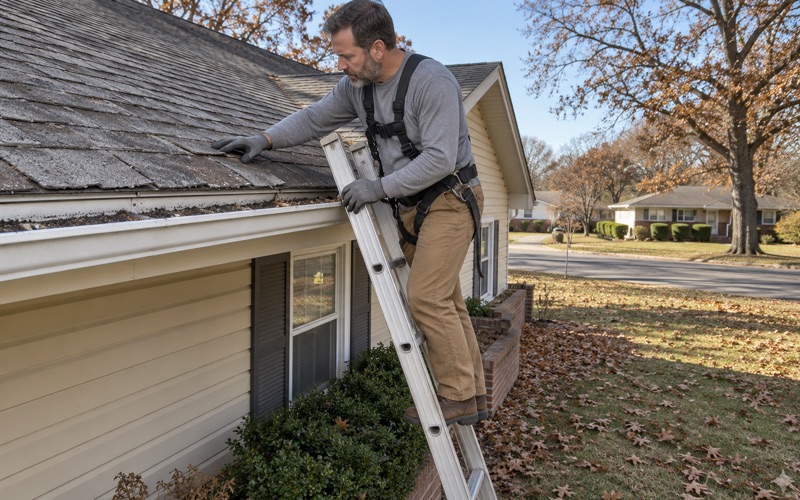
Whichever kind of building it is, the first visit runs the same way. We go into the attic as well as up on the roof, so a ceiling stain is traced to the spot where water actually gets in rather than to wherever the shingles look worst. Then we say plainly whether a repair will hold, and replacement only comes up if the answer is no.
That plain answer matters most to a committee, because a board has to explain any spending to members who will never climb a ladder. Our written scopes put tear-off, decking, underlayment, flashing, ventilation and gutters on separate lines, so a trustee can lay our number beside another contractor’s and compare each item instead of two totals.
Roofs on Port Elizabeth’s Church, Library and Hall
Port Elizabeth is a census-designated place inside Maurice River Township in Cumberland County, laid out in 1785 and named for Elizabeth Clark Bodly, the Quaker who owned the land. What stands out for a roofer is that its oldest named buildings are institutional rather than residential. A church, a library and a former schoolhouse carry most of the village’s recorded history, and each one puts its own demands on the people who maintain it.
Port Elizabeth United Methodist Church
The congregation began as the Morris River Methodist Society around 1778, was visited by Bishop Francis Asbury in 1785, and in 1786 put up the first building erected for exclusive Methodist use. The Greater New Jersey Conference records that the present edifice dates from 1827. A building that has served one congregation that long has usually been repaired by many hands, and each repair leaves its own layer of decisions behind.
No record we have found describes what covers the church today or when it was last redone, so we do not guess from its age. The first visit documents the existing covering, the decking and framing visible from inside, and the condition of the flashing where roof planes meet walls. That written record gives the trustees a starting point that does not depend on anyone’s memory of the last job.
Port Elizabeth Library
The Port Elizabeth Library began life in 1810 as a general store and was later known as Lee Hall. A building that has changed purpose more than once tends to carry openings, vents and joints added for one use and left in place for the next. Those are exactly the places where water finds its way in, and they deserve a closer look than the open field of the roof.
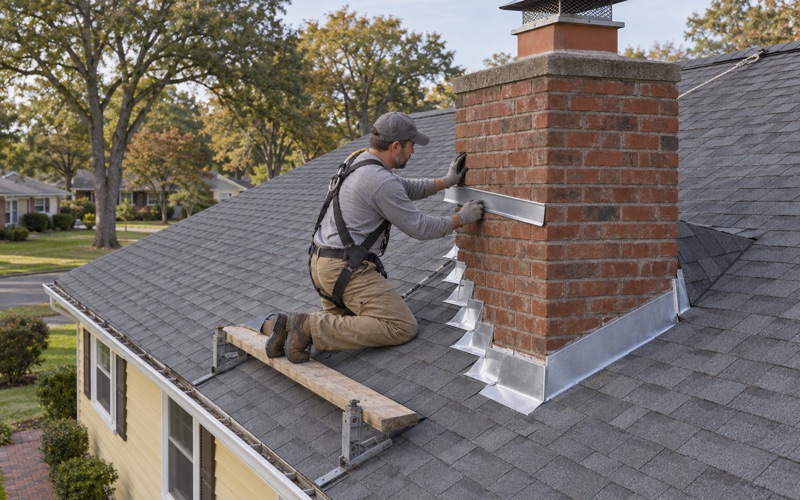
When a roof like this is redone, we replace the flashing at walls, chimneys and any roof-to-roof junction rather than caulking over the old metal. Caulk buys a season or two, while new step flashing, counter flashing and apron pieces are built to last as long as the covering above them. For a library, where books and records sit under the roof deck, that difference is the whole point of the job.
John Boggs Hall
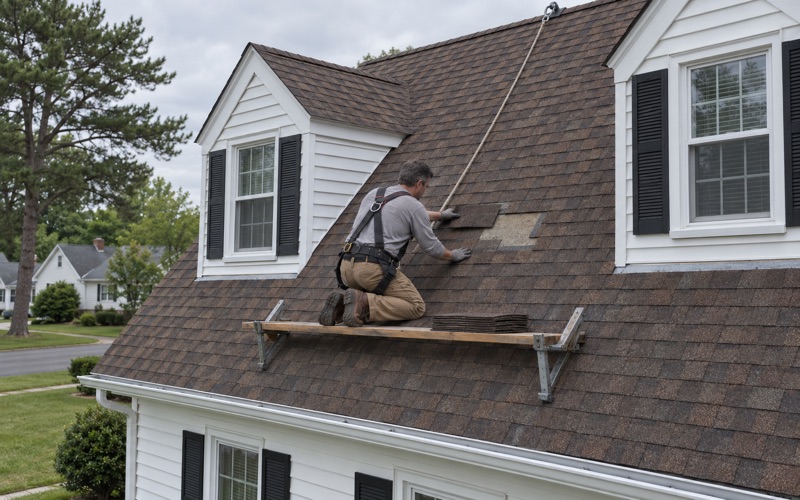
John Boggs Hall was built in 1854 as the Port Elizabeth School and moved to its present site in 1958. A hall that hosts meetings and gatherings cannot simply close for a week, so we plan tear-off and dry-in around its calendar and keep the work area roped off while people come and go.
At the end of every work day the grounds, walkways and gutters are cleaned, and a magnet sweep goes over the lawn and paths for roofing nails. On a building where the public walks to the door, that daily cleanup is part of keeping the site safe, not a courtesy saved for the last day.
Looking for roofing closer to Franklinville? See Roofing Services in Franklinville.
Why a Church Roof Is Not a House Roof
The same shingle on the same pitch can be a different job under New Jersey rules depending on who uses the building. Committees are sometimes surprised by this, because the bids they collect may come from contractors who mostly roof houses and quote every job the same way.
The Ordinary-Maintenance Clause Stops at Houses
New Jersey treats replacing the roof covering on a detached one- or two-family dwelling as ordinary maintenance under N.J.A.C. 5:23-2.7. A church, a library or a meeting hall is not a detached one- or two-family dwelling, so that clause does not reach it. Re-roofing one of these buildings goes through Maurice River Township’s construction office instead.
We raise this at the first meeting so the schedule allows for it. A board that expects a house-style start date and then learns the building needs township review loses weeks it did not plan for. Knowing the track at the outset keeps the trustees, the contractor and the township working from the same calendar.
Shingle Warranties for Churches and Halls
The lifetime limited warranties advertised on architectural shingles are written for owner-occupied single-family detached homes. GAF’s terms give churches, schools, condominiums, homeowner associations and apartment buildings 40 years instead, and Owens Corning’s comparable term is 50. Those are still long warranties, but they are not the word a committee may have heard from a neighbor who just roofed a house.
We put the warranty term that applies to the building’s actual use in writing before the contract is signed. When a board compares a GAF Timberline HDZ bid against an Owens Corning Duration or CertainTeed Landmark bid, the warranty line should compare like with like. A lifetime promise quoted to a church is a promise the paperwork may not support.
Decking, Storms and the Paper Trail
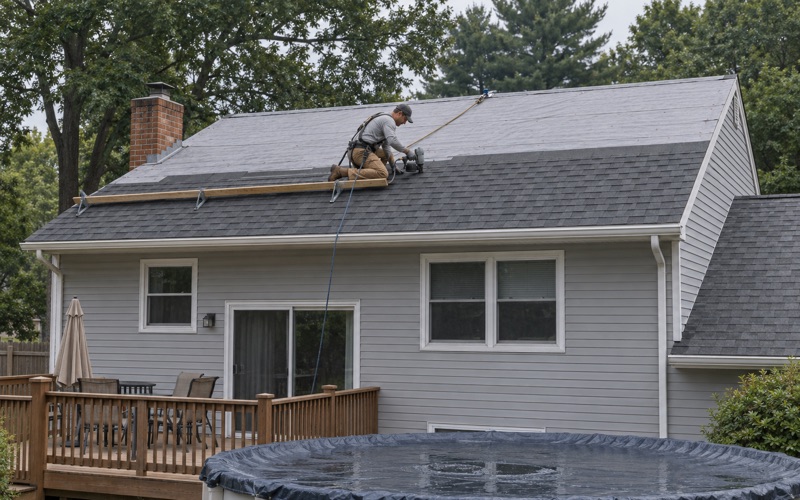
Old buildings often hide damaged boards under the covering, and nobody can see them until the tear-off. When we find bad decking, we photograph it and show it to whoever speaks for the building before any sheet is replaced, at a per-sheet price already set in the contract. The board knows its exposure before the job starts and can see every change as it happens.
After a storm, we photograph the damage and write it up for the owner’s own insurance claim, and we will meet the adjuster on site when asked. For a congregation, that written record also becomes part of the minutes, which helps the next committee understand what was done and why.
The Village’s Detached Houses
Outside its institutional buildings, Port Elizabeth is a village of houses. The Census Bureau’s 2024 five-year survey, a small sample for a place this size, counts 119 housing units in the CDP and classes all of them as detached single-unit houses. It records 67 as owner-occupied and 52 as rented.
Owner-Occupied Houses
For the owner who lives in the house, re-roofing falls under the ordinary-maintenance clause, and the manufacturer’s lifetime terms are written for exactly this kind of home. Our contracts follow New Jersey’s home improvement rules, including a written contract and the three-day cancellation notice, so the owner has the terms on paper and time to read them before work begins.
Shingle color is chosen against the siding, brick or stone on the actual house, with samples held up on site in daylight. A color that looked right on a showroom board can turn too warm or too dark against the real wall, and checking it in place takes a few minutes that save years of regret.
Rented Houses
A landlord roofing a rental has different questions from an owner-occupant. The lifetime warranty language is tied to owner-occupied homes, so we confirm in writing which term applies before an owner chooses a product. We also plan access with the tenant, since the crew will be on the roof and in the attic while someone else is living below.
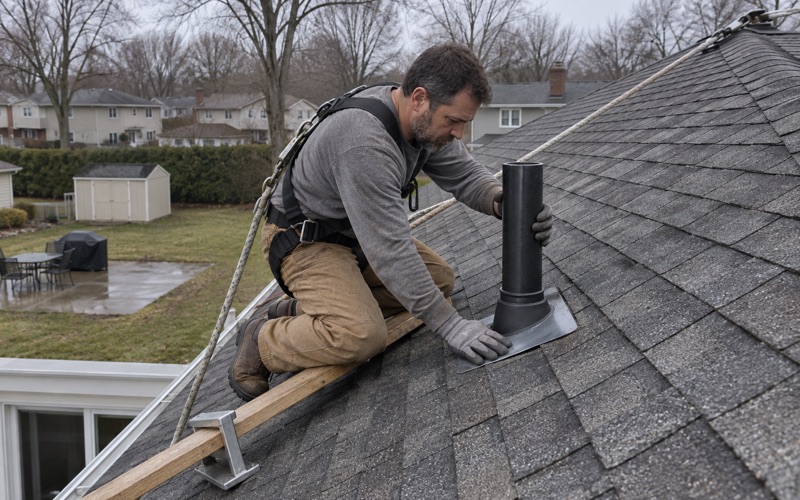
Leak calls on rentals often arrive secondhand, through a tenant describing a stain. That is why the attic check matters so much here: tracing the water from inside tells us whether the problem is a pipe boot, a flashing joint or the field of the roof, and the landlord pays for the fix the house needs rather than a guess.
Newer and Older Houses
The same survey dates most of the village’s housing to recent decades, with 52 units built from 2000 to 2009 and 15 in the 1990s. Smaller groups date from the 1950s and 1960s, and 12 were built in 1939 or earlier. Those older houses are where hidden decking damage and tired ventilation are most likely to turn up.
On any house, we check that the ridge vent has enough soffit intake to work, because exhaust without intake just pulls conditioned air from the rooms below. Drip edge at eaves and rakes, an ice and water barrier at the edges and valleys, and new pipe boots go into the scope as their own lines, so nothing is left to assumption.
Working With Maurice River Township’s Construction Office
Port Elizabeth is a census-designated place, not a municipality, so it has no municipal offices of its own. Construction, floodplain and code enforcement in the village belong to Maurice River Township, and that is the office that reviews any work outside the ordinary-maintenance clause.
Who Signs Off
For a church, library or hall, we prepare the application and keep the inspection dates on the schedule we share with the committee. For a detached house, the work usually proceeds as ordinary maintenance, and we tell the owner at the start whether anything in the scope, such as structural repairs beyond the covering, changes that answer.
Either way, nobody should have to learn the rules from a stop order. Naming the right authority at the first meeting is part of a straight estimate, the same as naming the right warranty term.
Weather and Access
Port Elizabeth falls in National Weather Service forecast zone NJZ021, issued from the Mount Holly office. We watch that zone forecast before any tear-off, because a roof that is opened has to be dried in the same day. Route 47 and Route 55 intersect in the village, which makes it straightforward to get a dumpster and material delivery onto a site.
Outbuildings and Solar
Barns, sheds and other outbuildings on village lots are quoted alongside the house and scheduled around the owner’s working season. Where a roof carries solar panels, the removal and reinstall go into the schedule from the start, so the panels are never a surprise on the morning the crew arrives.
- 20+ Years in Roofing
- Attic-First Leak Checks
- Line-Item Written Scopes