Vineland Elite Roofing brings more than 20 years of work to roofing in Pittsgrove, and this page is written for one customer in particular: the owner of a rented house. When a tenant lives under the roof, the person who notices the ceiling stain is rarely the person who pays for the fix, and that gap shapes every decision that follows.
Our approach is built for that split. We trace a leak from the attic as well as from the shingles before we price anything, we tell the owner plainly whether a repair will hold, and we only talk about replacement when a repair will not do the job. The landlord gets a clear answer, and the tenant gets a dry ceiling sooner.
When a full roof is the right call, our written scope breaks the job into separate lines for tear-off, decking, underlayment, flashing, ventilation and gutters. An owner comparing our number against another bid can match it line for line, which matters when the cost comes out of rental income rather than a household budget.
Roofs on Pittsgrove’s Rented Houses
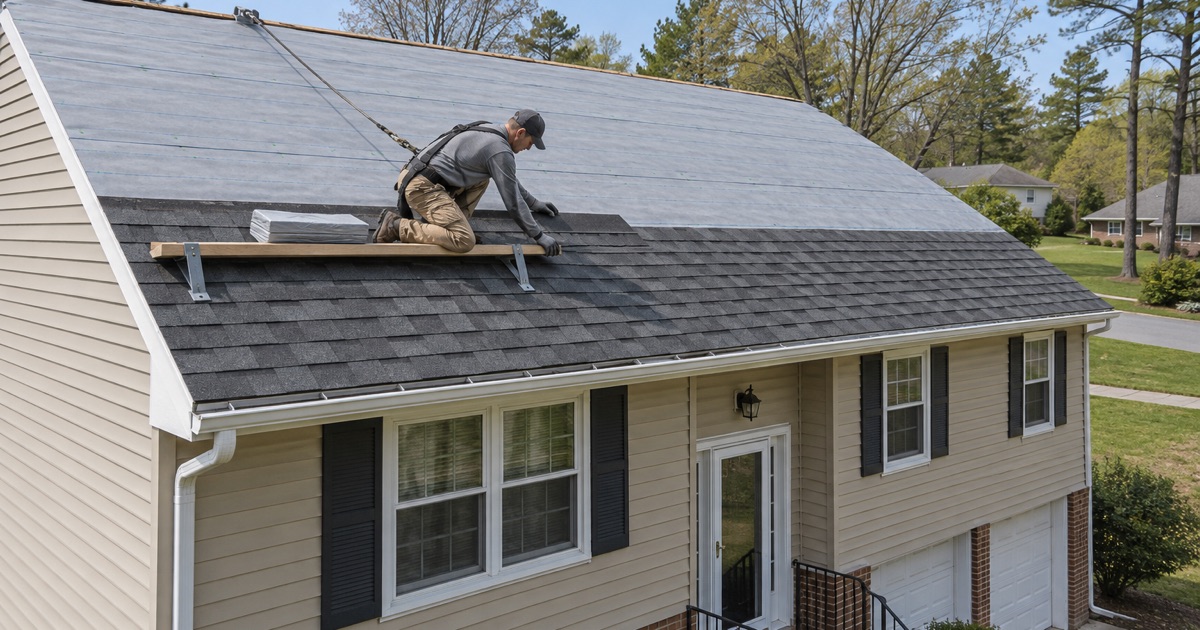
Across Pittsgrove Township, from the US 40 corridor on the northern edge to Route 56 in the south, renting a home almost always means renting a whole house. The ACS 2024 five-year survey counts 476 renter households, and 463 of them, 97.3%, live in single-family detached houses. Ten live in mobile homes and three in a building of five to nine units.
One Owner, One Roof
That pattern means the roof over a Pittsgrove tenant is usually one landlord’s single-family roof. There is no association reserve fund and no board vote. The owner decides when the roof is repaired, chooses the contractor and pays the bill, whether they live down the road in Salem County or manage the house from an hour away.
We treat that owner as our customer and the tenant as the person whose home we are working on. Both deserve straight information. The landlord needs costs, options and photos, while the tenant needs to know when a crew is arriving, how long it will be on site and what the yard will look like when it leaves.
What a Detached Rental Roof Asks For
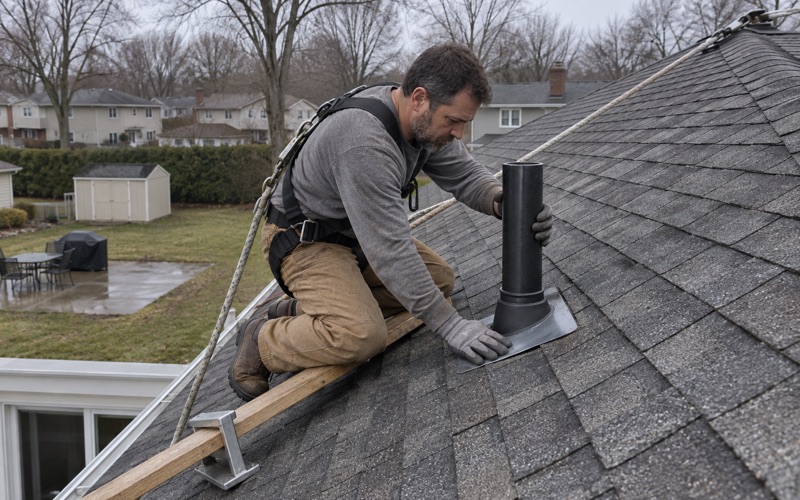
A detached house puts the whole roof on one owner’s ledger: every slope, the chimney, any skylight, the gutters and the attic ventilation. Nothing is shared with a neighbor, so nothing is split. That makes the scope easy to define, and it also means a neglected detail, such as a lifted pipe boot or a worn drip edge, stays the owner’s problem until someone fixes it.
When a rented house carries asphalt shingles, a re-roof usually means architectural shingles such as GAF Timberline HDZ, Owens Corning Duration or CertainTeed Landmark. For a rental, the practical goal is less about style and more about a roof that goes years without a tenant call, which is why the underlayment and flashing lines in our scope get as much attention as the shingle.
Looking for roofing closer to Franklin Township? See Franklin Township Roofing.
When a Tenant Reports a Leak
In a rented house the tenant almost always sees the leak first. A brown ring on a bedroom ceiling, a drip near the chimney during a hard rain, a damp patch in a closet: these reach the landlord as a text or a phone call, often secondhand and without photos. The sooner the owner passes that report to us, the less drywall and insulation the water reaches.
Tracing the Water Before Pricing It
Our leak calls include a trip into the attic as well as a walk on the roof. Water often enters well uphill of the stain it causes, running along a rafter or the top of the sheathing before it drops. Finding the true entry point first keeps the owner from paying to fix a spot that was never the source.
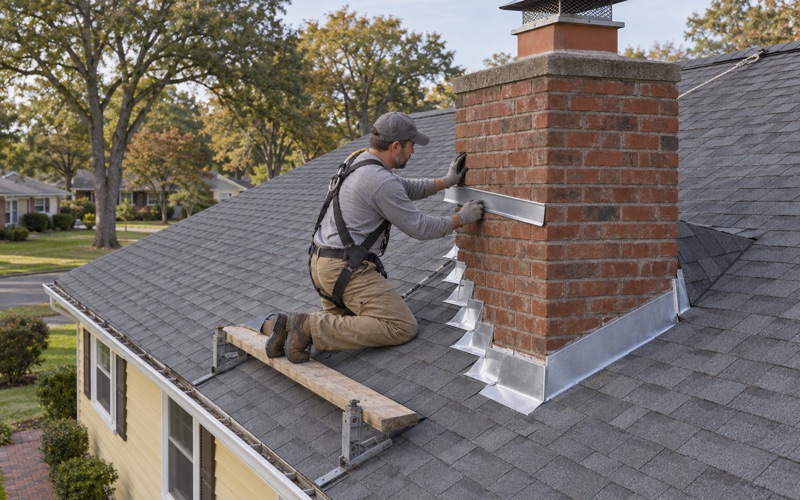
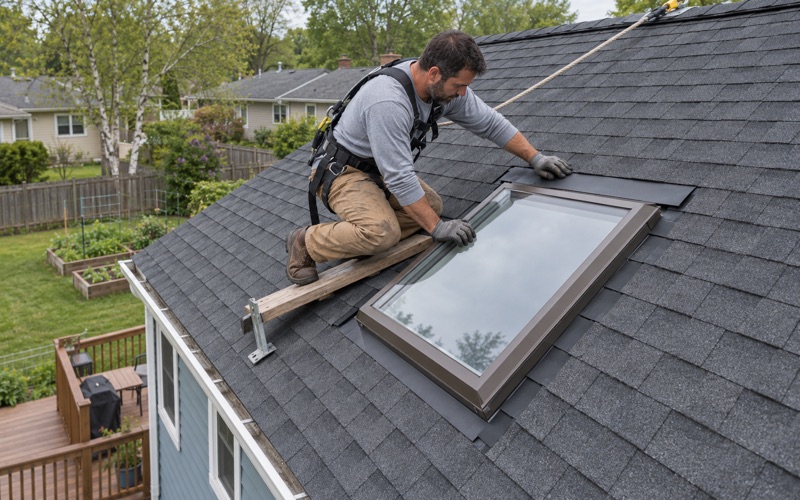
From the attic we check for wet decking, daylight around penetrations and staining around the chimney. On the roof we look at the step flashing and counter flashing where the roof meets a wall, the pipe boots, the ridge vent and any skylight curb. The owner receives photos of what we found, so the decision does not rest on a tenant’s description alone.
Access, Scheduling and the Tenant
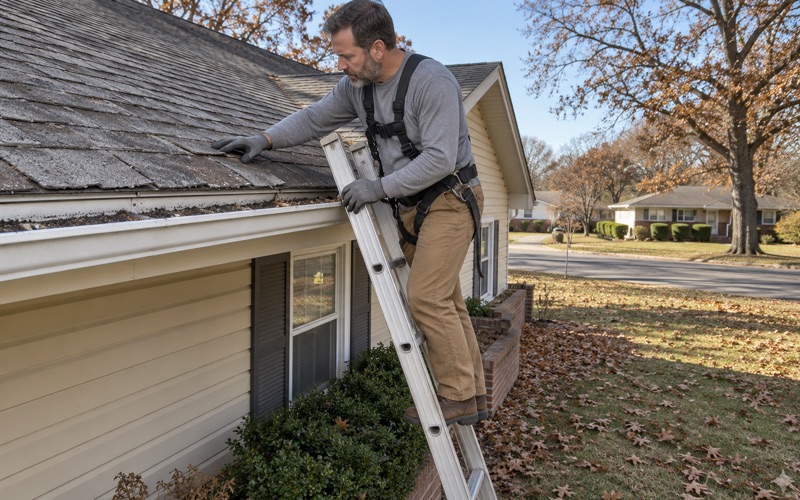
A landlord’s roof has a third party living under it, so access needs planning. We coordinate the visit with whoever the owner names, whether that is the tenant directly or a property manager. If the attic hatch sits inside a bedroom closet, we say so ahead of time so the tenant can clear a path rather than hearing the request at the door.
On a full replacement the tenant can usually stay in the home while we work. We give the owner a start date and an expected length to pass along, and we clean the yard, driveway and gutters at the end of every work day, including a magnet sweep for roofing nails. A tenant with children or a dog should not find nails in the grass that evening.
Repair Now or Replace Before the Next Lease
For a rental owner, repair versus replacement is a business decision tied to the lease calendar. A repair keeps the current tenant dry and costs less today. A replacement scheduled during a vacancy avoids working around occupants and resets the roof before the next tenant signs. We give a straight answer on whether a repair will hold before replacement comes up at all.
When a Repair Is the Honest Answer
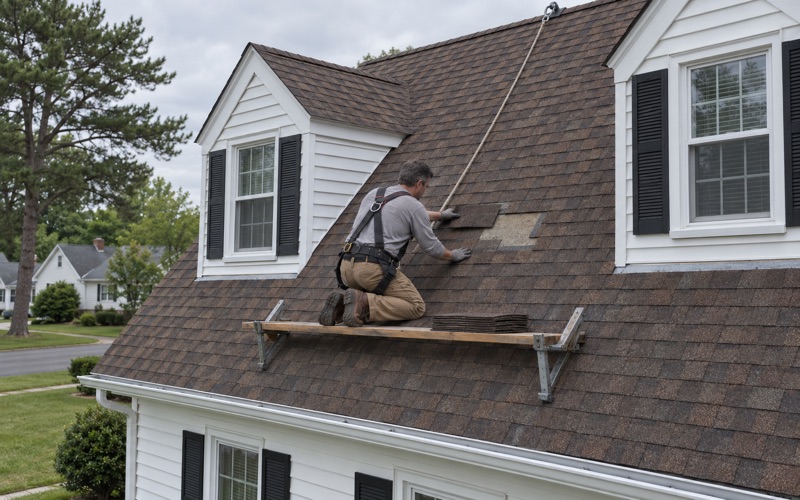
Plenty of leaks come down to one failed component: a cracked pipe boot, a missing shingle on a ridge, a gap in the kick-out flashing where a roof edge meets a wall. If the rest of the roof has life left, we say so and price only the fix. An owner who replaces a sound roof because of one bad boot has spent rental income for nothing.
We also tell an owner when a repair is buying time rather than solving the problem. Shingles curling across a whole slope, granules piling up in the gutters or decking that flexes underfoot all point toward replacement. In that case we price the repair as a stopgap and the replacement as a planned job, and the owner chooses which to do now.
Timing a New Roof Between Tenants
A turnover gap is often the cleanest window for a full roof. With nobody living in the house, the crew can work through the attic, set the dumpster where it suits the job and finish without working around a household. If the owner wants the roof done before a new lease starts, the earlier we hear the move-out date, the easier it is to fit the job in.
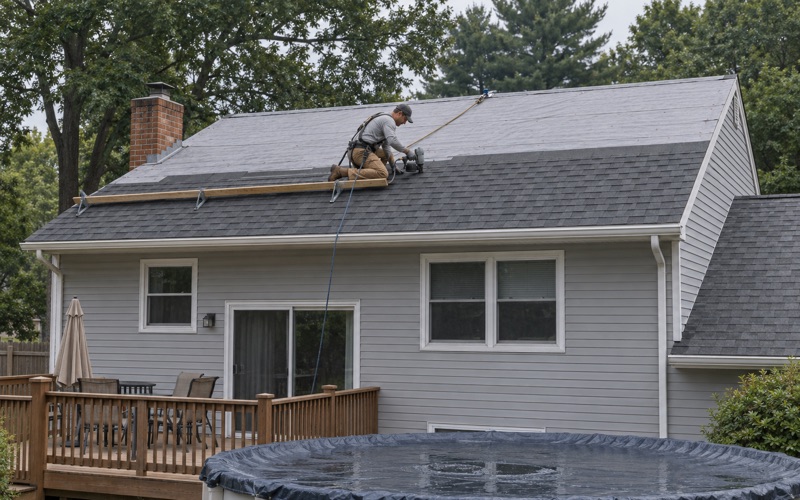
When no vacancy is coming, we can still replace the roof with the tenant at home; the job simply carries more communication. Either way, any decking that proves damaged once the old roof is off is photographed and shown to the owner before it is replaced, at a per-sheet price already written into the contract, so the final bill holds no surprise.
Older Farmhouses and 1970s Houses Across the Township
Pittsgrove’s housing stock spans a long stretch of time. The ACS counts 3,329 housing units, with 344 built in 1939 or earlier and 687 built in the 1970s, the largest single decade. Only 65 units date from 2010 or later. A rental here could come from either end of that range, and the roof work changes with it.
On an older house we may find more than one layer of shingles, board sheathing and a chimney that needs new flashing and possibly a cricket. The township’s history runs deep: the Alliance Colony, a Jewish agricultural community, was founded here on May 10, 1882, and its last in-place residence, the Moshe Bayuk House on Gershal Avenue, was listed on the National Register in 2012.
Houses from the 1970s raise different questions, usually about attic ventilation and the condition of the decking. Whichever era the rental comes from, flashing at the chimney, along walls, around skylights and where two roof planes meet is replaced rather than caulked over when the roof is redone. Caulk smeared over tired flashing is a common reason a tenant calls about the same leak twice.
Paperwork a Landlord Keeps for a New Roof
An investor’s roof generates records a homeowner might never think about. The contract, the scope, the invoice, the tax form and any insurance documents all belong in the property’s file. When the house is sold or refinanced, or when a tenant asks what was done, the owner can show exactly what is on the roof and when it went on.
Contract and Registration
Our contracts follow New Jersey’s home improvement rules, including a written contract and the three-day cancellation notice. Home improvement contractors in the state register under the Contractors’ Business Registration Act, N.J.S.A. 56:8-136 et seq. An owner managing a rental from elsewhere should keep the signed contract with the property records, along with the itemized scope.
Repair Invoices Versus Form ST-8
The line between repair and replacement also has a sales tax side in New Jersey. Repair work on a roof is generally taxable, while a new roof that qualifies as a capital improvement is documented with Form ST-8, the Certificate of Exempt Capital Improvement. We keep repair invoices and replacement contracts separate so the owner’s accountant is not left untangling them.
How a rental roof is treated on the owner’s tax return, depreciation included, is a question for their tax preparer, not for us. What we can do is make sure the paperwork describes the job accurately, so a repair reads as a repair and a full tear-off and re-roof reads as exactly that.
Township Forms and the Construction Department
Re-roofing a detached one- or two-family house is classed as ordinary maintenance under the state rule at N.J.A.C. 5:23-2.7. The Pittsgrove Township Construction Department, in the municipal building at 989 Centerton Road, says nothing about roofing on its own web page, so we confirm current requirements with the office before a job starts.
The department lists an Application and Requirements for Certificate of Housing among its forms, alongside the construction and zoning permit applications. A landlord who wants to know what that form covers can call 856-358-2300; extension 6026 handles permit packages, which the office will mail on request. Hours run 8:30 a.m. to 6:30 p.m. Monday and 8:30 a.m. to 4:30 p.m. Tuesday through Friday.
Storm Damage on a Rented House
When a storm tears shingles off a rental, the claim is the owner’s, not the tenant’s. We photograph the damage and write it up for the owner’s own claim, and we will meet the insurance adjuster at the house when asked. New Jersey sets claim settlement timelines for insurers in N.J.A.C. 11:2-17, and a prompt report with photos gives the claim a clean start.
Pittsgrove sits in National Weather Service forecast zone NJZ016, served by the Mount Holly office. A landlord who follows warnings for that zone knows when to ask a tenant to check the ceilings and the attic hatch after a storm, which turns a hidden leak into a phone call while the damage is still small.
- 20+ Years in Roofing
- Attic-First Leak Checks
- Line-Item Written Scopes