Vineland Elite Roofing brings more than 20 years in the trade to roofing in Pine Hill, where the person who calls us is often not the person who lives under the roof. An owner or a property manager may be responsible for a whole row of buildings, while the first sign of trouble shows up as a ceiling stain in a tenant’s bedroom. We plan our work around both of them.
Our first visit is about finding where the water actually gets in. That means a look in the attic or the ceiling space as well as on the roof itself, and a plain answer on whether a repair will hold before anyone talks about replacement. When a repair is the honest answer, we say so and price it that way.
When a roof does need to come off, the estimate we write breaks tear-off, decking, underlayment, flashing, ventilation and gutters into separate lines. An owner comparing bids for one building, or for several, can set two proposals side by side and see exactly where they differ instead of weighing one lump sum against another.
Pine Hill’s Apartment Communities and Their Matching Roofs
A borough where many homes are rented
Pine Hill is a borough in Camden County with a population of 10,743 at the 2020 census, and it is as much a renters’ town as an owners’ one. Of 4,488 occupied homes, 1,830 are rented, or 40.8 percent, according to the Census Bureau’s 2024 five-year American Community Survey. That share shapes who makes roofing decisions here.
The building types tell the same story. More than a third of all housing units in the borough, 1,736 of 4,733, sit in buildings of three or more units, and 1,411 of those are rented. For roofing, that means a large share of Pine Hill’s roofs belong to someone who manages them from an office rather than someone who hears the rain on them at night.
Chalet Gardens and complexes like it
The clearest example is Chalet Gardens on West Branch Avenue. Published real estate reports describe it as 484 apartments in 49 two-story buildings spread over 31.58 acres, built in 1973, with 348 one-bedroom and 136 two-bedroom units. A 2014 report described a capital improvements program of more than $3 million to renovate the units and install new windows.
None of those reports describes the roofs, so we make no claim about what is on them, how old it is, or whether any of it is due. We mention Chalet Gardens because it shows the scale of apartment housing in the borough, not because we have any connection to the property. What its single build date does illustrate is a pattern worth planning around at any complex of this kind.
Why roofs built in one campaign age together
When dozens of matching buildings go up in the same year, their roofs likely start the clock at the same time. Sun exposure, wind direction and shade from trees still vary from one building to the next, so they rarely wear at exactly the same pace. They do tend to fall into the same window, which is what makes them a planning problem rather than a series of separate calls.
That changes the question an owner asks. Instead of whether one roof needs work, it becomes which of these buildings need work first, and how the rest can be spread over the seasons that follow. Answering it well takes a building-by-building look rather than one inspection used to stand in for all of them.
Looking for roofing closer to Mantua? See Roofing Services in Mantua.
Roofing a Complex Building by Building
Starting with a survey of every roof
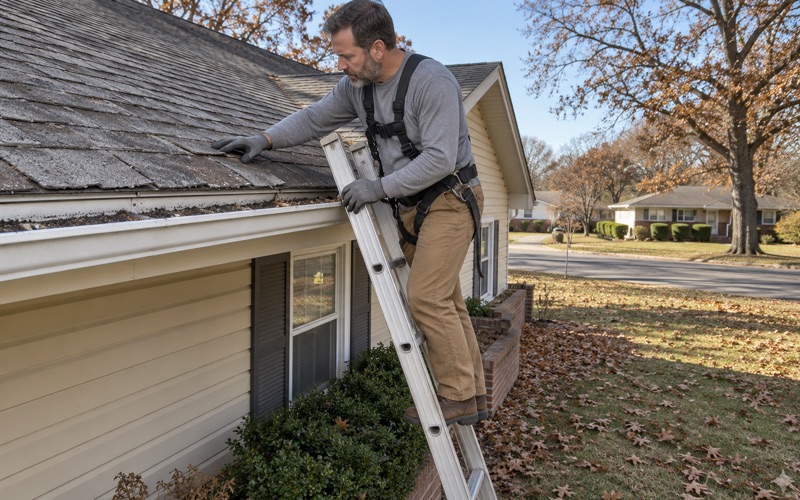
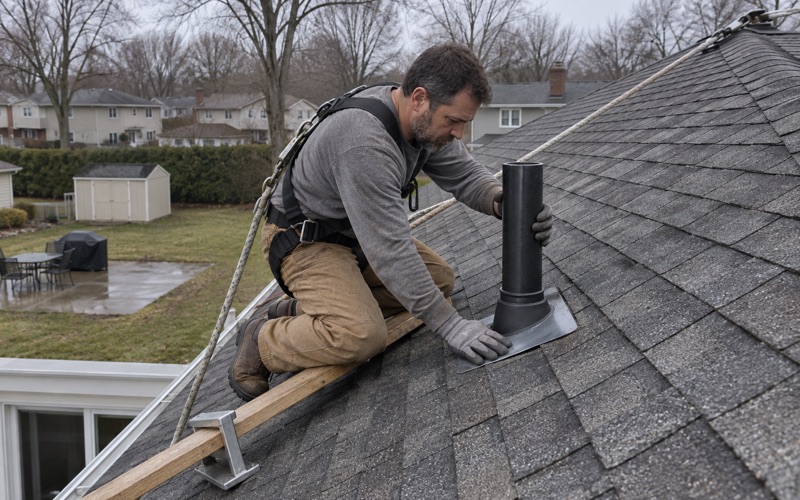
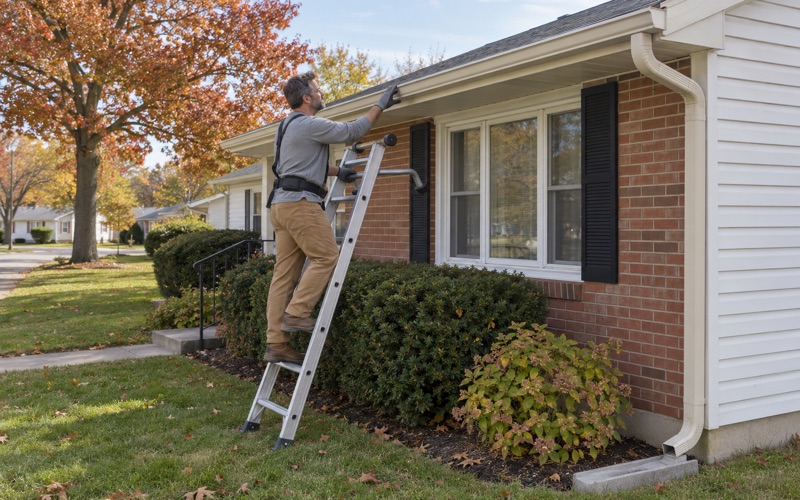
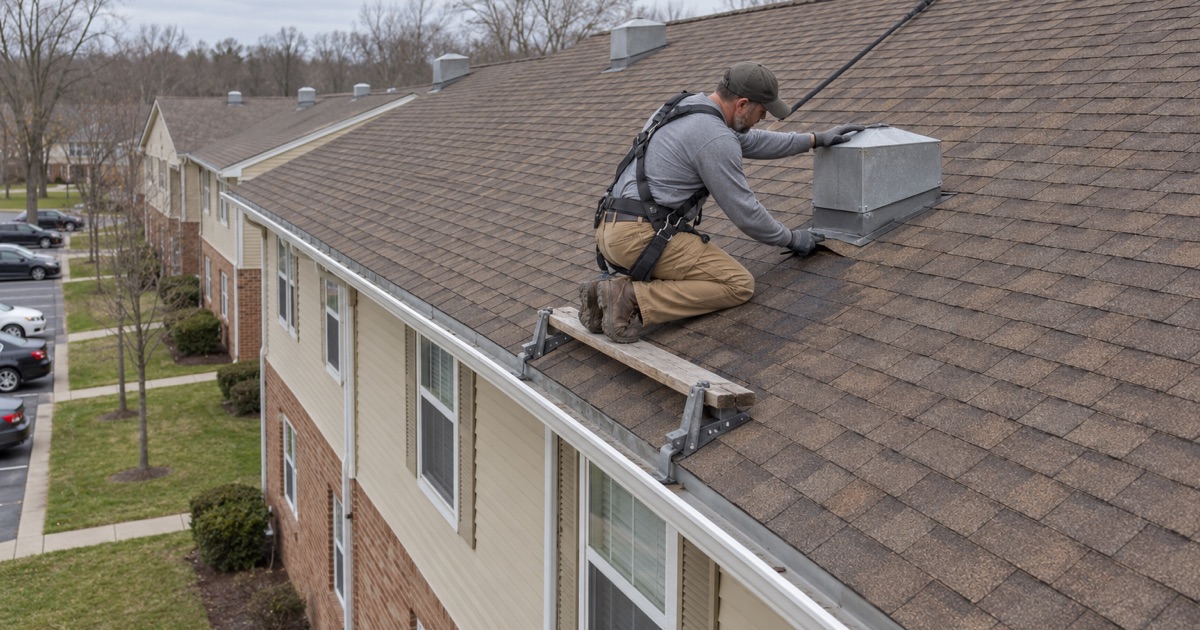
For a multi-building property, we start by walking each roof and noting its condition separately: the field of shingles, the flashing at walls and penetrations, the pipe boots, the drip edge at eaves and rakes, and the gutters and leaders. Where we can get into the attic or ceiling space, we check that too, because staining and damp sheathing there often show trouble before the surface does.
The result is a written list by building, not a single verdict for the whole site. Some roofs may need only a repair, some may be ready for replacement, and some may have plenty of service left. That list gives an owner or manager something concrete to budget against and a sensible order for the work.
Phasing the work across a program
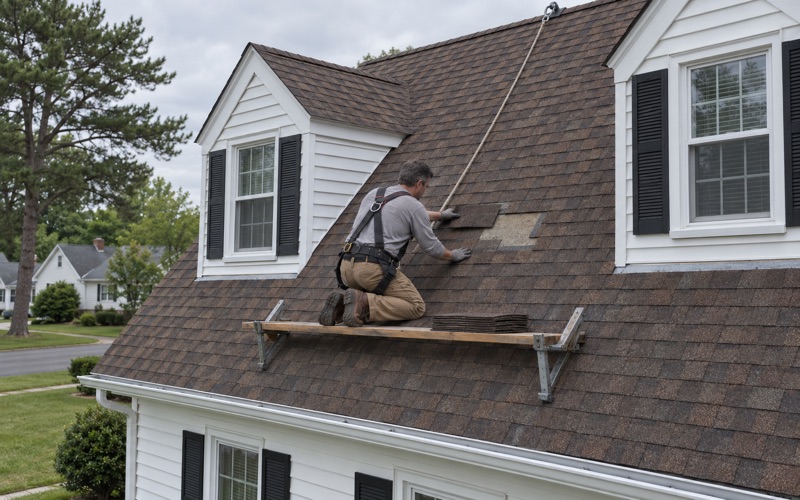
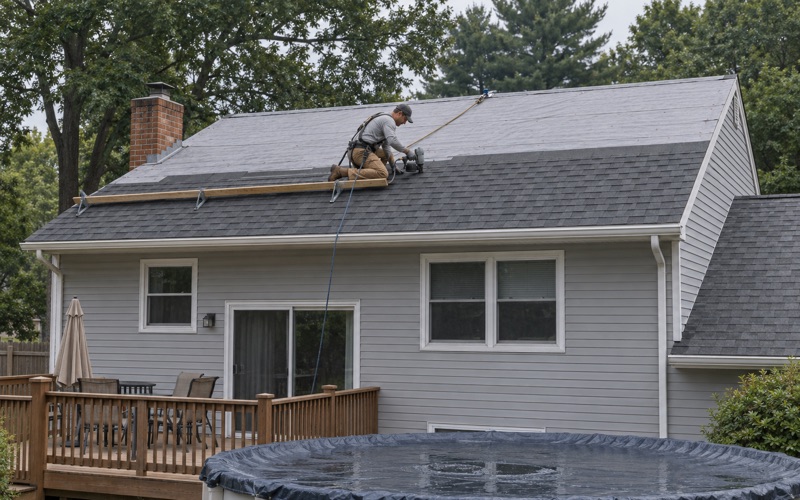
With the survey in hand, replacement can be grouped into phases. Buildings with active leaks or the heaviest wear go first, and the rest follow in later rounds as budget and season allow. Each phase gets its own itemized scope in the same format, so a manager can compare round two against round one line by line.
Decking is the one cost nobody can see until the old roof is off. When we find damaged sheets, we photograph them and show the owner before replacing anything, at a per-sheet price already set in the contract. On a program spanning many buildings, that keeps a surprise on one roof from turning into a dispute about all of them.
Keeping each building consistent
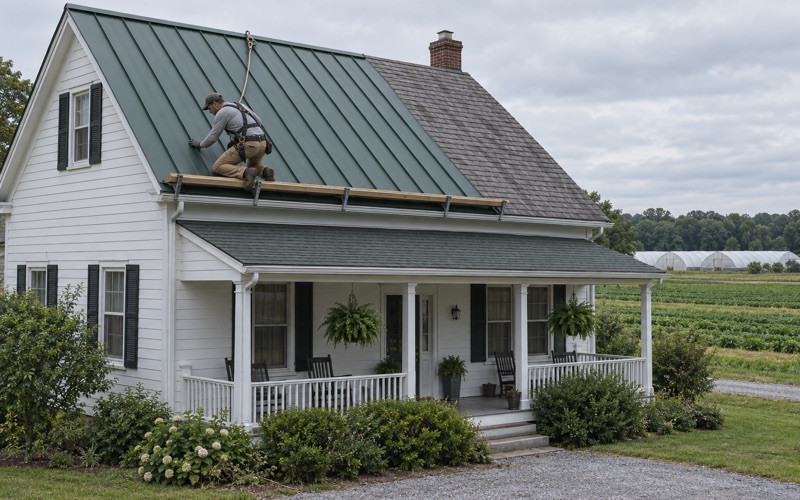
Matching buildings should still match when the program is done. Where the owner wants that, we keep the same shingle line and color across every phase, choosing it against the siding or brick on the actual buildings with samples held up on site. Architectural shingles such as GAF Timberline HDZ, Owens Corning Duration and CertainTeed Landmark are common choices, and we quote whichever line the owner prefers.
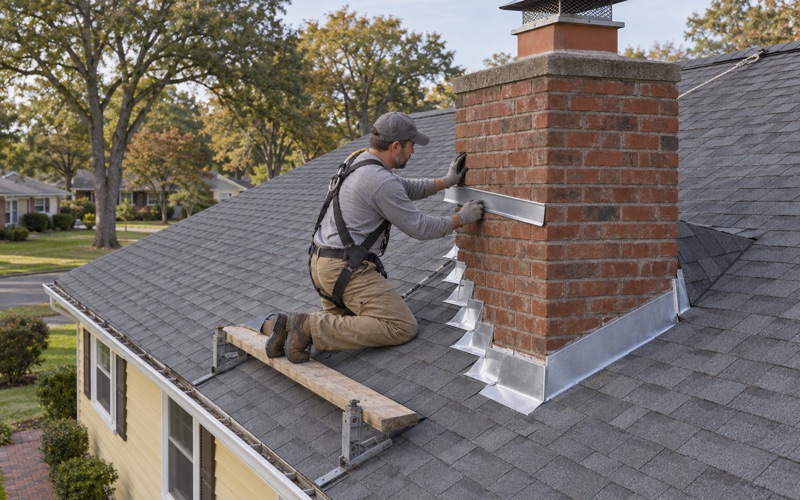
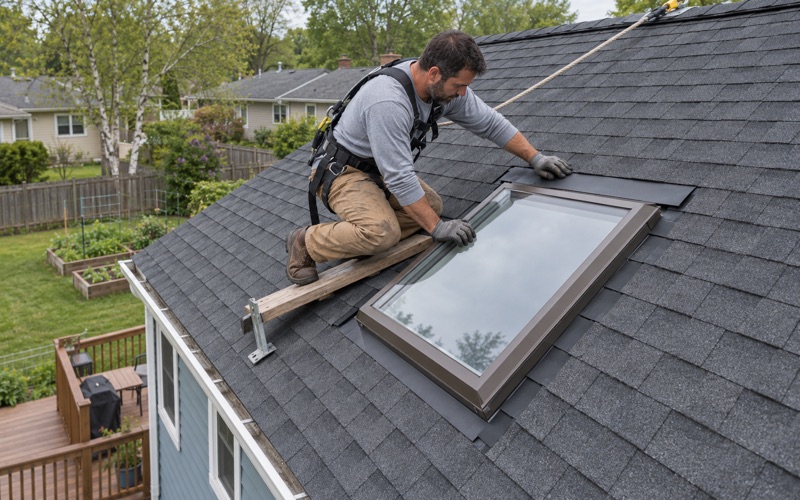
Flashing gets the same treatment on every building. Where a roof meets a wall, a chimney, a skylight or another roof, we replace the flashing rather than caulking over the old metal. Step flashing, counter flashing and kick-out flashing go in fresh, so the weak points are handled the same way from the first building in the program to the last.
Leaks in an Occupied Apartment Building
When a tenant reports the leak
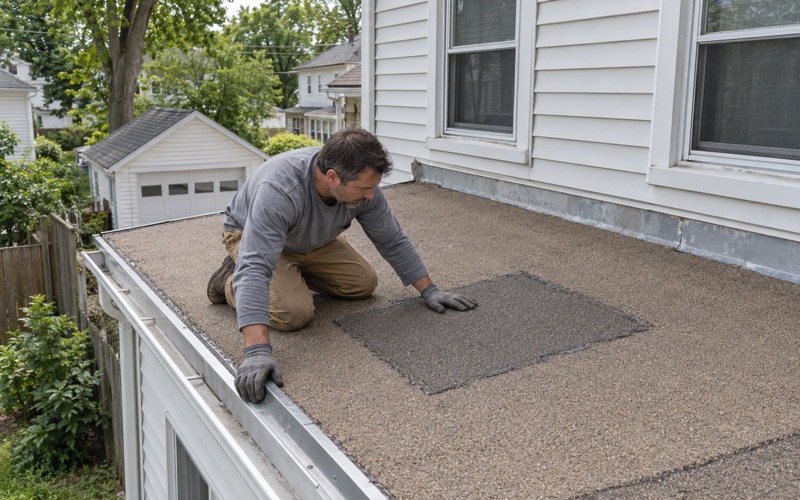
In a rented building, a leak report usually passes through more than one person before it reaches us. A tenant notices a drip or a stain, tells the manager, and the manager calls a roofer. By then the water may have been getting in for a while, and the spot on the ceiling may be some distance from where it enters the roof.
That is why we trace it from inside and out. Water can follow a rafter, a pipe or the underside of the sheathing before it shows, so we check the space above the stain and then the roof above that, working toward the real entry point. Only once it is found do we put a price on the repair.
Working with people living underneath
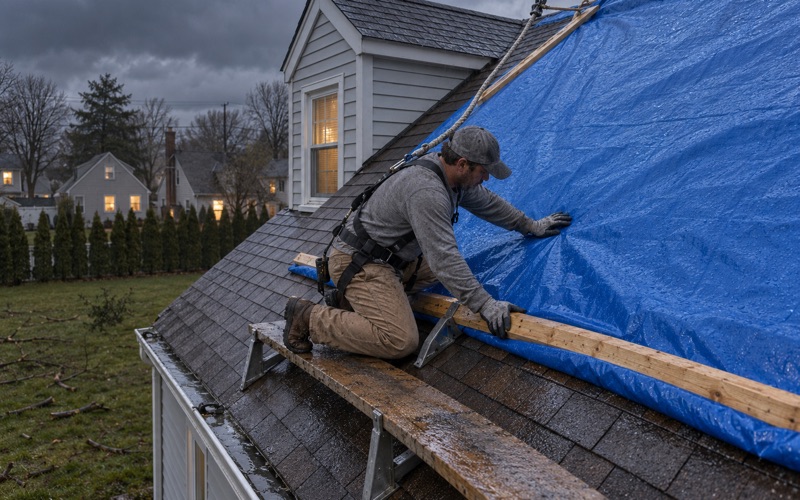
Roofing an occupied two-story building means residents are home while the crew is overhead. We schedule with the manager so tenants can be told in advance which building is being worked on and when. Tear-off is kept to what can be covered and dried in before the crew leaves for the day.
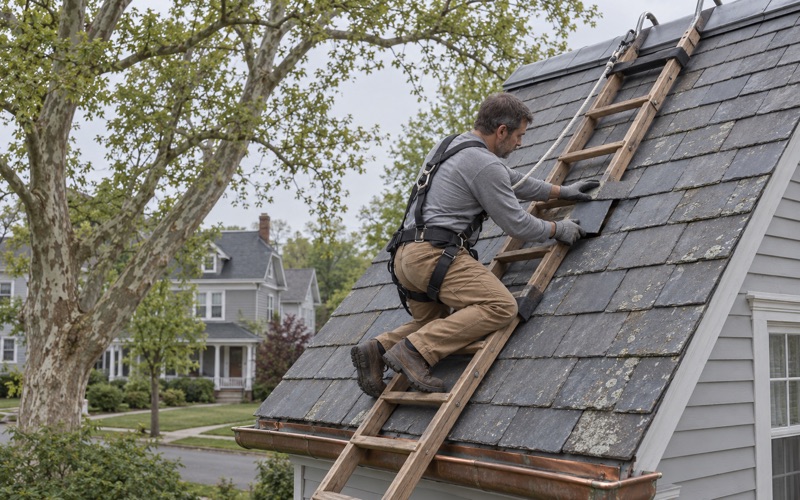
Cleanup matters more when families walk past the work every day. At the end of each work day we clean the yard, walkways and gutters, and run a magnet sweep for roofing nails along parking areas and paths. Our crews also follow the OSHA fall protection rule for residential roofing, which applies at 6 feet under 29 CFR 1926.501(b)(13).
Storm damage across several buildings
One storm can reach several buildings on a property in a single afternoon. A NOAA Storm Prediction Center log lists a wind report at 1 NNE Pine Hill on June 25, 2023, though it describes no roof damage. For forecasts, the borough sits in National Weather Service zone NJZ018 Camden, covered by the Mount Holly office.
When a storm does cause damage, we photograph it and write it up building by building for the owner’s own insurance claim, and we will meet the adjuster on site if asked. On a large property, a clear record of which roofs were hit and which were not makes the claim far easier to follow for everyone involved.
Pine Hill’s Townhouses and Detached Homes
Attached homes and association roofs
Not every Pine Hill roof belongs to an apartment complex. The borough also has 821 one-unit attached homes, 621 of them owner-occupied, along with 2,126 detached houses. For a townhouse, the first question is who is responsible for the roof, the owner or an association, and the answer is not the same everywhere.
Listings that turned up in our research point both ways. One townhouse listing with a $60 monthly HOA fee for common-area maintenance described the owner’s roof as 2 years old, while another said the roof was the condo association’s responsibility. Each community’s own documents decide it, so we ask to see them before we quote.
Detached houses on an original roof or a first replacement
Much of Pine Hill’s housing dates from the late twentieth century, with 1,354 units built in the 1970s and 1,337 from 1990 to 2009. A house from that later period is likely on its original roof or its first replacement. That is a different job from a multi-layer tear-off on one of the 302 homes built before 1940.
For a detached house, we hold shingle samples against the actual brick, stone or siding before a color is chosen. Our contracts follow New Jersey’s home improvement rules, including the written contract and the three-day cancellation notice. If the house carries solar panels, their removal and reinstall go into the schedule from the start rather than being discovered on the day.
A little of the borough’s own history
Pine Hill was created on April 23, 1929, from Clementon Township, and the borough’s history page notes that it holds the highest point in Camden County at 214 feet. The same page recalls early residents showering in summer rain with “the water that would run off the roof of the house.” The Isaac Tomlinson House on Blackwood-Clementon Road is listed on the National Register of Historic Places.
Whether you manage a complex of matching buildings or own a single house, the starting point is the same: a careful look at the roof and the attic, and an honest answer about repair. Call us to set up that visit, and we will tell you plainly what we find.
- 20+ Years in Roofing
- Attic-First Leak Checks
- Line-Item Written Scopes