Vineland Elite Roofing has been handling roofing in Olivet and the surrounding part of South Jersey for more than 20 years, and most of the roofs we are asked about here share a problem of timing rather than damage. The houses went up in the same stretch, the shingles have aged side by side, and many owners are now weighing a replacement within a few seasons of their neighbors.
We start each of those conversations with a straight answer. If a section can be repaired and the rest of the roof still has life in it, we say so before anyone mentions a full tear-off. When replacement is the honest call, our written scope breaks out tear-off, decking, underlayment, flashing, ventilation and gutters as separate lines, so a second estimate can be laid beside ours and compared item by item.
Two-story houses change the work in ways a one-story ranch does not. The roof sits higher, the slopes can run longer, and the yard below has to be protected for days rather than hours. The sections below walk through what that means on the houses here, from the shape of the roof to the questions worth settling before a shingle color is chosen.
Replacing a Roof on a Palatine Lake Colonial
Why So Many Roofs Here Come Due Together
Olivet is a census-designated place within Pittsgrove Township in Salem County, and its housing is unusually concentrated in one decade. The 2024 American Community Survey five-year estimates count 508 housing units, and 269 of them, or 53.0%, were built between 1980 and 1989. The same survey records all 508 occupied units as owner-occupied detached homes.
Palatine Lake Village, where many of those houses sit, was built out roughly from 1980 to 1995. Houses finished within a few years of one another tend to come due for roofing within a few years of one another too. A roof that went on in the same season as the one next door has taken the same sun, wind and weather ever since.
What the Colonial Form Asks of a Roofer
The realtor record for Palatine Lake shows 16 Colonials among the last 25 sales, alongside four Salt Box designs and a single Cape Cod, Contemporary, Ranch and Traditional. A two-story Colonial typically carries a gable roof set a full two stories above the ground, with a broad, unbroken field of shingles on each side of the ridge.
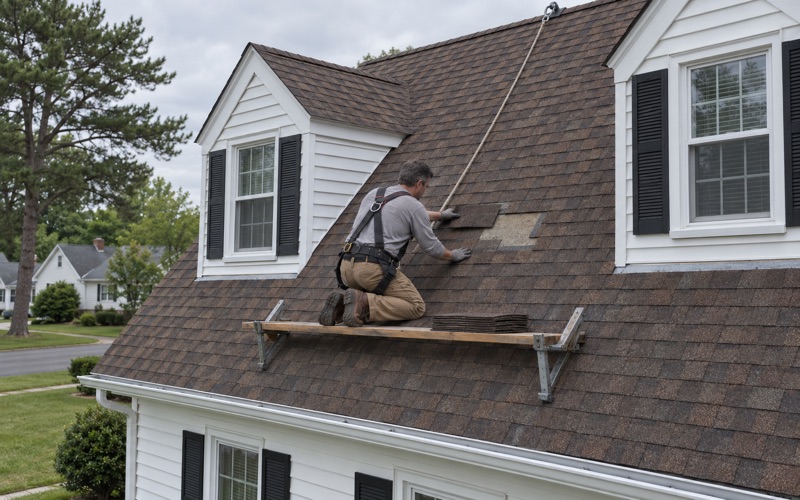
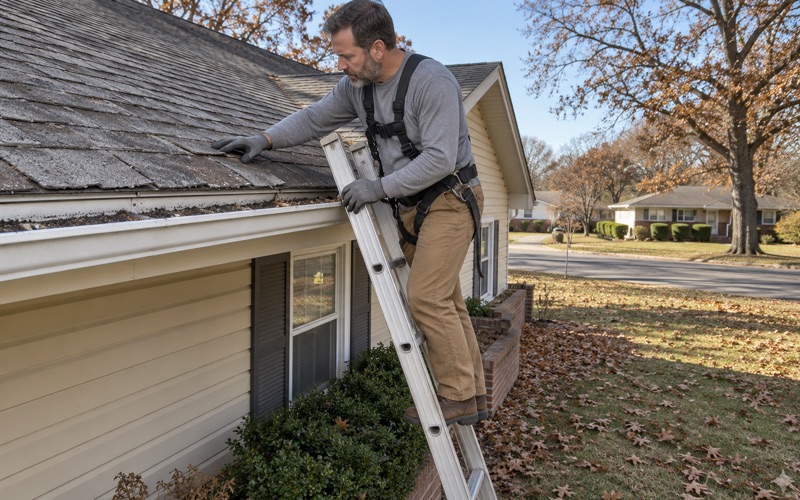
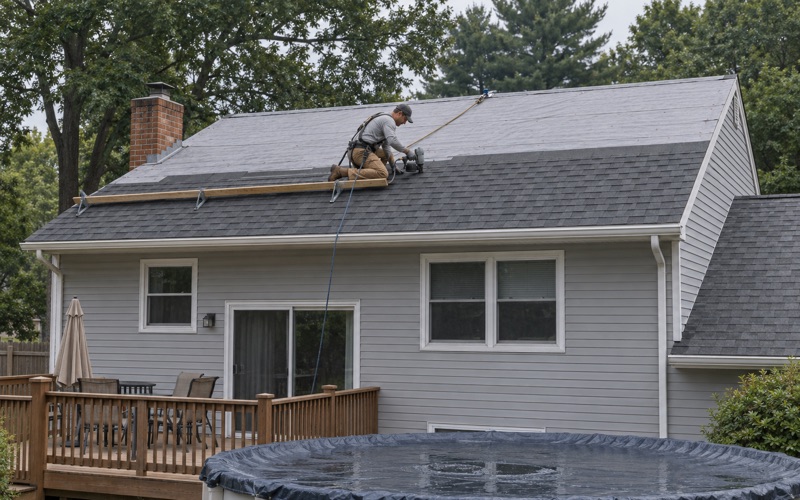
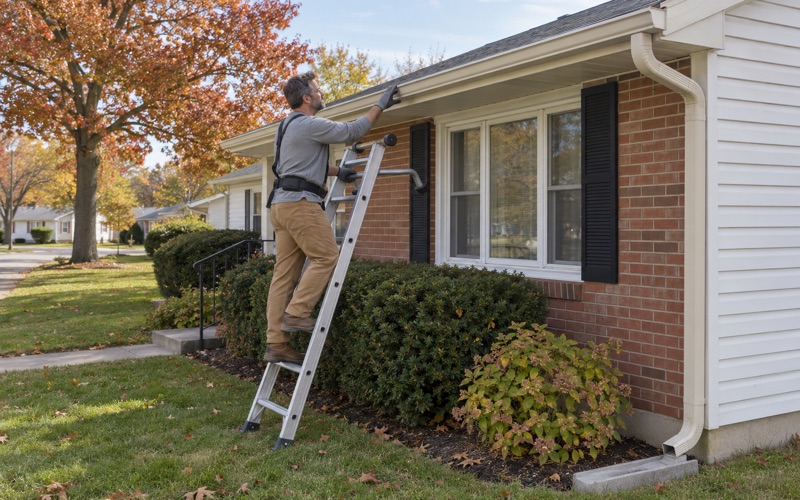
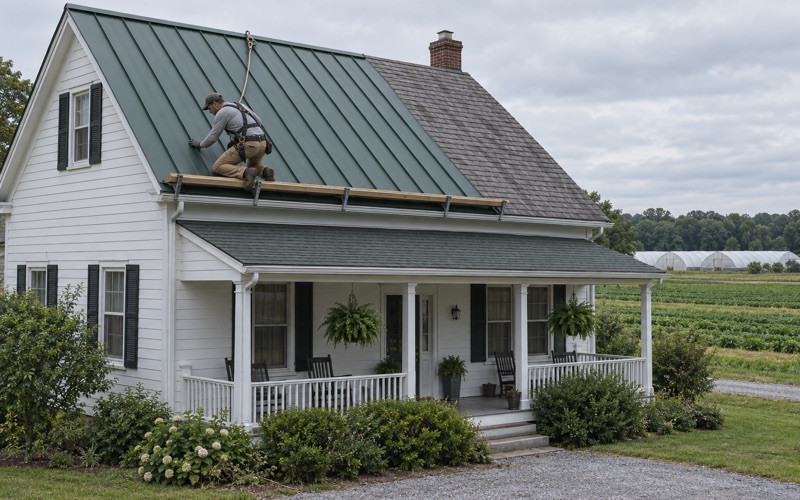
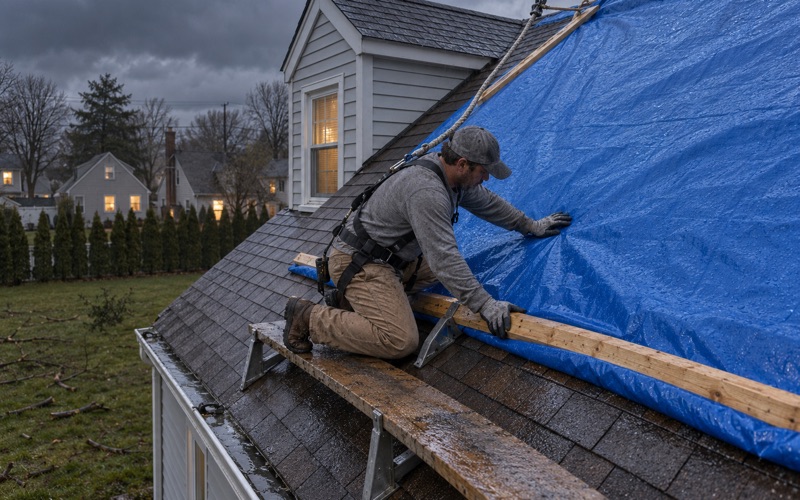
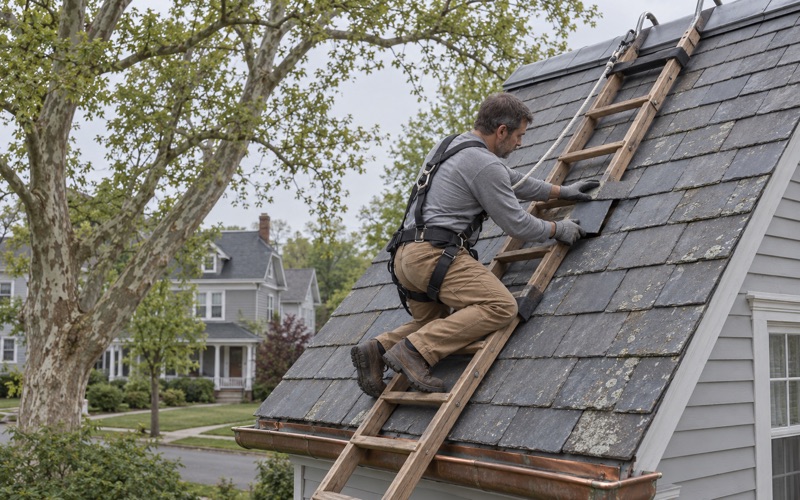
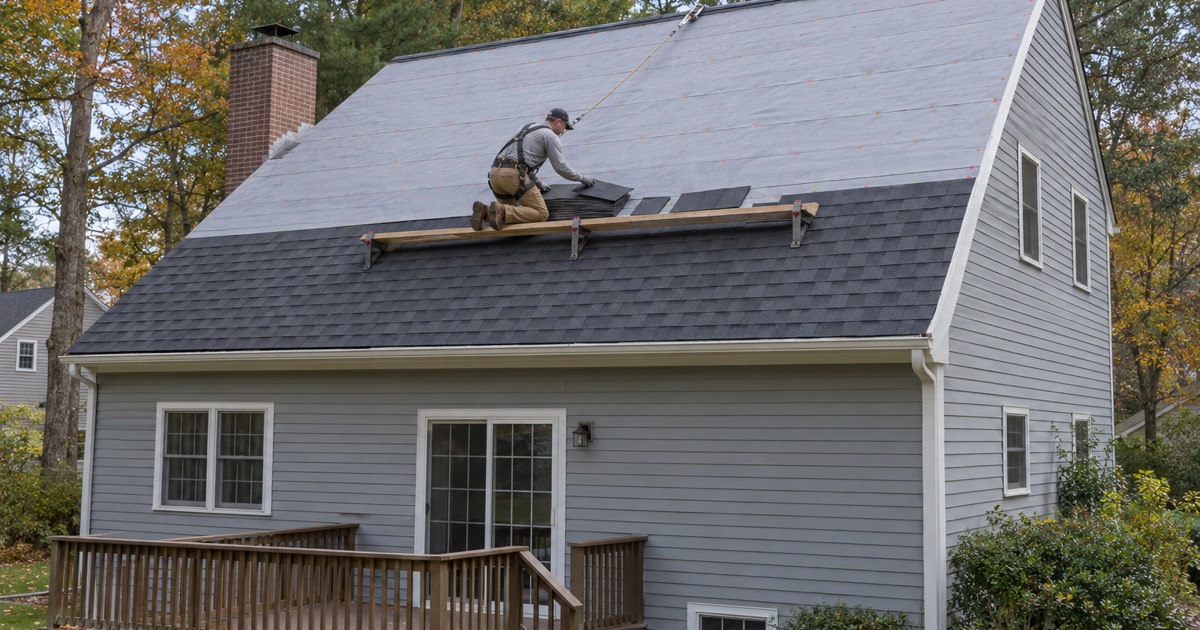
That simple shape is easy to work on once the crew is up, and harder everywhere else. Material has to be lifted higher, debris has to come down farther, and fall protection is in place from the first hour, since OSHA requires it on residential roofs at six feet. We plan the setup around the height before the first bundle arrives.
Where Water Gets In on These Houses
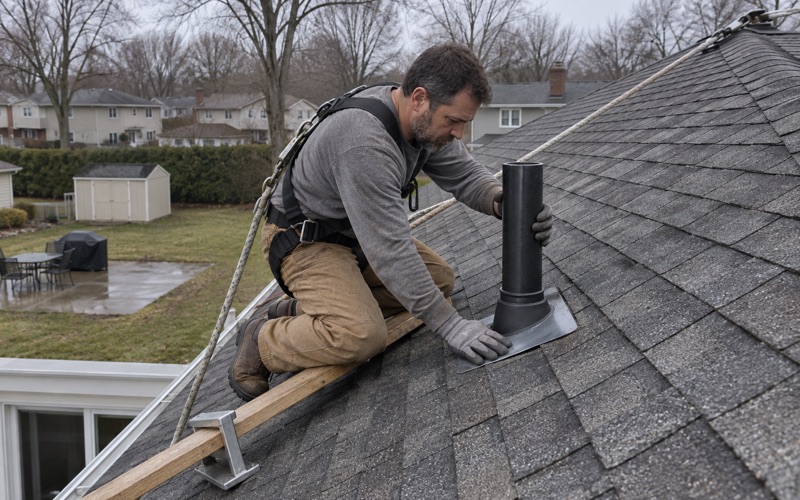
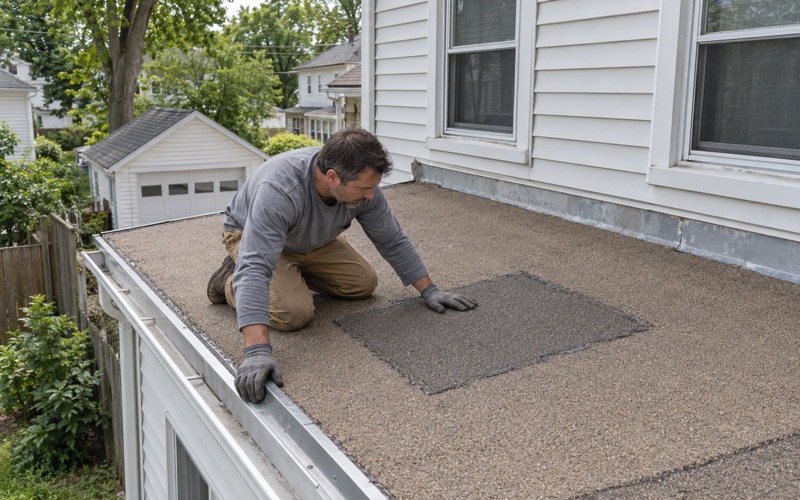
On a Colonial, leaks rarely start in the open field of shingles. They start where the roof meets something else: a chimney on the gable end, a wall where a garage or porch roof ties in, plumbing vents and pipe boots, and the rakes where wind can lift an edge. Those are the places we check first.
Every leak call includes a trip into the attic as well as onto the roof. Water often runs along a rafter or the underside of the decking before it shows on a ceiling, so the stain is seldom directly below the entry point. Tracing it back before pricing anything keeps a repair from fixing the wrong spot.
Looking for roofing closer to Port Elizabeth? See Roofing in Port Elizabeth.
The Saltbox’s Long Rear Slope
How a Saltbox Roof Is Shaped
The Salt Box designs in Palatine Lake are the houses that look most different from the street. A saltbox keeps two full stories at the front but carries its rear roof plane down from the ridge, past the second floor and over the first, so the back slope runs much longer than the front.
That long slope gathers more water than any other plane on the house. Rain, leaves and melting snow travel its full length before reaching the gutter. The low end of the slope, near the first-floor eave, takes the heaviest flow, and it is where wear and staining tend to show first.
Protecting the Low End of the Slope
When we replace a saltbox roof, the lower courses get the most attention. Self-adhering ice and water barrier meeting ASTM D1970 goes along the eave and into any valleys, with synthetic underlayment to ASTM D8257 over the rest of the deck. New drip edge at the eaves and rakes lets water leave the roof cleanly instead of wicking back under the first course.
The gutter at the foot of that slope matters as much as the shingles above it. A long rear plane can overwhelm a gutter that is undersized or pulling away from the fascia, so we look at it and its leaders during the estimate. If seamless aluminum gutters are the better fix, the scope says so on its own line.
Ventilating a Long, Low Attic
A saltbox attic follows that long slope, and the back of it is often low and tight. Air needs a clear path from soffit intake to a ridge vent, and on older houses that path is sometimes blocked by insulation packed into the eaves. We check the net free area of intake and exhaust while we are in the attic.
Fixing ventilation during a replacement is far simpler than adding it later. Ridge vent is cut in once the old ridge cap comes off, and blocked eaves can be cleared while the deck is open. It is listed as a separate line, so an owner can see exactly what it adds and decide.
Working Two Stories Up on Half-Acre Lots
Staging the Tear-Off
Palatine Lake lots run roughly 0.46 to 0.70 acre, with a median near 0.55. That room helps: there is usually space to set the dumpster clear of the house and to place ladders and hoists away from foundation plantings. We walk the lot with the owner before the job and agree where the dumpster, the material drop and the work zone will go.
On a two-story house, tear-off debris falls a long way. We hang tarps along the walls, cover shrubs and window wells, and keep the drop zone tied to the dumpster instead of the lawn. New material is loaded onto the deck in stages, so no part of the roof carries more weight than it needs to.
Wells, Septic and What Sits Under the Yard
Palatine Lake homes are served by private wells and septic systems, according to the community’s realtor record. That changes where heavy vehicles can go. A loaded dumpster or delivery truck parked over a septic field or a well line can do damage that has nothing to do with the roof, so we ask where both sit before anything rolls off the street.
If an owner is not sure, we work from the property survey or septic records and keep heavy equipment on the driveway. It is a short conversation that heads off an expensive one. The same care applies to irrigation lines and to any shed or outbuilding on the lot, which we can quote alongside the house.
Cleanup at the End of Every Day
A big lawn holds onto roofing nails. At the end of each working day the crew cleans the yard, driveway and gutters and runs a magnet sweep across the grass and the drop zone, so children, pets and mowers are not finding fasteners the next morning. The final day gets a second pass after the dumpster leaves.
The neighborhood shares a pool, clubhouse, courts, playground and beach around its private 77-acre lake, so foot traffic past a job site is common. We keep materials stacked on the owner’s own lot and leave nothing on the shoulder overnight.
What Comes Off a 1980s Roof, and What Goes Back On
Decking After Decades Under Shingles
Once the old roof is off a 1980s house, the decking gets its first full look in years. Some sheets will be sound; others may be soft along the eaves, around old vents or under a slow leak nobody caught. There is no way to know which until the shingles are gone, which is why our contract sets a per-sheet replacement price in advance.
Every damaged sheet we find is photographed and shown to the owner before it is replaced. That way the decking line on the final invoice matches what was actually changed, and nobody is asked to take a number on faith.
Flashing Replaced, Not Caulked
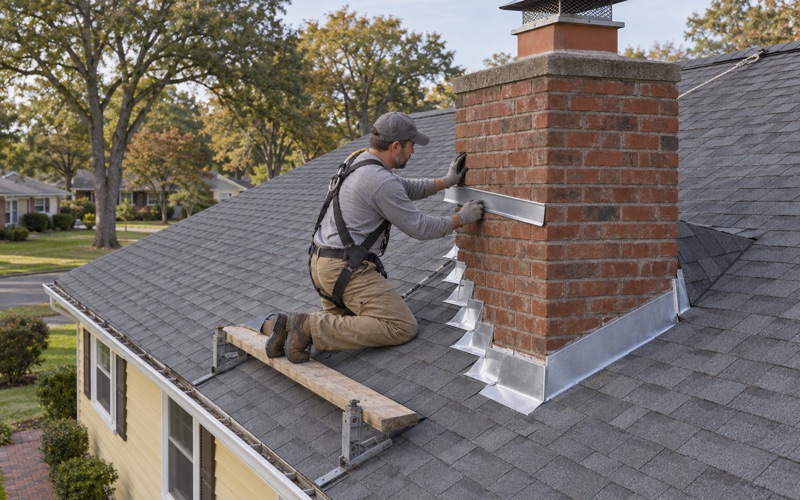
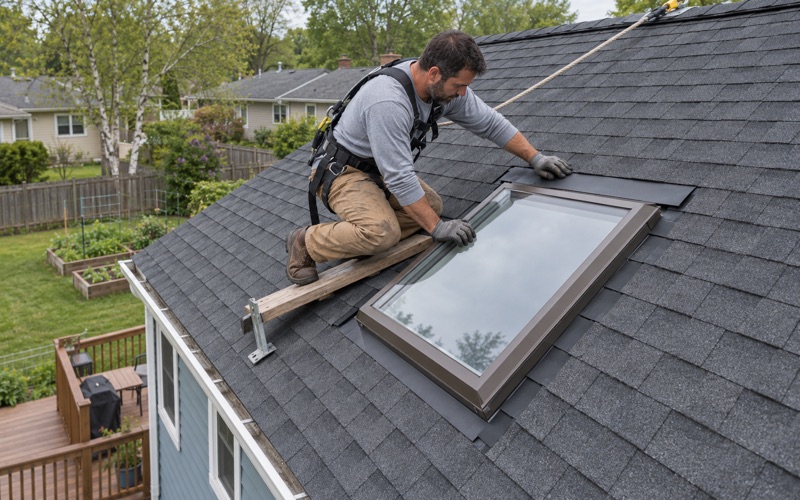
Flashing on a house this age has often been patched more than once. When we redo the roof, step flashing along sidewalls, counter flashing at the chimney, apron and kick-out flashing where a lower roof meets a wall, and the flashing around any skylight all come off and are replaced. We do not caulk new shingles against old metal.
A chimney on the gable end of a Colonial is a common source of slow leaks. Where a chimney is wide enough to trap water behind it, a cricket built into the roof steers the flow around it. If one is missing or failing, it goes on the scope as its own item.
Shingles, Color and the Association
Architectural laminated shingles such as GAF Timberline HDZ, Owens Corning Duration or CertainTeed Landmark are the usual starting point on these houses. Owners who want more can choose lines rated to ASTM D3161 Class F or ASTM D7158 Class H for wind, or UL 2218 Class 4 for impact. If a storm does damage the roof, we photograph and write it up for the owner’s claim and will meet the adjuster when asked.
Palatine Lake Village has a homeowners association, with governing documents on file dated 2019. We have not read their text, so we cannot say whether they address roof color or material. Before settling on a shingle, check the association’s documents yourself or ask its board directly.
Color itself is chosen against the actual house. We bring samples and hold them up beside the brick, stone or siding in daylight, because a swatch that looks right on a screen can read very differently on a real two-story wall. The choice is yours; our job is to show it honestly.
Our contracts follow New Jersey’s home improvement rules, including a written contract and the three-day cancellation notice. Pittsgrove Township runs the construction office that serves Olivet, at 989 Centerton Road, and homes in Palatine Lake Village carry Elmer 08318 mailing addresses, which is worth knowing when paperwork asks for a town.
- 20+ Years in Roofing
- Attic-First Leak Checks
- Line-Item Written Scopes