Vineland Elite Roofing brings more than 20 years of roofing in Ocean City and across South Jersey to owners whose houses are often empty for half the year. A shore house roof is judged less by how it looks in July than by what it does in January, when nobody is upstairs to notice a drip. We plan our work around that gap between storms and the people who would see the damage.
Most of the calls we take for the island come from owners who live somewhere else. They want to know whether a stain on a ceiling means a small repair or a bigger job, and they want the answer before the next renter arrives. We give a straight repair-or-replace answer first, and only talk about a new roof when the old one cannot be fixed sensibly.
When replacement is the right call, the written scope breaks out tear-off, decking, underlayment, flashing, ventilation and gutters as their own lines. That lets an owner who is managing the house from a distance compare our number with another bid line by line, without standing on the street to do it.
Roofs Over Second Homes and Empty Winters
Who lives under the roof, and when
Ocean City is a second home town in plain numbers. The Census Bureau’s 2024 five-year estimates count 14,042 of the city’s 21,191 housing units as held for seasonal, recreational or occasional use, which is 66.3% of the housing stock. Only 5,689 units are occupied year-round, so a large share of the roofs here sit over rooms that stay dark from fall until spring.
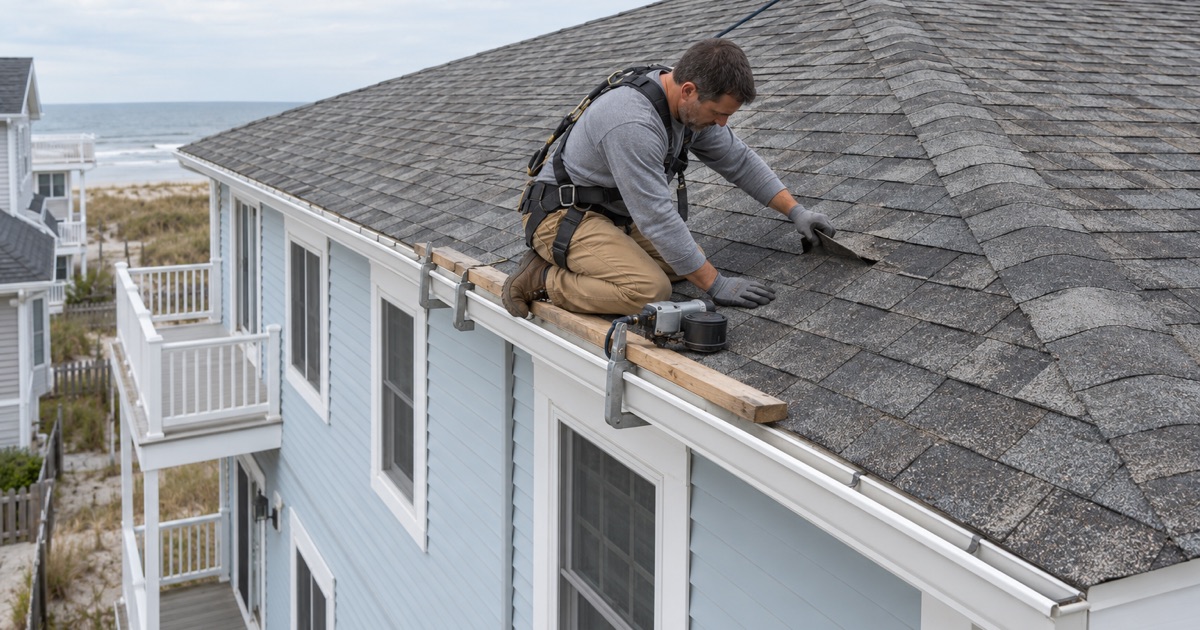
That changes how a roofing job starts. The owner is usually calling from a primary home, sometimes hours away, and has seen the problem only in a photo from a neighbor or a cleaning crew. We set our visits up so the owner can follow along from a distance, with photos of what we found on the roof and in the attic sent the same day.
A leak nobody sees until spring
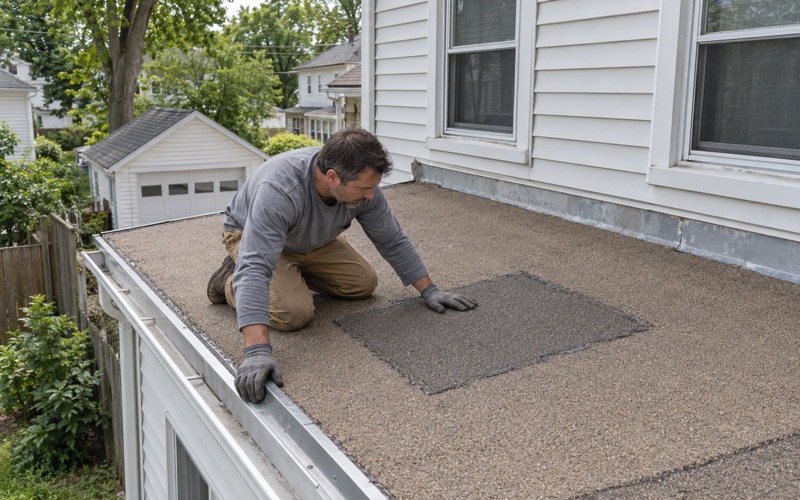
A seasonal house has no one to put a bucket under a drip. A leak that opens during a January nor’easter can keep wetting insulation, drywall and the decking for weeks before anyone unlocks the door. By then the visible stain is often far from where the water actually entered, because it has traveled along rafters and the underside of the sheathing.
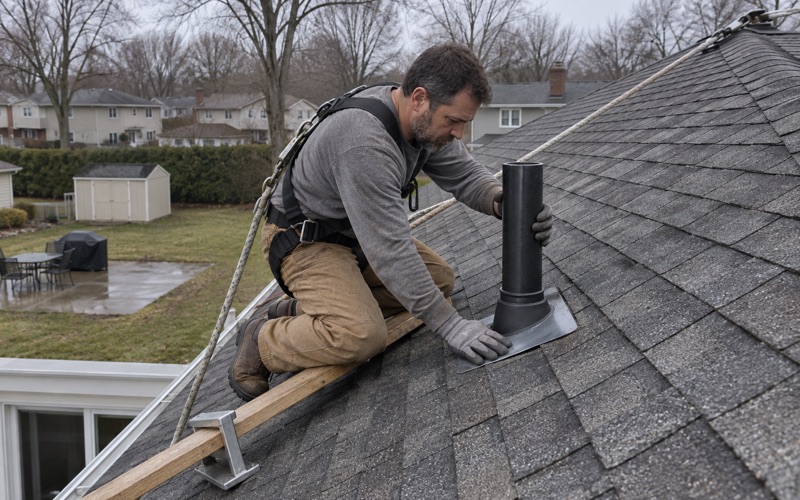
That is why each leak call we take includes a look in the attic as well as on the roof surface. We trace the stain back to its source, whether a lifted shingle, a cracked pipe boot or a gap at a wall, before we price any repair. Fixing the wrong spot on an empty house just means another season of hidden water.
What an off-season roof check covers
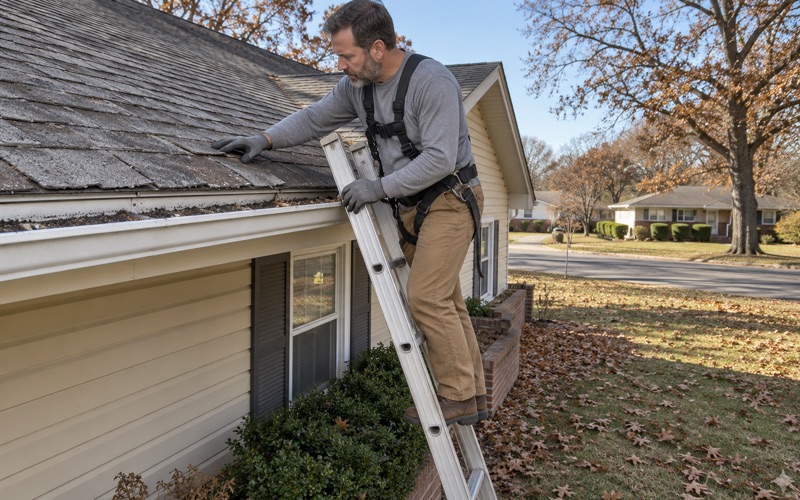
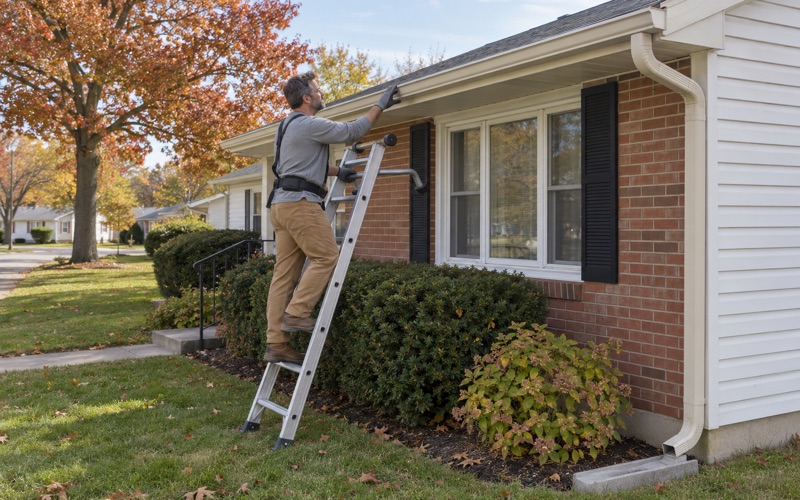
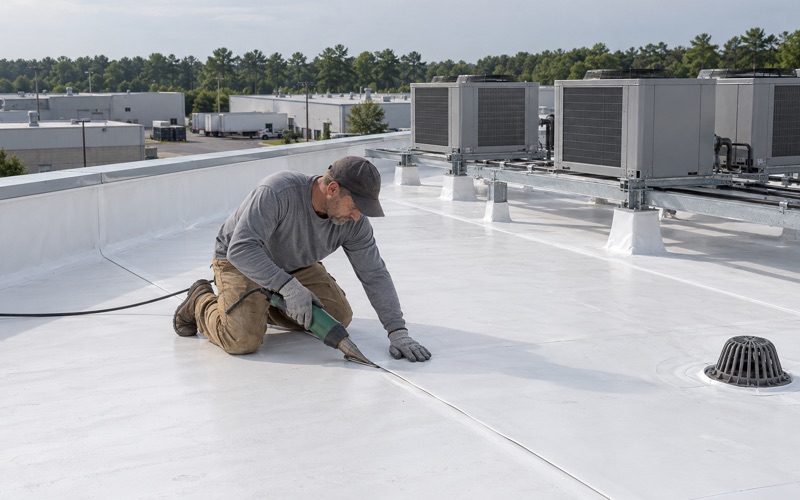
Owners who book a check in the fall or late winter are asking us for one visit, not ongoing watch over the house. On that visit we look at flashing at chimneys and walls, the condition of the shingles or membrane, pipe boots, the drip edge at eaves and rakes, and whether the gutters and leaders are clear enough to carry storm water away.
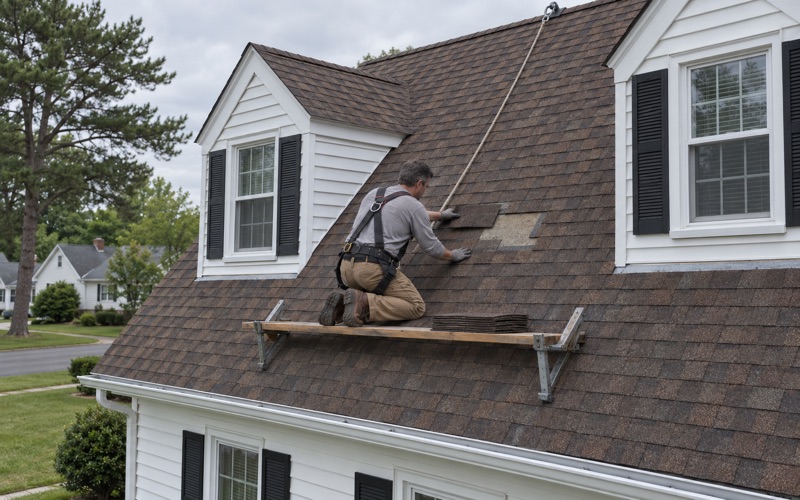
We write up what we see with photos so the owner can decide what to do before the house opens. A small flashing repair in March is a short job. The same problem found by a renter in June becomes a scramble, with a crew on the roof while guests are trying to use the deck below.
Looking for roofing closer to East Greenwich? See Roofing Services in East Greenwich.
Scheduling Roof Work Around the Rental Season
Why the calendar matters more here
The island fills up in summer. Wikipedia puts the summer population at an estimated 115,000 to 130,000, against 11,261 residents in the Census count. For an owner who rents, those months are when the house earns its keep, and a tear-off with a dumpster in the driveway is not something a weekly renter expects to find.
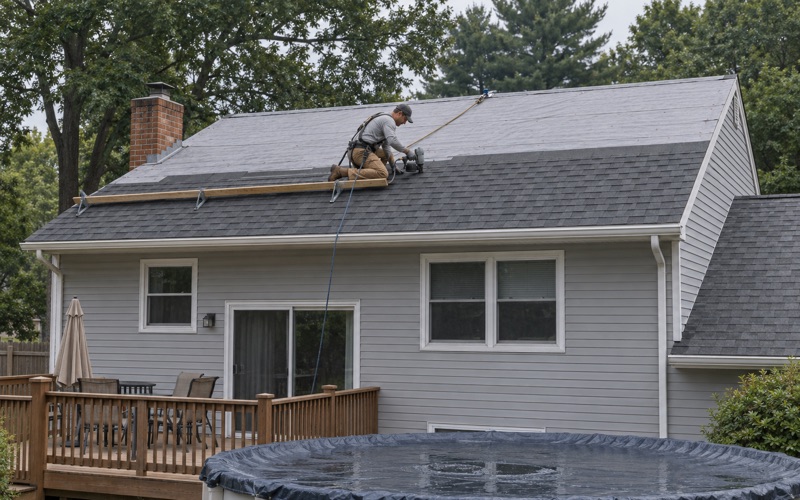
We plan full replacements for the quieter months whenever the roof allows it. Booking the work in fall or early spring gives time for the crew, the materials and any decking surprises to be handled before the first rental week. If the roof carries solar panels, the removal and reinstall go into the schedule from the start rather than turning up as a delay.
Rental owners and the city’s Mercantile License
Owners who rent their place already deal with the city’s paperwork. Ocean City requires every residential rental to hold a Mercantile License, also called a Rental Registration, and the owner keeps liability insurance of at least $500,000 on file with an annual registration. That requirement is about insurance and registration, and it says nothing about the roof itself.
What it does mean is that rental owners tend to plan the year in advance, and a roof fits into that plan. We give dated, written scopes and contracts that follow New Jersey’s home improvement rules, including the written contract and the three-day cancellation notice, so an owner can line up the job alongside renewals and booking dates.
When the problem shows up in July
Not every leak waits for the off-season. When a summer storm opens a seam or lifts shingles during a rental week, we focus on a repair that stops the water with as little disruption to the guests as we can manage. A full replacement can then be planned for the fall, with the temporary fix holding until the house empties.
At the end of every work day we clean the yard, driveway and gutters and run a magnet sweep for roofing nails. On a rental, that matters twice over. Bare feet on a driveway or a beach path are common here, and the next family arriving should not find a stray nail where they park.
Attached and Two-Unit Houses on the Island
Shared roofs and shared walls
Ocean City’s housing is not mostly detached houses. The 2024 estimates count 7,958 single-family attached units and 3,671 two-unit units, compared with 6,264 detached. Many shore houses share a wall, a roof line or both with a neighbor, and that shapes how a roof job is scoped from the first visit.
On an attached house the line between one owner’s roof and the next is rarely as neat as the deed suggests. We look at where the two roofs meet, how the flashing is tied in at the shared wall, and whether water from one side can reach the other. Where two owners are involved, the scope says plainly which work belongs to which side.
Flashing where two roofs meet
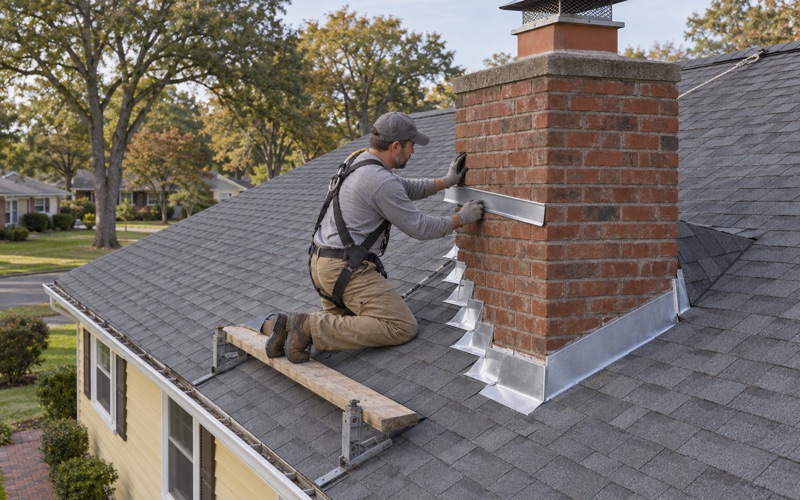
The joints between attached units, the walls rising above a lower roof and the valleys where two roof planes meet are where most of the leaks we trace on these houses begin. When we redo a roof, flashing at those points is replaced, not caulked over. That includes step flashing and counter flashing set into a reglet at walls, and kick-out flashing where a roof edge ends against siding.
On a duplex with an upper and lower unit, a leak in the top floor’s roof can show up first in the ceiling of the unit below. We trace it through the attic and the framing so the repair goes where the water enters, not where it lands. The owner of each unit then gets the same written findings.
Decking and permit questions on attached work
Older houses on the island add another variable. The Census counts 3,449 units built in 1939 or earlier, and decking on houses that age can hide rot until the old covering comes off. When we find damaged boards, we photograph them and show the owner before replacing anything, at a per-sheet price already set in the contract.
Attached and multi-unit buildings also raise permit questions that a simple detached house may not. We confirm what the job needs with the owner before work is scheduled, so a permit question does not hold a crew in the driveway during a short weather window between rental bookings.
Salt Air, Fasteners and Coastal Metal Warranties
Fasteners that hold up near the water
Ocean City sits on a barrier island first called Peck’s Beach, between the Atlantic and Great Egg Harbor Bay. Salt air reaches every exposed piece of metal on a house this close to the water. Plain steel nails, screws and flashing can rust faster here than on a roof inland, and a corroded fastener lets go long before the shingle around it wears out.
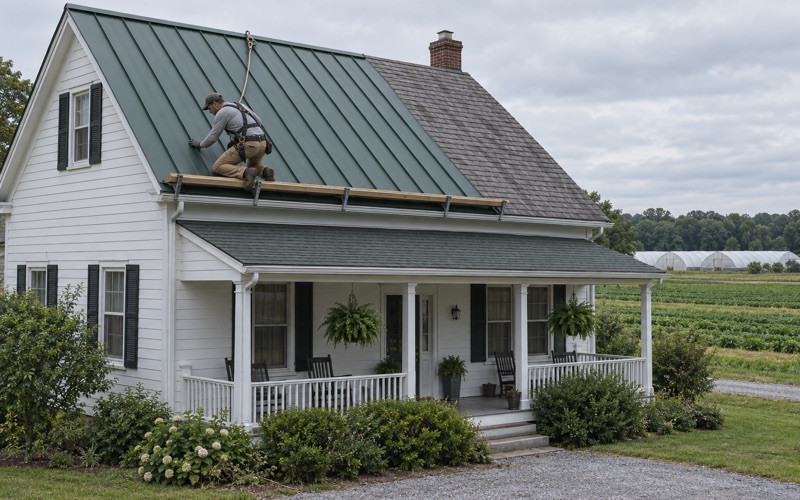
For that reason we spec stainless fasteners where the material and manufacturer allow it, especially on metal roofing, drip edge and exposed flashing. On exposed-fastener ribbed metal panels the screws carry the whole roof, so their corrosion resistance matters as much as the panel coating. Standing seam metal roofing hides its fasteners under the seams, which is one reason owners near the water consider it.
What metal warranties say about distance to salt water
Metal roofing warranties near the coast need reading before anyone signs. Some metal panel makers, Drexel and Sheffield among them, set distance limits from salt water in their warranty terms, and a house on the island can fall inside those limits. We check the published terms for the specific product before it goes into a quote.
For asphalt shingles, we read the warranty for the exact line being proposed, whether GAF Timberline HDZ, Owens Corning Duration or CertainTeed Landmark, rather than assuming anything about the coast. The owner gets the warranty language in writing alongside the scope, so the decision rests on the product’s own terms.
Storms, flood maps and the claim paperwork
Hurricane Sandy, on October 29, 2012, caused major to severe damage to 29% of the city’s houses, and coastal storms remain the main source of sudden roof damage here. The city sits in the National Weather Service’s Atlantic Coastal Cape May forecast zone, and the city participates in FEMA’s flood insurance Community Rating System at class 4, which matters to owners comparing coverage.
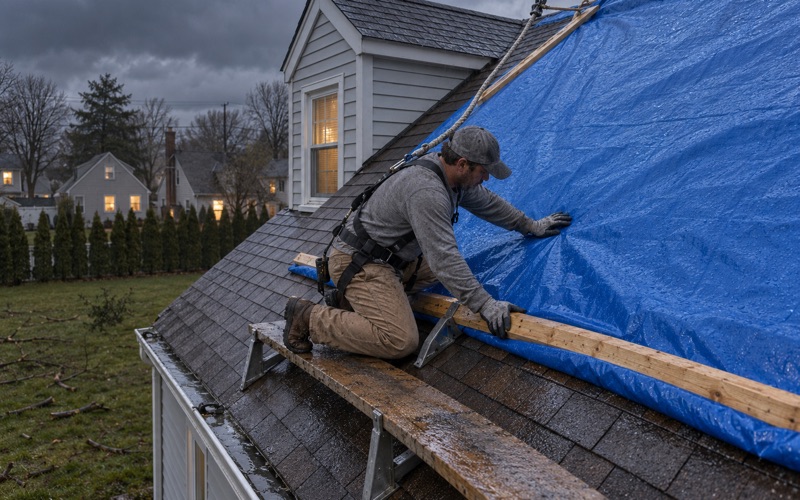
When wind or a storm damages a roof, we photograph the damage and write it up for the owner’s own claim, and our crew will meet the insurance adjuster on site when asked. For a seasonal owner who cannot be on the island the week after a storm, having that record made on the day it is seen is often what keeps the claim moving.
- 20+ Years in Roofing
- Attic-First Leak Checks
- Line-Item Written Scopes