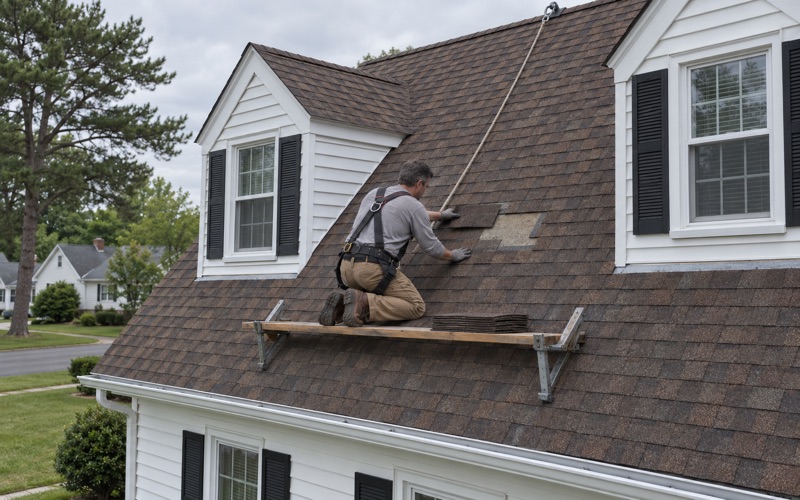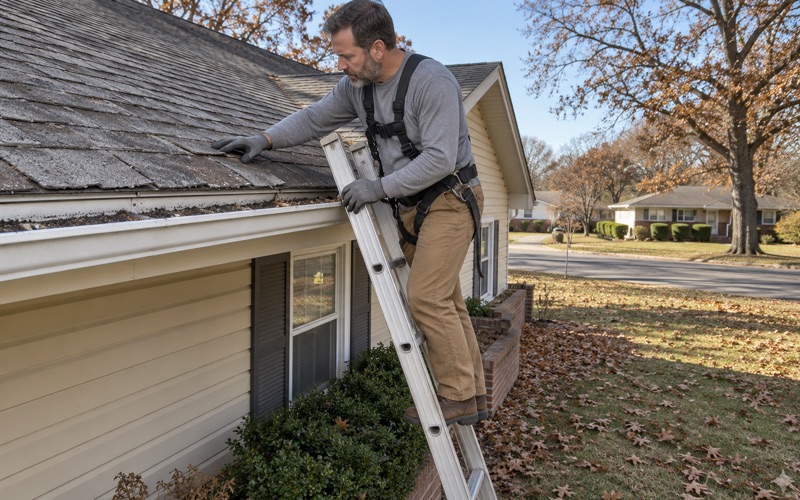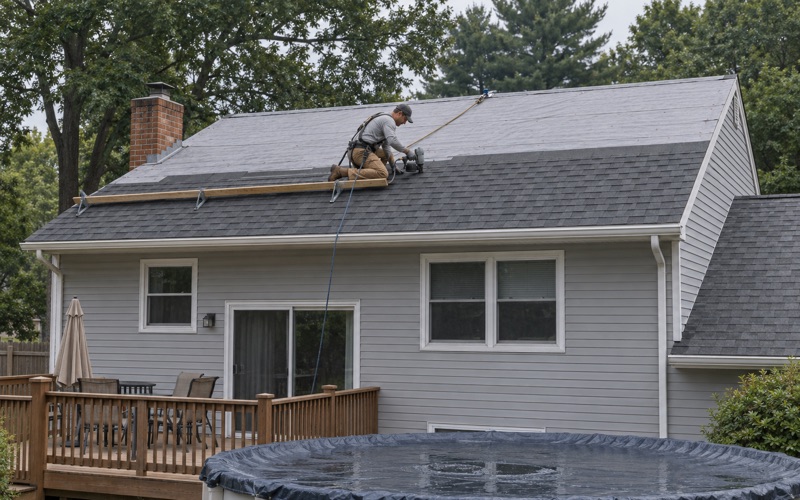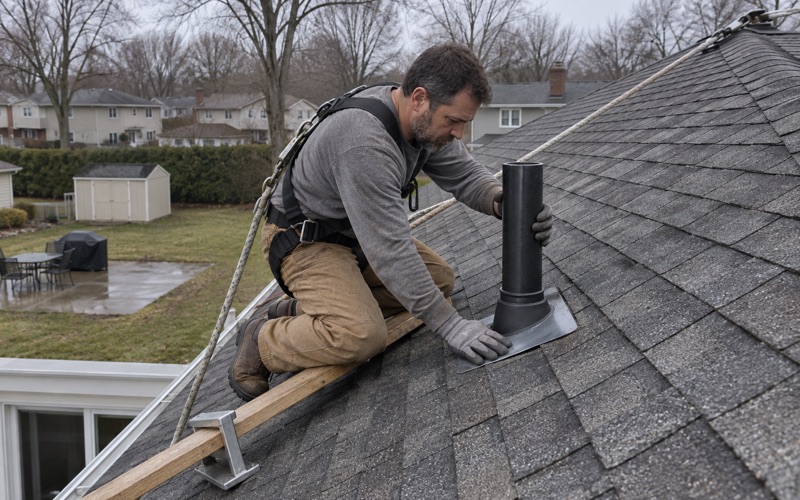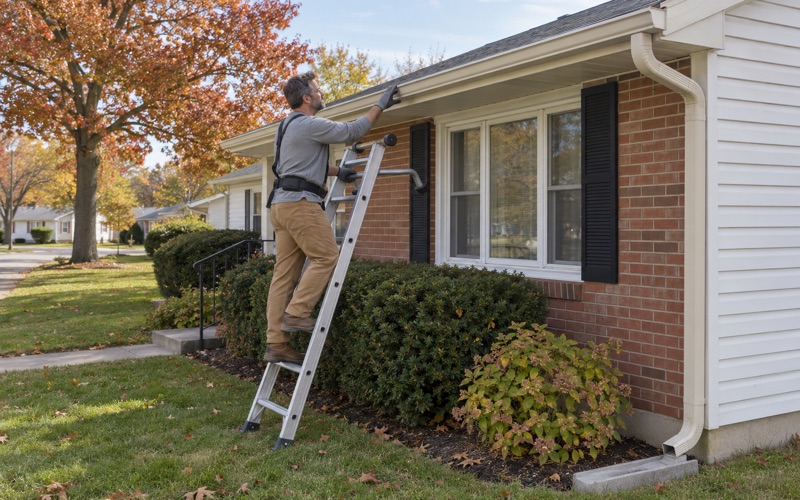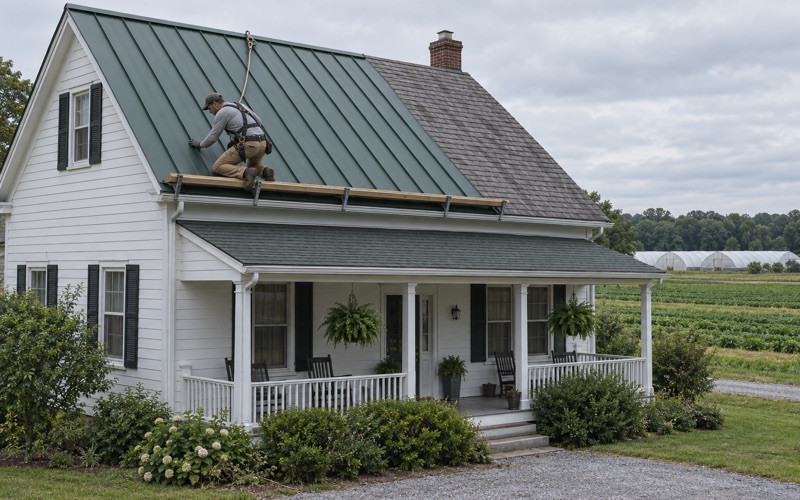
Vineland Elite Roofing has handled roofing in Millville for more than 20 years, and the work here splits cleanly in two. One half is houses: shingle roofs, flashing, gutters and the leaks that come with them. The other half is large commercial buildings, where a roof is measured in tens of thousands of square feet and the decisions run through a permit office and, often, a lease.
Both halves start the same way with us. On a leak call we go into the attic or the space under the deck as well as onto the roof, because water rarely shows up inside at the spot where it enters outside. Once we know the path, we tell you plainly whether the roof can be repaired, and that answer comes before anyone talks about a replacement.
When a full re-roof is the right call, our written scope breaks tear-off, decking, underlayment, flashing, ventilation and gutters into separate lines. That lets a building owner, a tenant or a homeowner set our number beside another contractor’s and compare one item against the same item, rather than two totals that hide different work.
Warehouse and Plant Roofs Around Millville Airport
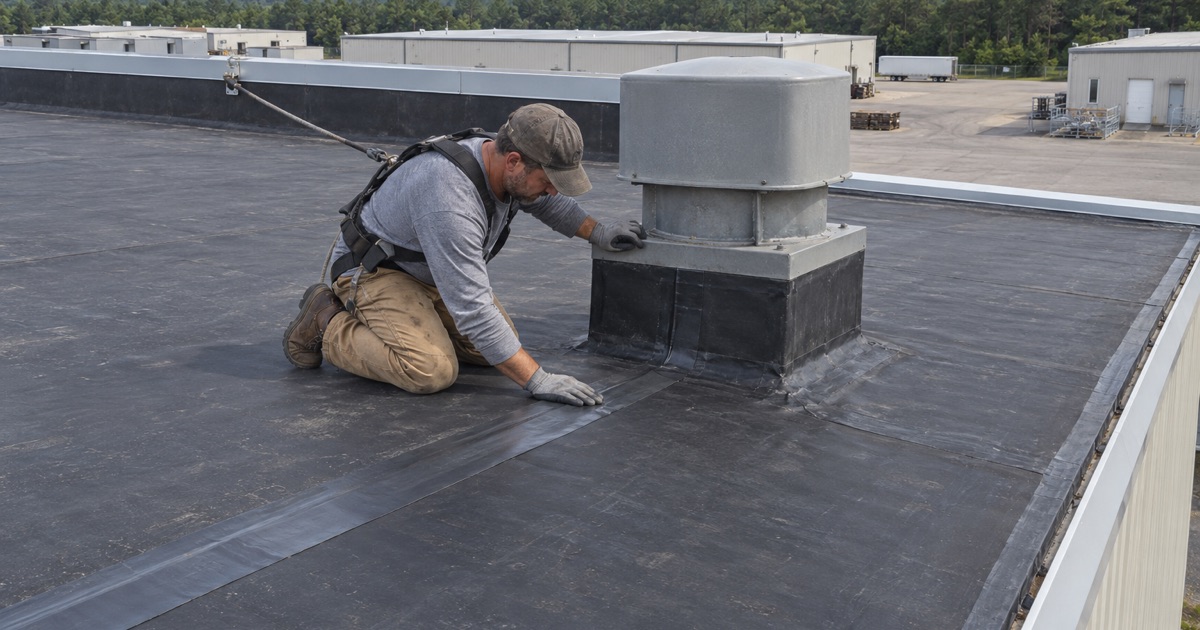
Millville carries a working stock of industrial buildings that most cities its size do not. Much of it sits at Millville Airport, which the Delaware River and Bay Authority operates, and in the Airport Commerce Center, a 300-acre industrial park the city owns just outside the airport perimeter.
The Former Dallas Airmotive Plant on Bogden Blvd
The largest single building in the public record is the former Dallas Airmotive Main Plant at 100 Bogden Blvd. An April 2023 Authority resolution leases about 66,400 square feet of warehouse and shop space there to Worldwide Turbines, which has occupied the space since 2014. Another tenant, TK Autosports, leases about 11,000 square feet at the same address.
A roof over a building like that is not a scaled-up house roof. Seams, drains, rooftop units and the edges where the roof meets a parapet wall each need their own attention, and a leak that shows up over a work bay can start well away from where it drips. We trace it from inside the building and from the roof surface before we price anything.
Numbered Warehouse Buildings at the Airport
Beyond the main plant, the Authority leases space in numbered warehouse buildings. American Wire Group holds about 23,500 square feet across buildings 7, 8 and 9, a brewery leases a small space in Warehouse #7, and a glass and door business leases about 2,000 square feet in Building 273.
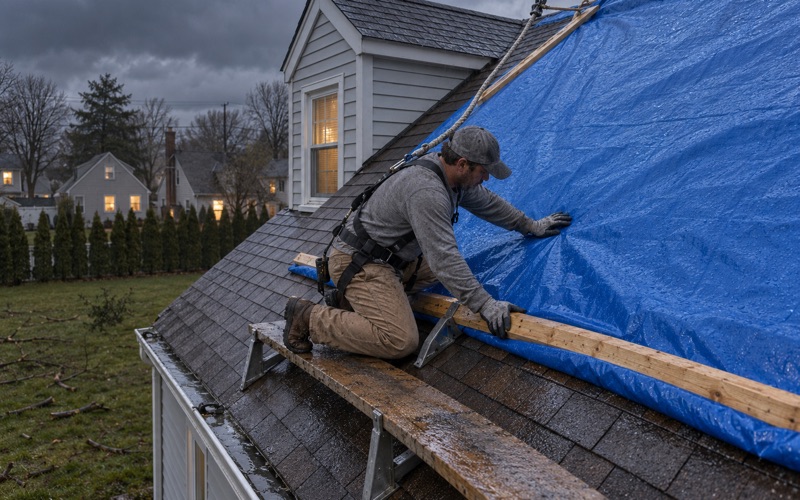
Mixed occupancy matters on a roof. One building may shelter a manufacturer on one side and a small shop on the other, and a repair that opens the roof over one has to be scheduled so the other keeps working. We plan tear-off sections, weather protection at the end of each day and cleanup with every occupant in mind, including a magnet sweep for nails across lots and loading areas.
The Airport Commerce Center
The Commerce Center holds newer industrial construction. RLS Logistics built a 56-foot-tall, 1.6 million-cubic-foot refrigerated warehouse there in 2014, and the census tract that covers the area sits inside a Federal Opportunity Zone. Not every big building in the area is new, though: the old Wheaton plant closed in the mid-1990s and still sits idle.
A tall refrigerated building puts different demands on a roof than a shop does. The roof over a cold room sees a large temperature difference between the space below and the weather above, so insulation, vapor control and the condition of the membrane all bear on whether moisture collects inside the assembly. We look at those layers, not just the surface, when we assess a roof like that.
Looking for roofing closer to Buena Vista? See Buena Vista Roofing.
Low-Slope Membrane Roofs: TPO, EPDM, Modified Bitumen and Coatings
Large commercial buildings are usually low-slope, which means the roof sheds water slowly and depends on a continuous membrane rather than overlapping shingles. Public records for the airport and Commerce Center buildings do not name what is on any of those roofs, so the first job on a commercial call is finding out what is actually there and what condition it is in.
TPO and PVC Single-Ply Membranes
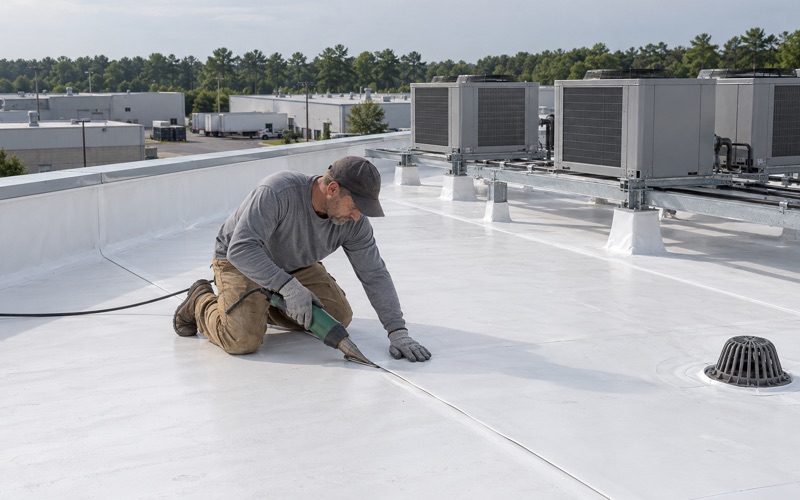
TPO and PVC are single-ply sheets with seams welded by hot air, so the seam becomes the same material as the sheet. Their light surface reflects heat, which matters on a broad warehouse roof through a South Jersey summer. On a re-cover or replacement we check seams, penetrations and terminations at walls, since those are where single-ply systems tend to open up first.
We also look at the fastening pattern and the insulation underneath. A membrane can look sound from above while the board below has taken on water, and a soft spot underfoot is often the first clue. A moisture survey or test cuts settle the question before a scope is written, so nobody pays to cover wet insulation with new sheet.
EPDM Rubber Membrane
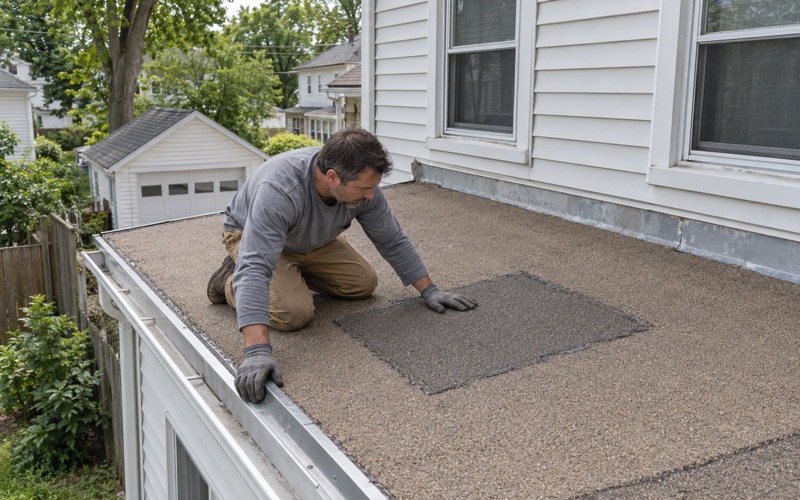
EPDM is a black synthetic rubber membrane that has covered low-slope buildings for decades. It is often repairable with patches and new seam tape when the sheet itself is still flexible. Where it has shrunk, pulled away from walls or lost adhesion at the laps, we say so and price replacement as its own option.
Rubber roofs usually fail at the details: pipe boots, curbs around rooftop units, and the flashing that runs up a parapet. When we redo a roof, those flashings are replaced rather than caulked over, because sealant on a moving joint is a short-term answer on any roof type.
Torch-Down Modified Bitumen and Roof Coatings
Torch-down SBS and APP modified bitumen roofs are built in layers, with a granulated cap sheet on top, and they stand up well to foot traffic around equipment. Coatings are a different tool: a liquid applied over a sound existing roof to extend its service life. A coating is worth discussing only when the roof underneath is dry and intact.
We give the coating question the same straight answer as any repair question. If a roof is wet or failing, a coating seals the problem in rather than solving it, and we tell an owner that before money is spent on one.
Permits and Leases: Who Signs Off and Who Owns the Roof
Two questions tend to come up on a commercial roof here before a single sheet is pulled. The first is whether the work needs a permit. The second, at the airport especially, is whose decision the roof is in the first place.
Commercial Re-Roofs Go Through the Permit Office
New Jersey’s ordinary maintenance rule, N.J.A.C. 5:23-2.7, lets owners of detached one- and two-family dwellings repair or replace roof covering without a permit. Warehouses, plants, shops and other commercial buildings fall outside that clause, so a commercial re-roof in Millville goes on the permit track.
The city code names the Bureau of Permits and Inspections at 12 South High Street as the enforcing agency, and appeals go to the county’s construction board of appeals at 164 West Broad Street in Bridgeton. We build the permit timeline into the schedule for a commercial job rather than treating it as paperwork for the end.
Leased Buildings at the Airport
Many businesses at the airport are tenants, and the Delaware River and Bay Authority is the landlord on the leases in the public record. The Worldwide Turbines lease, for example, runs one year with two five-year renewal options. Those lease terms, as read, do not say who carries roof repair, so we do not assume an answer either way.
A tenant with a leak should check their own lease and talk to the landlord before authorizing work. What we can give either party is a clear account of the problem: photographs of the damage, where the water gets in, and a written scope with each item broken out on its own line.
Documentation That Helps Either Side
Clear records settle roof questions between a tenant and a landlord faster than a phone call does. After a storm, we photograph the damage and write it up for the owner’s own insurance claim, and we will meet the adjuster on the roof when asked.
On a replacement, the old roof sometimes hides damaged decking. When we find it, we photograph it and show it to the owner before replacing it, at a per-sheet price already set in the contract. Nobody learns about added decking cost from the final invoice.
Millville Houses, From Pre-1940 Downtown to 1960s and 1970s Streets
Commercial roofs are only part of the picture. Of the city’s 12,195 housing units, 7,693 are detached houses, and owners occupy 7,597 of the 11,845 occupied homes, so residential work is a steady share of what we do here.
Older Homes Built Before 1940
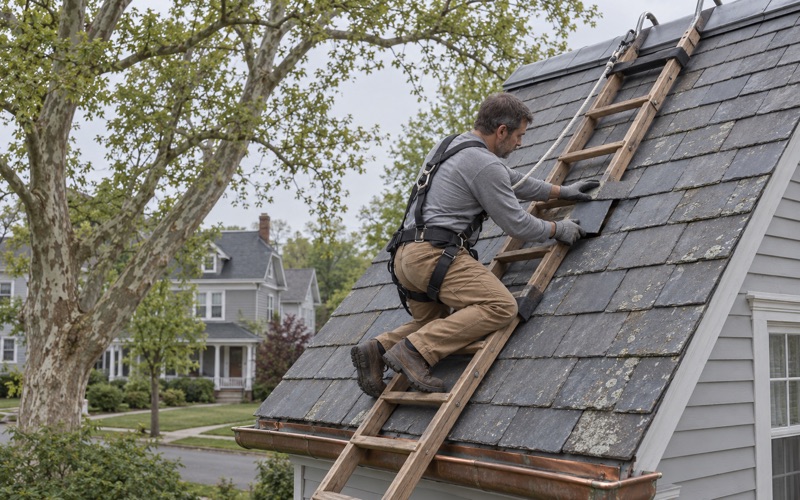
The city’s housing includes 1,902 units built in 1939 or earlier. On a house that age, the roof may be several layers deep, and the decking is often board sheathing rather than plywood. We check for both before quoting, because each changes the tear-off and the decking line on the scope.
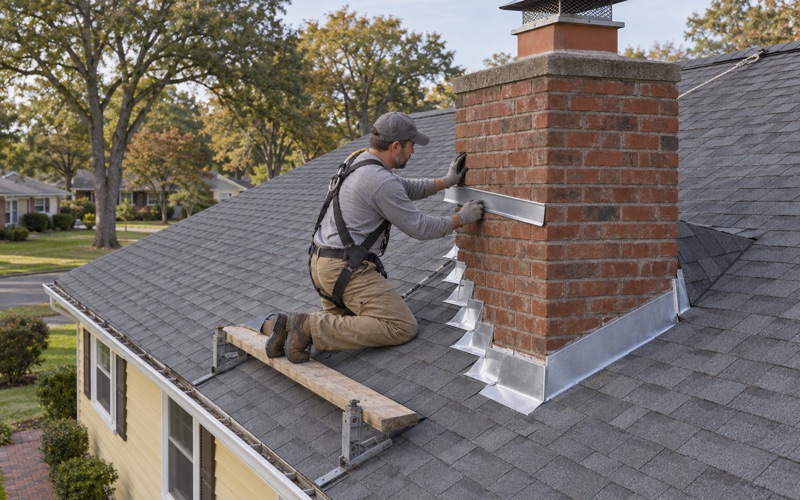
Older chimneys and wall joints are where these roofs leak most. Step flashing and counter flashing set into a reglet get replaced rather than reused, and a wide chimney usually needs a cricket to steer water around its uphill side instead of letting it pool against the brick.
1960s and 1970s Streets
The 1960s and 1970s account for 2,079 and 2,041 units, the two largest decades in the city’s housing stock. Houses from that era are often on their second or third roof, and ventilation that suited the original roof may be undersized now. We look at soffit intake and the ridge vent together, since one without the other moves little air.
Shingle choice on these houses comes down to the siding and brick already on the wall. We hold samples of architectural shingles such as GAF Timberline HDZ, Owens Corning Duration or CertainTeed Landmark against the actual house, so the color decision is made in daylight on site rather than from a brochure.
Rentals, Contracts and Solar
Renters occupy 35.9% of occupied units, so many residential calls come from landlords managing rental houses. Owner or landlord, every residential contract we write follows New Jersey’s home improvement rules, including the written contract and the three-day cancellation notice.
Houses with solar panels need the panel removal and reinstall planned into the schedule from the start. We coordinate that sequence before tear-off day, so the roof is never left open waiting on an installer while the weather turns.
- 20+ Years in Roofing
- Attic-First Leak Checks
- Line-Item Written Scopes