Vineland Elite Roofing has been in business for more than 20 years, and much of our roofing in Mantua starts with a call nobody plans to make: a limb on the house, a hole over a bedroom, water coming through a ceiling. That work runs in a set order. The house is dried in first, the damage is documented second, and the permanent repair to decking and covering comes last.
Skipping a step costs something real. A roof left open overnight lets more water into insulation and drywall, and a hole cleaned up before it is photographed leaves an owner with less to show for their own claim. A permanent repair rushed over wet decking traps the problem under new shingles, where it grows quietly until the next leak shows on a ceiling.
This page walks through that sequence the way we handle it on a damaged roof. It covers the temporary tarp, the photographs and the adjuster visit, and the rebuild of the decking and covering where a tree came through. It also marks clearly where a roofer’s role ends and the owner’s own insurance conversation begins.
The September 1, 2026 Storm and a Tree Through the Roof
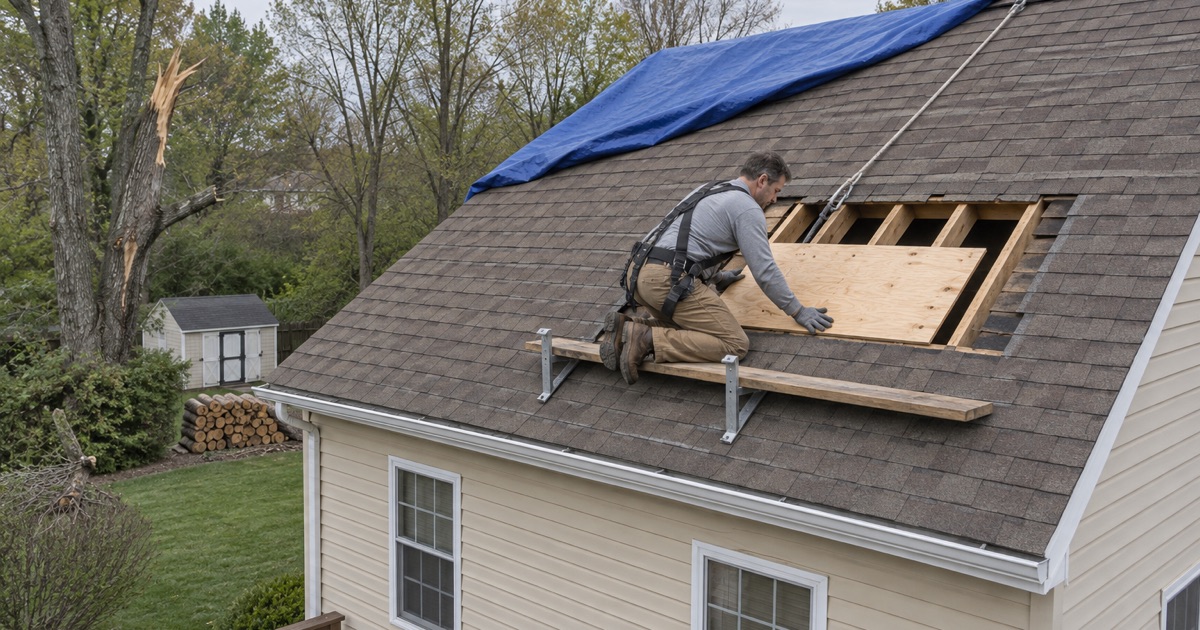
What the night left behind
On the night of September 1, 2026, storms tore through Mantua. Published reports put about a quarter of the township in the damage, with the fire department answering 75 calls and roughly 25 roads affected by downed trees and wires. More than 1,200 customers were without power the next morning, and the municipal building and the Mantua Township School District closed that day.
Bridgeton Pike and Berkeley Road were among the closures the fire department reported, along with multiple side streets. Atlantic City Electric restored power to more than 14,000 customers during the cleanup, and the Red Cross visited hard-hit families. No National Weather Service finding or wind speed was published in those reports, so we attach no cause to the night beyond what was recorded.
When a tree comes through the roof
Trees came down on houses that night, one of them trapping a resident, and on one house branches holed a bedroom roof and let in water. That last detail is a pattern a roofer knows well after a strike. The visible hole is rarely the whole story, because a limb that punctures the covering can crack the decking around it and sometimes a rafter too.
The first job is safety, not shingles. A tree resting on a roof is still loading it, and nobody should climb onto or stand under that section until the weight is off. A tree crew removes the trunk and limbs; we come in behind them to read what the strike left, from the attic as well as from above.
Why the order holds
The set order exists because each step protects the next one. A tarp stops more water from entering while the paperwork is assembled. Photographs taken before cleanup preserve what the adjuster needs to see. The permanent repair then goes onto dry, sound framing instead of over soaked wood that will keep failing long after the crew has left.
Mantua has been through this before. The National Weather Service survey of the September 1, 2021 tornado found trees snapped or uprooted near Main Street in the township. The cause that night was different, but the lesson for a roof hit by a falling tree is the same: close the opening before anything else is decided.
Looking for roofing closer to Somers Point? See Somers Point Roofing.
Drying In: Tarps and Temporary Repairs
Setting the tarp
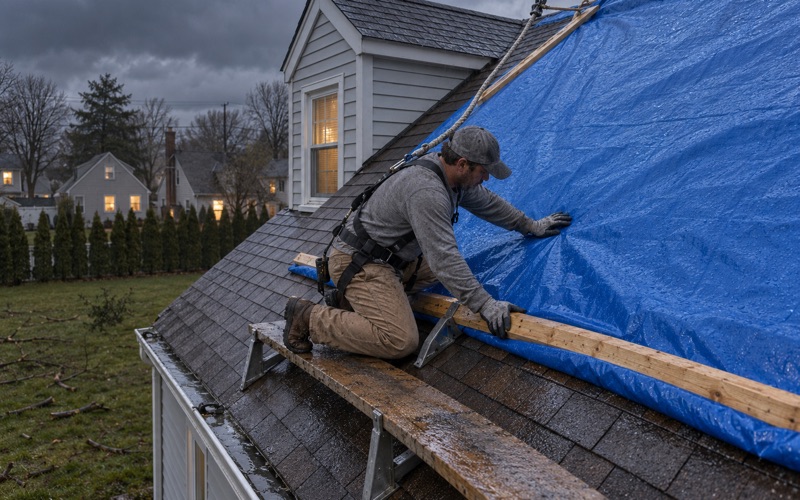
Once the limbs are off, a tarp goes over the opening and well past it, so water running down the slope has no seam to find. We fasten it to wood rather than trusting the damaged covering, carry it over the ridge where the damage allows, and keep the edges from catching wind. A loose tarp flapping on a roof can do more harm than none.
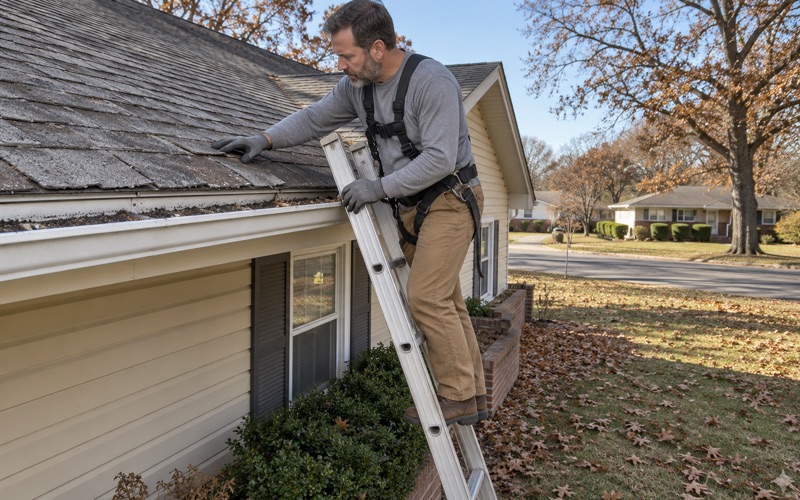
Before the tarp goes down, we look from inside the attic as well as on top. That tells us how far the water traveled, whether insulation is soaked, and whether a rafter took part of the hit. The tarp is sized to the damage the attic shows, not just to the hole visible from the yard.
Small openings and quick patches
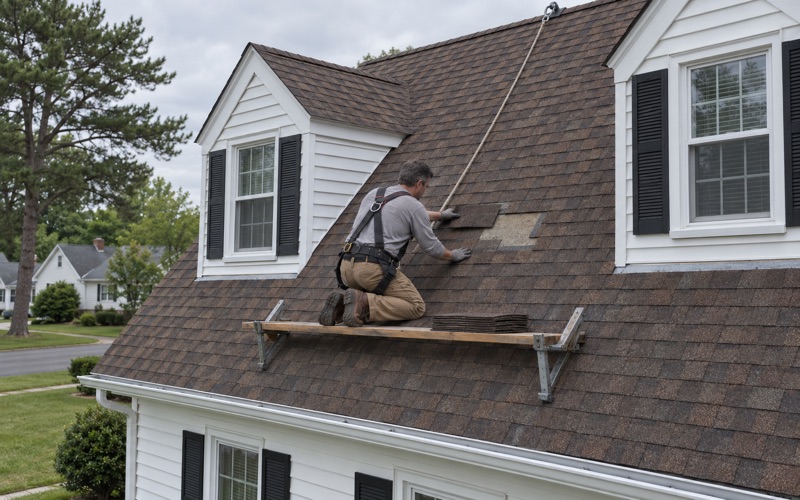
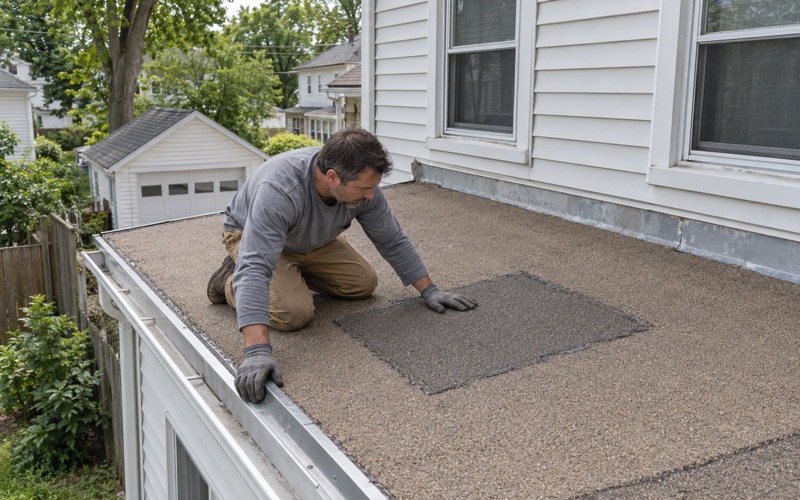
Not every strike leaves a gaping hole. Sometimes a limb drags across the slope, tearing shingles, bending drip edge and knocking pipe boots loose without breaking through. Those spots can often be sealed temporarily with patch material and loose shingles set back in place, which keeps water out while the claim is still open.
A straight answer matters here. If the damage can be repaired, we say so before replacement is ever raised, and the temporary work is planned so it does not complicate that repair. If the section is beyond patching, the owner hears that too, with the reason shown in photographs rather than stated across a driveway.
How long temporary can last
A tarp is a holding measure. Sun, wind and the next storm work at it, and the fasteners that hold it are small openings in the roof themselves. Mantua sits in National Weather Service forecast zone NJZ017 Gloucester, issued from the Mount Holly office, and a watch or warning for that zone is our cue to check a tarp’s fasteners and edges.
After the 2026 storm, one Mantua homeowner told reporters the roof should be repaired within a week or two. That is a reasonable horizon for a house that has been dried in, provided the tarp is set correctly and the photographs are already taken. The longer a temporary cover stays on, the more often it needs a look.
Photographs, the Adjuster and Who Speaks for You
What to photograph before cleanup
Document the damage before it is cleared. Wide shots of the house with the tree still on it, closer shots of where it struck, and interior photos of stained ceilings, wet insulation and soaked belongings all belong in the record. Time stamps help, and so does a short written note of when the damage was first noticed.
Keep receipts as well. Tree removal invoices, emergency work the owner paid for and any nights spent elsewhere belong with the photographs, because an owner’s claim rests on the whole record rather than the roof alone. We hand over our own invoices and write-up in a form that sits easily alongside the rest of that file.
Meeting the adjuster on site
When we inspect, we photograph the roof and attic and write up what we find for the owner’s own claim. That write-up describes the damage, the temporary work done and the repair we recommend. It is the owner’s document to submit, and when the owner asks, our crew will meet the insurance adjuster at the house to show the damage in person.
On that visit, we point out the strike, the cracked decking visible from the attic and how far the water reached, so the adjuster sees on the roof what the photographs show. Our written scopes list tear-off, decking, underlayment, flashing, ventilation and gutters as separate lines. That lets an adjuster or a second contractor compare figures item by item rather than debating a single lump sum.
Where a roofer’s role stops
In New Jersey, handling, negotiating or settling a claim on an owner’s behalf is public adjusting, governed by the Public Adjusters’ Licensing Act, N.J.S.A. 17:22B. We do not do it. Coverage, deductibles and whether a policy pays for a tree on the roof are questions between the owner and the insurer, and we make no promise about any of them.
State regulations at N.J.A.C. 11:2-17 set out the time frames insurers work within on claims, and an owner with questions about a claim’s timing should raise them with the carrier directly. What we can do is keep the roof dry, keep the paperwork accurate, and be ready to start the permanent repair once the owner is ready to go ahead.
Rebuilding Decking and Covering Under the Hole
Opening the damaged section
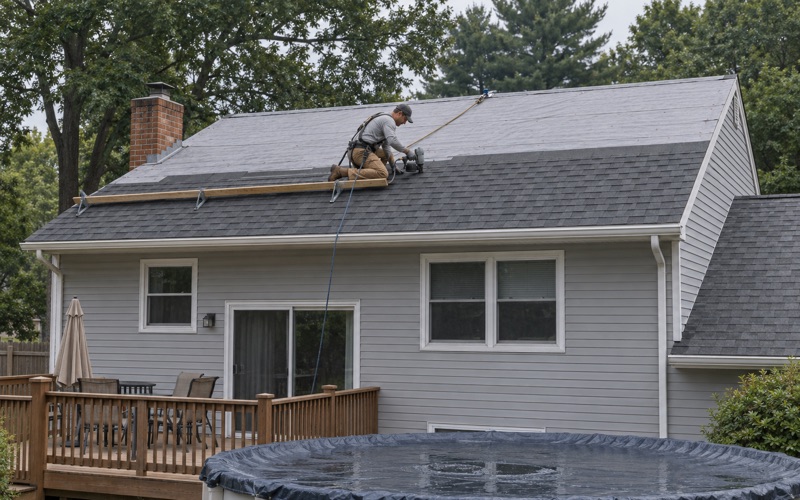
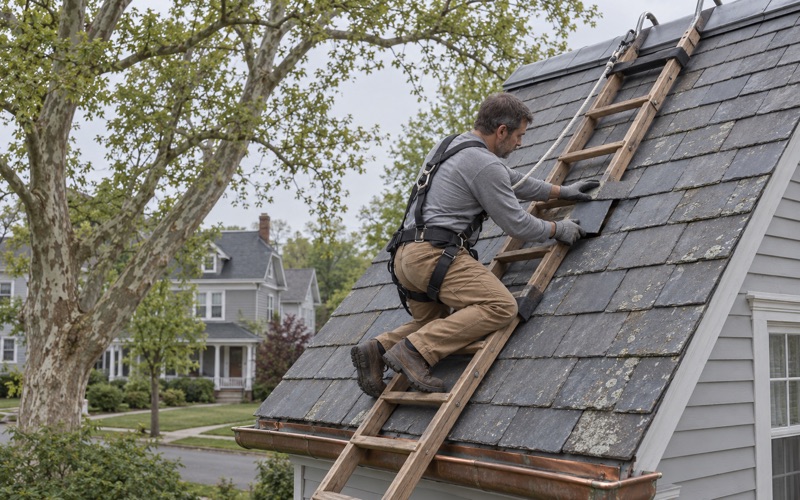
The permanent repair starts with removing the covering around the strike, well past the visible hole, until the decking shows sound edges. A limb that punctured one sheet may have cracked the sheets beside it, and only tearing back reveals how far that runs. If a rafter is split, the framing repair comes before anything else goes back on.
Damaged decking found once the old roof is off is photographed and shown to the owner before it is replaced. The price per sheet is set in the contract ahead of time, so the count found on the day changes the total in a way the owner already agreed to, rather than in a surprise conversation at the curb.
Underlayment, flashing and the new covering
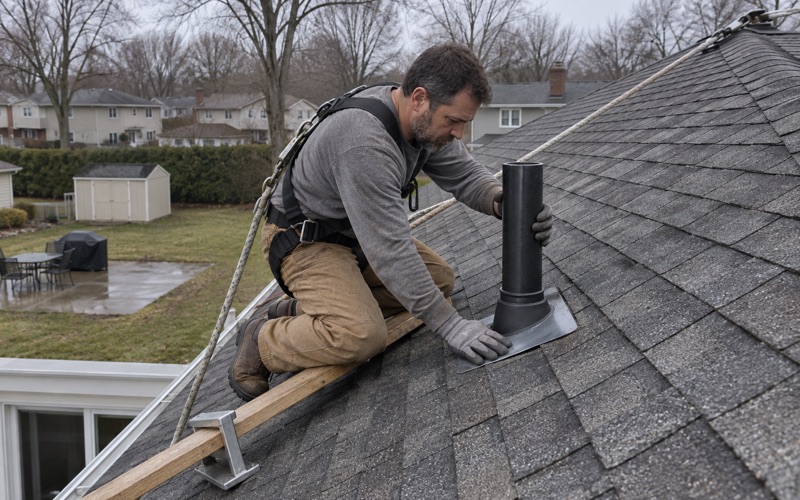
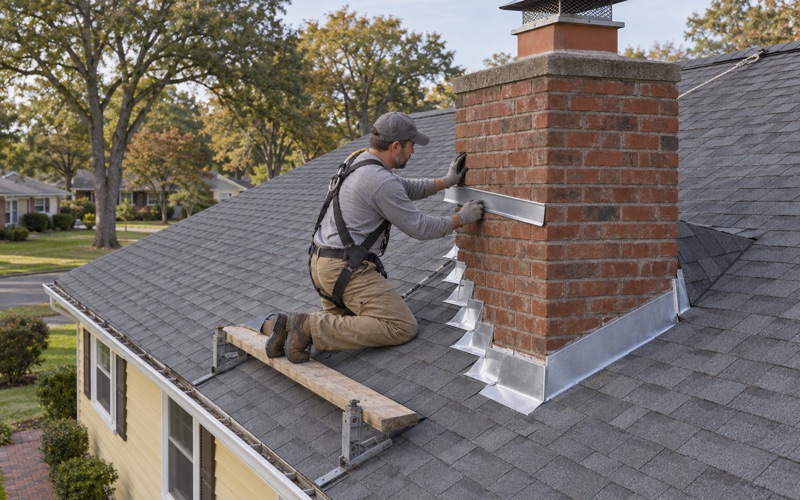
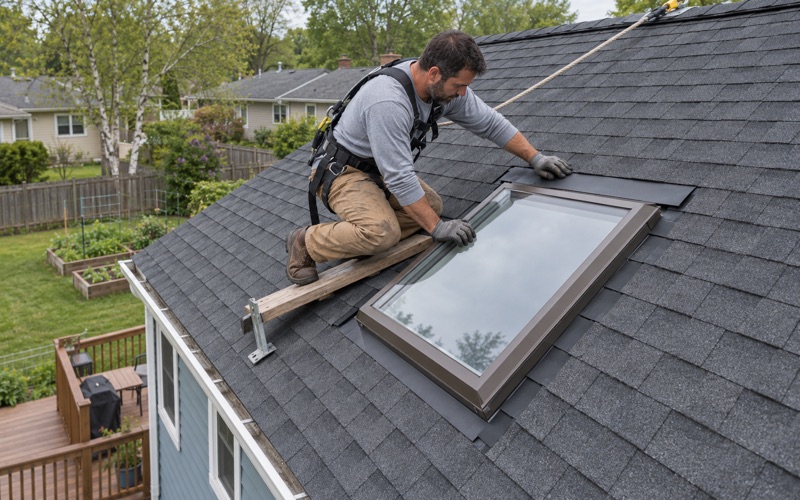
Over new decking, we lay underlayment, renew drip edge at the eaves and rakes, and replace any step flashing, counter flashing or pipe boots the tree disturbed. Flashing at walls and chimneys is replaced rather than caulked over when that section is redone. Self-adhering ice and water barrier rated to ASTM D1970 goes where the slope and valleys call for it.
Matching the new covering to the old matters on a partial repair. Shingle color is chosen against the brick, stone or siding of the house itself, with samples held up on site, and against the weathered shingles that remain. Where a clean match cannot be made, we say so and talk through the options before any material is ordered.
Permits, contracts and cleanup
Replacing roof covering on a detached one- or two-family house is ordinary maintenance in New Jersey and needs no permit under N.J.A.C. 5:23-2.7(c)1.x. Work that affects structural or fire safety is excluded by 5:23-2.7(b), so a split rafter under a tree strike is a different matter from re-covering and is planned as one.
Our contracts follow New Jersey’s home improvement rules, including the written contract and the three-day cancellation notice. At the end of each work day, the yard, driveway and gutters are cleaned, with a magnet sweep for roofing nails. That matters on a property where the owner may still be hauling storm branches to the curb.
- 20+ Years in Roofing
- Attic-First Leak Checks
- Line-Item Written Scopes