Vineland Elite Roofing has spent more than 20 years on roofing in Haddonfield and the rest of South Jersey, and much of the work on an older house comes down to what sits above it. A roof that has carried a heavy limb, or a whole trunk, needs more than new shingles. It needs someone to look at the wood underneath before anything is priced.
When a branch comes through, the visible damage is usually the smallest part of the problem. Shingles tear and gutters fold, but the load lands on the decking and the rafters that hold it. We go into the attic on every call like this, because the underside of the roof shows cracks, splits and daylight that the top surface hides.
You also get a straight answer before any talk of replacement. Plenty of tree damage is a section repair: new decking, new underlayment, matched shingles and fresh flashing where the roof was opened. When the whole roof is past saving, we will say so plainly and show you why.
The July 2023 Microburst and the Old Trees Over Haddonfield
What the borough described
On July 4, 2023, a short, slow-moving storm crossed Haddonfield. A borough spokeswoman called it a microburst, which she described as a downburst less than 2.5 miles across. About 20 roads were closed for debris, trees or wires, and trees came down on more than a half dozen streets. Roberts Avenue was described as the hardest-hit area.
The spokeswoman’s own words were that the borough had a lot of old trees that just got snapped. That line explains the whole storm better than any wind figure could. The damage that day was driven by mature trunks and limbs giving way, and by where they happened to land when they did.
Hawthorne Avenue and Roberts Avenue
On Hawthorne Avenue, off Grove Street, a tall tree fell and struck one house’s roof, its porch and both cars in the driveway. Nearby, another uprooted tree missed a house but leveled a shed and damaged a neighbor’s shed and garage. Around Roberts Avenue, garages were crushed and a large tree ended up leaning against a front porch.
We did not work on any of those properties, and we do no tree work at all. What the reports show is the pattern a roofer sees after a storm like this one. A tree that misses the house still takes out what stands near it, and a tree that connects puts its whole weight on a roof that was never framed to carry it.
Pre-1940 houses under a mature canopy
The housing stock is the other half of the story. Census estimates count 2,238 of Haddonfield’s 4,470 housing units as built in 1939 or earlier, about half of the borough, and roughly 80.8 percent of units are detached houses. Streets that have had houses on them that long have usually had trees growing beside them just as long.
That pairing changes how we think about storm risk here. On a newer street with young plantings, wind on the shingles is the main concern. Under old shade trees, the bigger question is what is hanging over the ridge, how far it reaches across the roof, and what it would hit if it let go.
Looking for roofing closer to Buena? See Roofing in Buena.
What a Falling Limb Does Under the Shingles
The shingles are the least of it
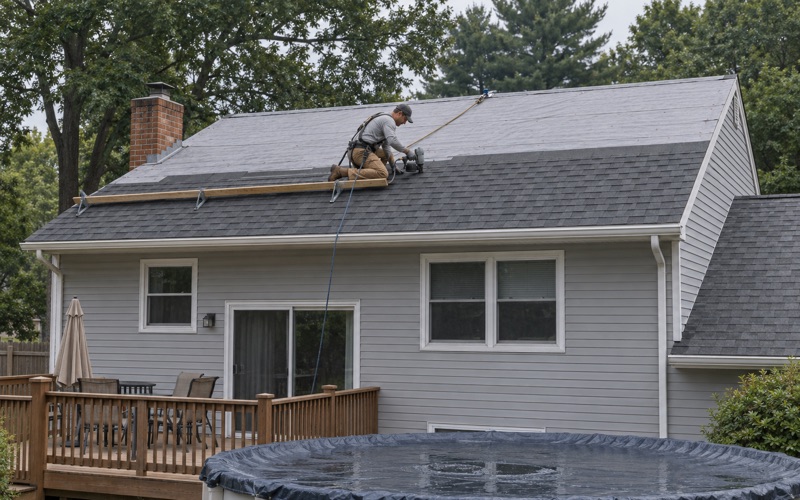
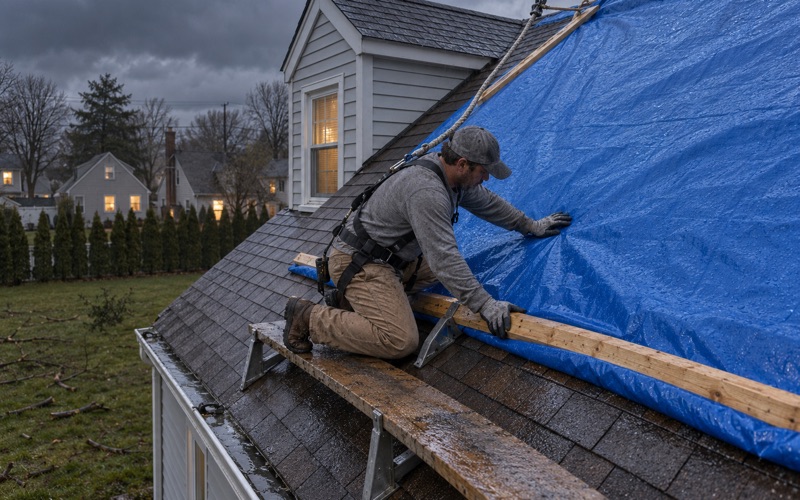
A limb that drops onto a roof can leave a surprisingly small mark on top. A few torn or creased shingles, a dented gutter, some scattered granules. It is tempting to call that a quick patch, and sometimes it is. But the impact travels down through the covering into the sheathing, and that is where we start looking.
We walk the roof first to map every point of contact, then go up into the attic to check the same areas from below. If the two views agree that only the surface was touched, the job stays small. If the attic shows anything more, the scope grows to match what we actually found, not what we guessed.
Cracked and sagging decking
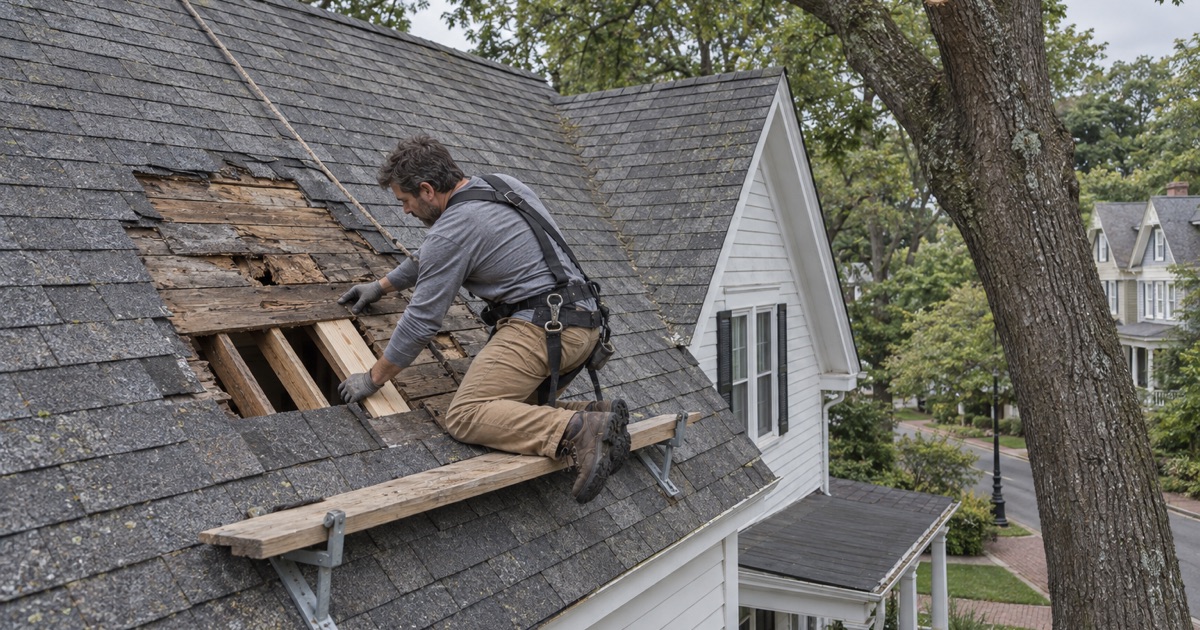
Decking takes the first real blow. A heavy limb can crack a board or a sheet straight through, punch a hole, or push a section down between rafters so the roof plane dips. From the street, a slight sag can look like nothing. From the attic, it often shows as a split line, fresh splinters or nails that have backed out.
Damaged decking cannot simply be shingled over. A cracked board will not hold nails properly, and a dip collects water where it should shed it. That section has to be cut out and replaced with sound material so the new underlayment and shingles have something solid to fasten into.
Rafters and the ridge
When a trunk rather than a branch comes down, the framing is in play. A rafter can crack, split along the grain or pull away where it meets the ridge or the wall plate. Those failures are not always obvious right away, and a roof can look intact for weeks while a cracked rafter slowly lets the plane settle.
That is why we treat the attic inspection as part of the job, not an extra. If a rafter is damaged, it gets repaired or reinforced before any new decking goes down. Putting fresh sheathing on a broken rafter only hides the problem until the next heavy snow or the next limb finds it.
Decking and Framing on a Pre-1940 House After a Strike
What an older roof deck often looks like
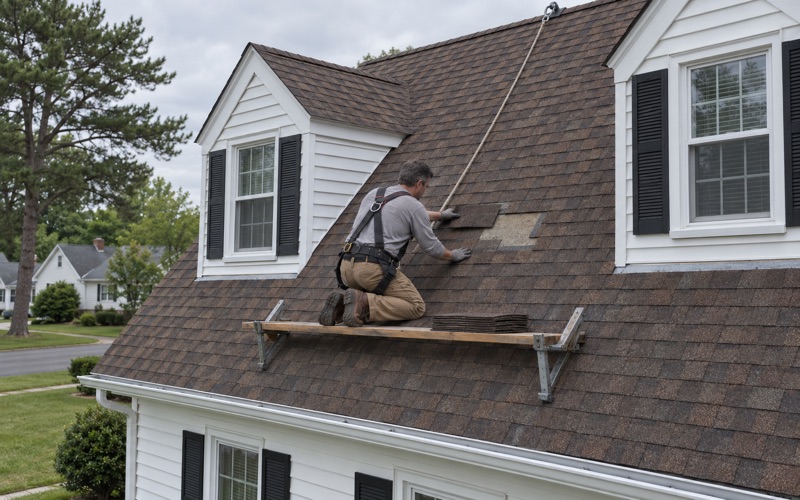
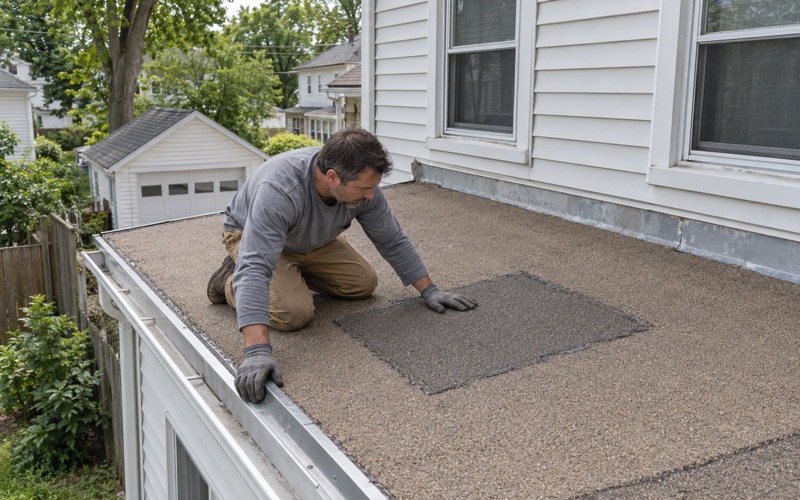
Many houses from the decades before 1940 were sheathed with boards rather than the plywood sheets used on most newer roofs. Some have been re-roofed more than once, sometimes with a newer layer over an older one. Opening a section after a tree strike is often the first time anyone has seen that original wood in years.
Because of that, we do not price the decking blind. When the old roofing comes off, any damaged decking is photographed and shown to you before it is replaced. The price per sheet is written into the contract ahead of time, so the cost of what turns up under the shingles is never a surprise negotiated on the day.
Matching the repair to the house
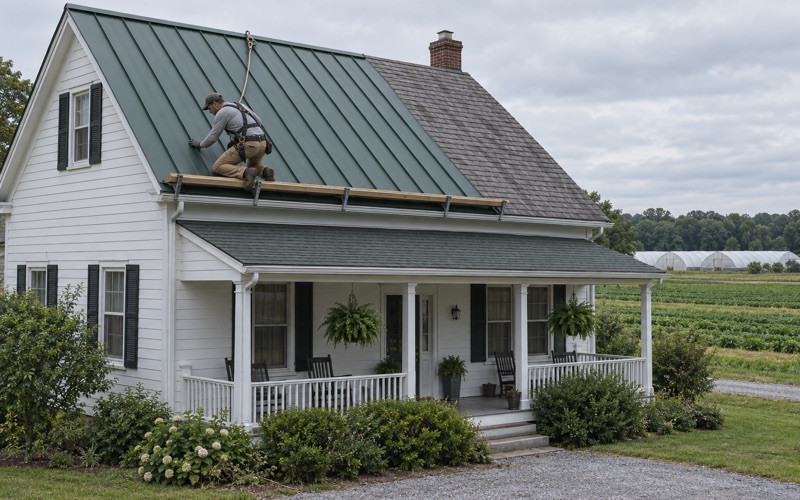
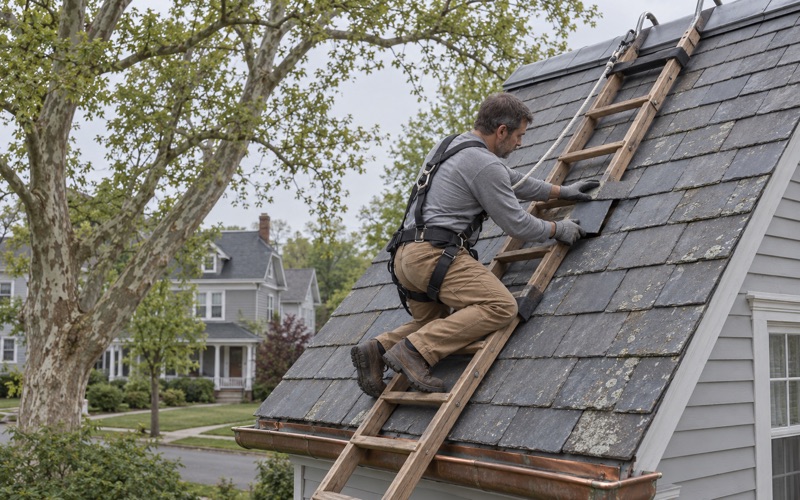
A repair on an older roof has to tie in cleanly with the roof around it. That means sound new decking at the right thickness, underlayment lapped correctly onto the existing roof, and shingles matched as closely as we can to what is already there. Where a match is not possible, we will talk you through the options before any material is ordered.
Shingle color is a real question on a house that has stood this long. If a larger section or a full roof is going on, we hold samples up against the actual brick, stone or siding on site. A color that looks right on a brochure can look wrong against old masonry, and checking it in place avoids that.
Flashing where the tree came through
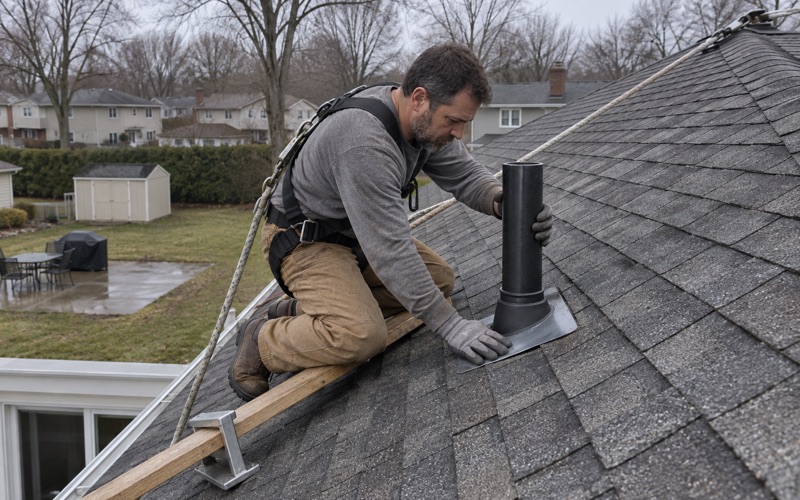
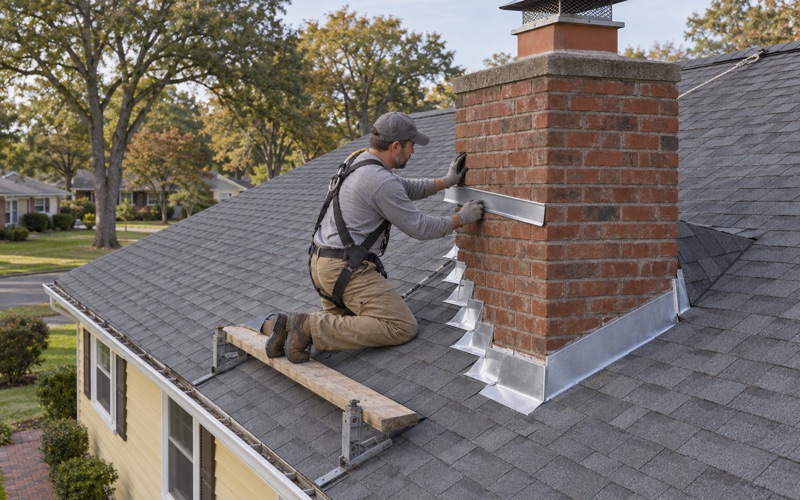
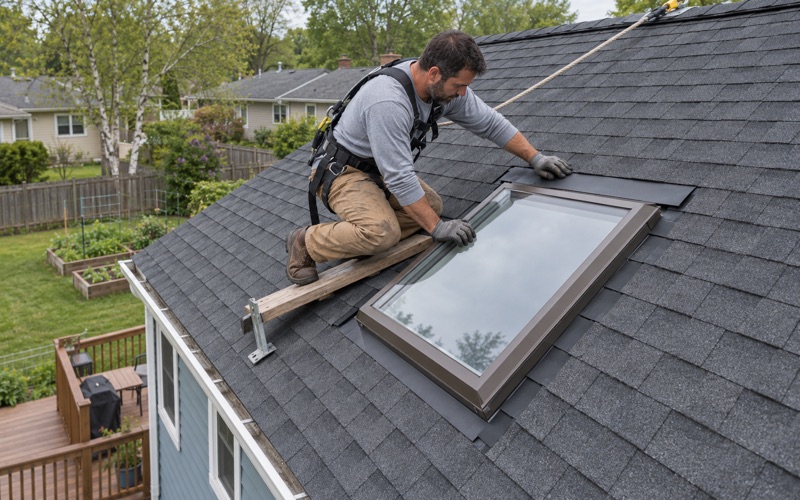
Trees tend to land near chimneys, walls and valleys, because those are the high points that catch a falling limb. When we open a roof around any of them, the flashing is replaced, not caulked over. Step flashing, counter flashing and the cricket behind a wide chimney all get the same treatment.
This matters more after a strike than at any other time. A chimney that took a hit may have shifted slightly, and old flashing that was sealed tight before the storm may now have a gap. New metal, properly lapped, is the only way to be sure the opened section stays dry.
Looking at the Limbs Over an Older Roof Before the Next Storm
What you can see from the ground
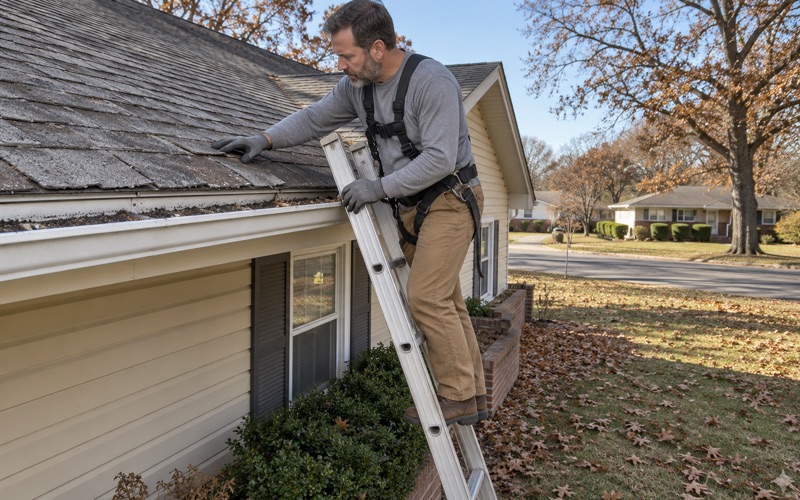
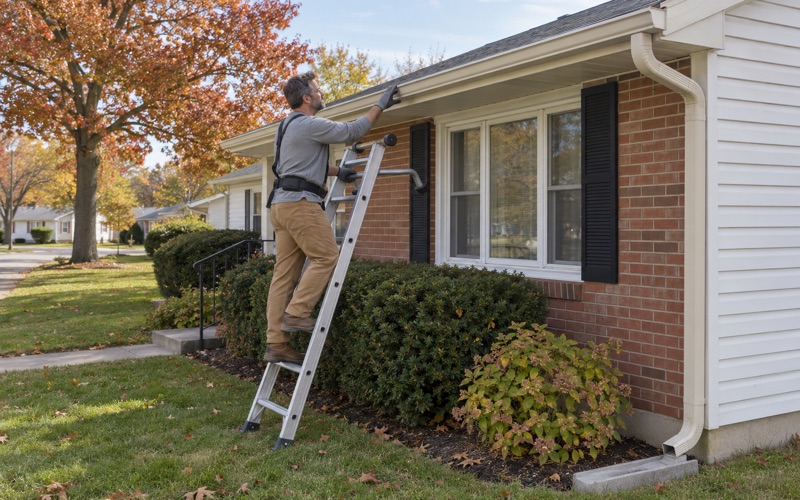
You do not need a ladder to spot the warning signs. Walk around the house and look for large limbs reaching over the ridge, dead branches with no leaves in summer, and branches resting on or rubbing against the shingles. Note anything that would land on the roof, the porch or the driveway if it fell.
Deciding what to do about the tree itself is a job for a tree professional, not a roofer. What we can do is look at the roof under those limbs and tell you whether rubbing branches have already worn through shingles, whether gutters are packed with debris, and whether any earlier impact left damage nobody caught.
What the attic tells you
The attic is the best early warning a homeowner has. On a dry day, look for daylight through the decking, water stains on boards or rafters, and any section that looks bowed. After a hard storm, check the same spots again. Fresh staining under a big overhanging limb is worth a call.
When we come out for a leak, we trace it from both sides, roof and attic, before anything is priced. Water on an older roof often enters well away from where it drips, and on a house under trees the cause can be a cracked board from a branch years ago rather than anything on the surface.
How we write it up
Whatever we find, you get a written scope with tear-off, decking, underlayment, flashing, ventilation and gutters each listed as its own line. That lets you compare our number against anyone else’s item by item. Our contracts follow New Jersey’s home improvement rules, including the written contract and the three-day cancellation notice.
At the end of each work day, the yard, driveway and gutters are cleaned, and we run a magnet over the ground for loose roofing nails. On a lot shaded by old trees, debris from the roof mixes with leaves and twigs fast, so that daily sweep keeps the property usable while the work is under way.
- 20+ Years in Roofing
- Attic-First Leak Checks
- Line-Item Written Scopes