Vineland Elite Roofing has spent more than 20 years on roofing in Franklinville and the rest of Franklin Township, and the older houses here have taught us where to look first. On a roof that has been patched, extended and re-shingled over several generations, trouble usually starts where one surface meets another, not out in the open field of shingles.
That is why our inspections here begin at the joints: where a porch roof meets the house wall, where a chimney comes through, and where an added wing ties into the original roof. Every leak visit also includes time in the attic, so we can follow the stain back to the spot where water actually gets in before we put a number on anything.
You will hear from us first whether the roof can be repaired. Replacement only comes up when a repair would not hold, and when it does, the written scope breaks the job into separate lines so you can lay our estimate beside anyone else’s and compare the two item by item.
Roofs on Franklinville’s Older Village Houses
How Old the Housing Runs
Franklinville’s houses are older than a drive past the newer streets on its edges might suggest. Census figures for the community (ACS 2024 five-year estimates) count 264 of its 827 housing units as built before 1960, which is 31.9%, and 88 of those date to 1939 or earlier.
Another 153 went up in the 1950s alone. A house of that age has likely carried more than one roof, and each round of work left its own decisions at the edges, valleys and penetrations. The next roofer has to read those decisions before changing anything, or the same leak comes back under brand-new shingles.
The Village Around the Five-Way Junction
The oldest part of the community sits around its town center, where Route 47, known locally as Delsea Drive, meets County Route 538 and County Route 613 at a five-way junction. Historic buildings mix with later ones there, including the Franklinville Inn, which was historically the Franklin House Hotel.
The place was once called Little Ease, and Franklin Township itself was incorporated on January 27, 1820. Franklinville was counted as its own census-designated place for the first time in the 2020 census, which recorded 1,927 residents, and its ZIP code, 08322, is also the township’s mailing address.
What That Age Means on the Roof
Older village houses tend to carry details that a later tract house does not: a porch roof tied into the main wall, a masonry chimney, a wing added in a different decade. No survey of the community’s roofs exists, so we will not pretend each house here has all three.
Where those details do exist, they are the joints that were flashed by hand, often by different crews years apart. They are also the places we find most of the leaks on older roofs, which is why they get our attention before the shingles do.
Looking for roofing closer to Victory Lakes? See Victory Lakes Roofing.
Porch Roofs, Chimneys and Added Wings
Porch Roof Tie-Ins
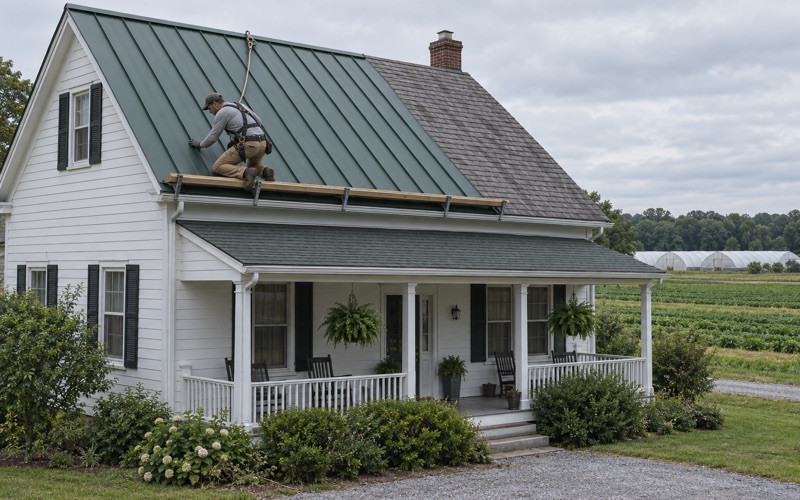
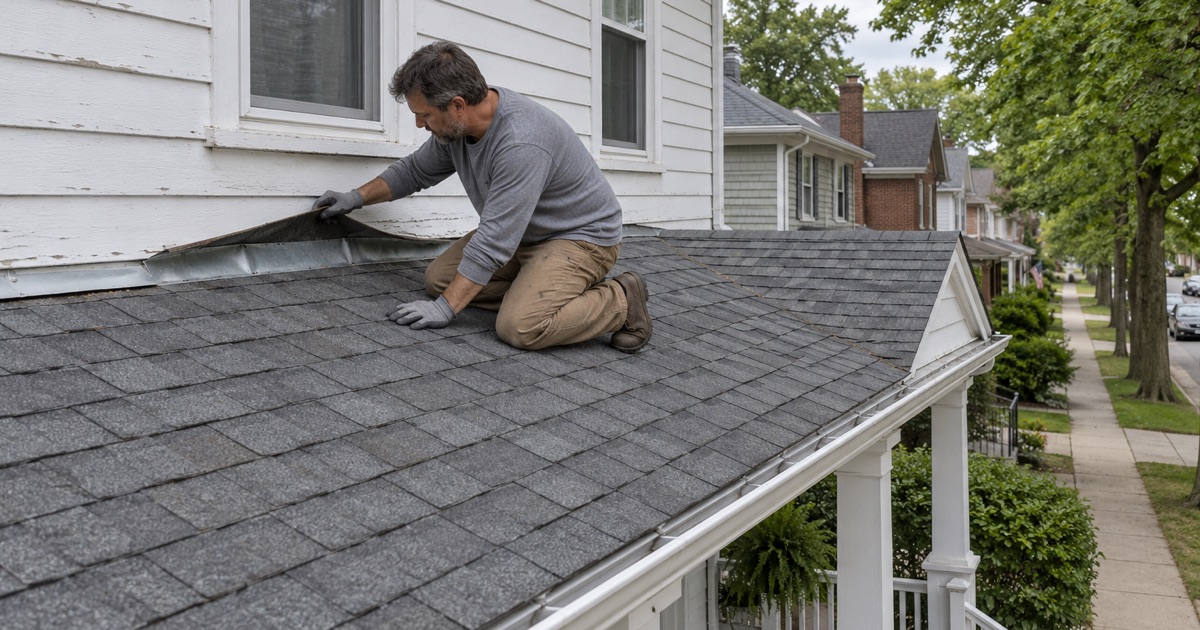
A porch roof usually runs at a lower pitch than the main roof and dies into the house wall instead of meeting another roof at a ridge. The seal along that wall depends on step flashing woven into each shingle course, with counter flashing above it that sheds water over the top of the steps.
On an older house that wall may have been re-sided once or twice since the porch was built. When siding goes on over old flashing, or the flashing gets cut back to fit new trim, the porch ceiling is often where the first stain shows up, well away from the actual gap.
Masonry Chimneys
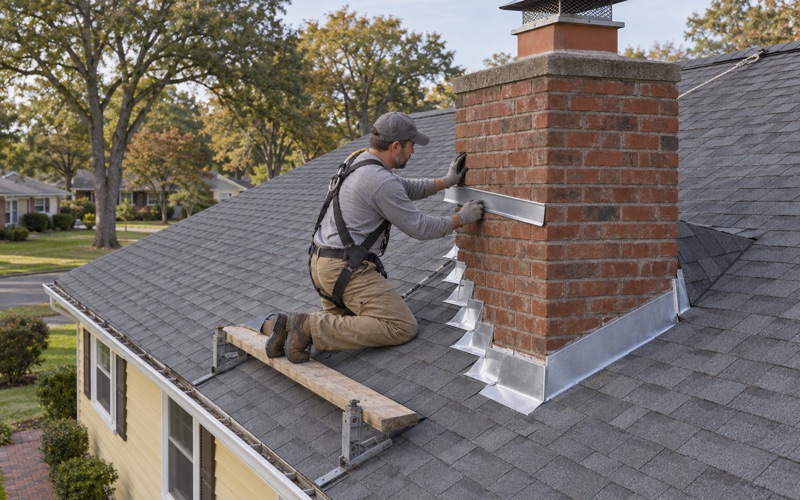
A chimney is the largest single penetration on most roofs, and on an older house it often predates every shingle around it. The flashing at its base is a two-part system: step flashing under the shingles along the sides, and counter flashing set into the mortar joints or a cut reglet so the brick sheds water onto the metal.
Where a chimney sits below the ridge and is wide enough to dam water, a cricket, also called a saddle, splits the flow around its upslope side. If the chimney was rebuilt or repointed at some point, the counter flashing can end up loose in fresh mortar or held only by a bead of caulk, and either one opens over time.
Wings Added at Different Pitches
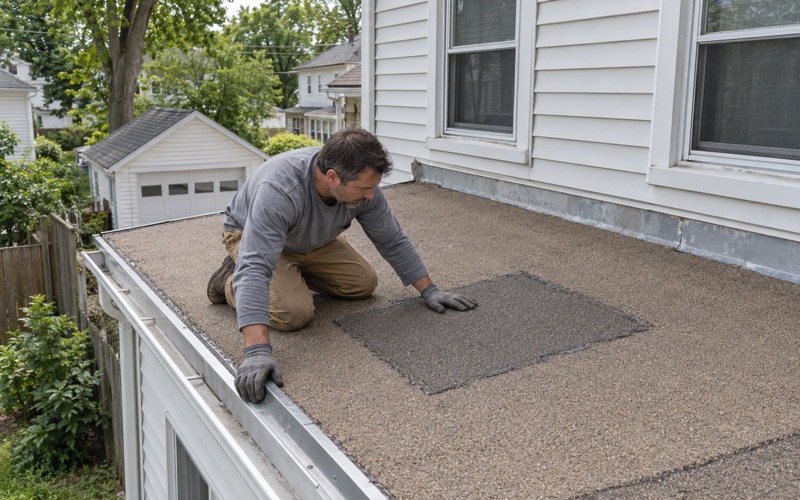
Additions on older houses were rarely built to match the original roof exactly. A kitchen wing or rear bedroom may sit at a shallower pitch, meet the main roof in a valley, or butt against a gable wall, and each of those joints is a place where two building eras overlap.
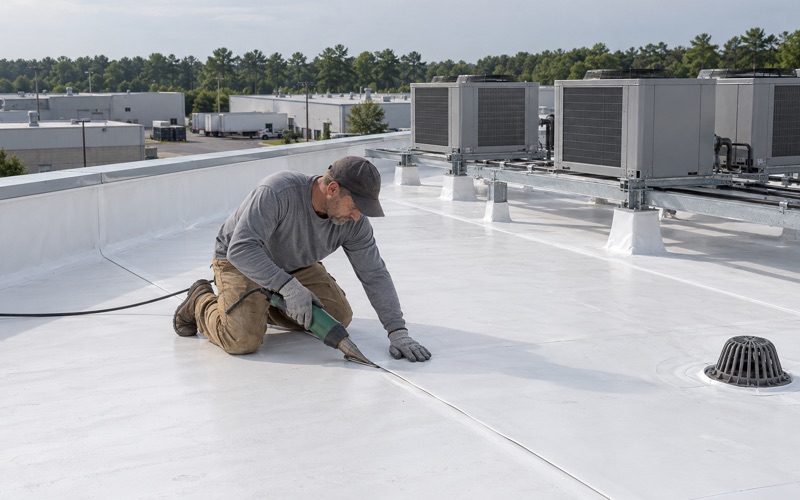
A shallow addition roof can fall below the slope shingles are made for. There, a low-slope membrane such as EPDM rubber or a torch-down modified bitumen system may serve better than another layer of shingles, and we tell you which one the pitch calls for rather than shingling everything to look uniform.
Finding the Leak at a Flashing Joint
Starting in the Attic
Water on an older house rarely comes through where the ceiling stain appears. It runs along a rafter, a top plate or the back of a sheathing board before it drips, so a stain in a front bedroom can trace back to a chimney several feet upslope.
That is why every leak call we take includes a look from inside the attic along with the roof itself. Dark streaks on the wood, rusted nail tips and dampness around a penetration point to the joint that is failing, so we know where to open the roof before we open it.
Reading the Flashing Itself
On the roof, we check whether the step flashing is still lapped correctly under each course, whether the counter flashing is still set in the masonry, and whether a kick-out flashing sits at the bottom of each wall run. Without a kick-out, water from a porch or wing roof can empty straight into the wall behind the gutter.
Old repairs tell their own story. Layers of roofing cement smeared over a chimney base, caulk run along a wall line, or a strip of metal face-nailed over the shingles all mark spots where a previous fix covered the problem without correcting it.
Repair or Replace
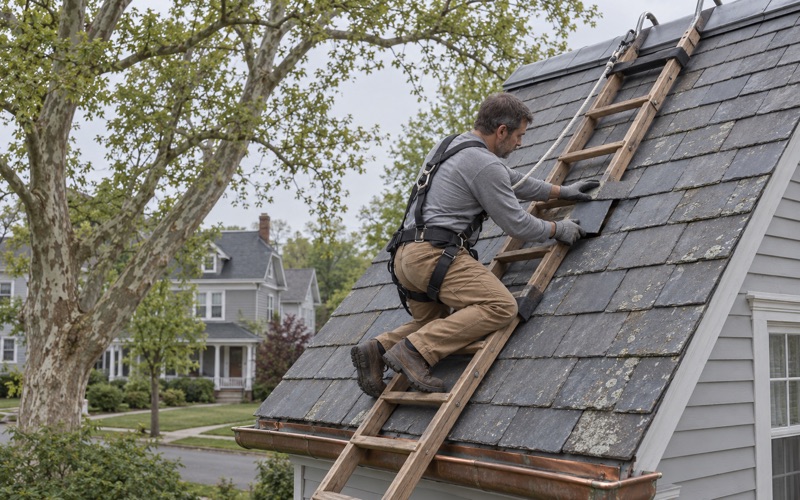
Many flashing leaks can be fixed without touching the rest of the roof, and when that is the case we say so first. Rebuilding the step and counter flashing on one chimney or along one porch wall is a contained job, and on a roof with life left in the shingles it is usually the right call.
When the shingles around the joint are worn out too, patching the flashing alone only buys time. In that case we explain why, show you what we found in the attic and on the roof, and walk through a replacement scope before you decide anything.
Re-Roofing Older and Newer Franklinville Houses
Flashing Is Replaced, Not Reused
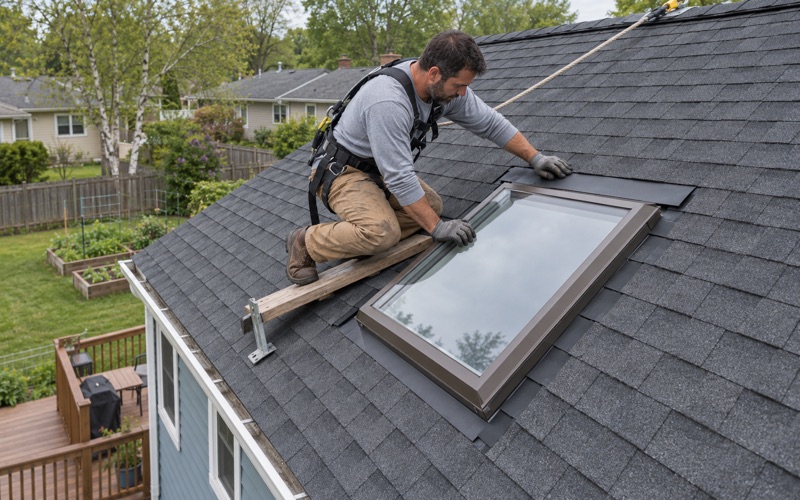
When we redo a roof in Franklinville, the flashing at chimneys, walls, skylights and every point where two roofs meet is replaced with new metal. We do not caulk over old step flashing and shingle around it, because that joint would then be the oldest part of a new roof.
Our written scope lists tear-off, decking, underlayment, flashing, ventilation and gutters as separate lines. That makes it plain what each part of the job costs, and it lets you check whether another estimate actually includes the same work or quietly leaves part of it out.
Underlayment, Edges and Color
Along the eaves, in valleys and around chimneys we lay a self-adhering ice and water barrier that meets ASTM D1970, with synthetic underlayment rated to ASTM D8257 across the rest of the roof. New drip edge goes on at the eaves and rakes, and the ridge vent is matched to soffit intake so the attic actually moves air.
Shingle color on a village house has to sit right against old brick, painted clapboard or stone. We hold samples of architectural shingles such as GAF Timberline HDZ, Owens Corning Duration or CertainTeed Landmark up against the house itself, in daylight, rather than choosing from a printed swatch.
Permits, Contracts and the Work Day
In New Jersey, re-roofing a detached one- or two-family house is classed as ordinary maintenance under N.J.A.C. 5:23-2.7. Work outside that rule goes through Franklin Township’s construction code office, and we sort out which applies to your house before the job is scheduled.
Our contracts follow the state’s home improvement rules, including the written contract and the three-day cancellation notice. At the end of each work day we clean the yard, driveway and gutters and run a magnet across the ground for loose roofing nails.
Newer Houses on the Edges
Not every Franklinville house is a village house. The census counts 210 units built in the 1970s and 110 in the 1980s, and those later roofs tend to be simpler planes with fewer of the hand-flashed joints described above.
They still wear out, and they still have pipe boots, vents and sometimes a chimney to flash. The same attic-first inspection and the same itemized scope apply, and if solar panels sit on the roof, their removal and reinstall go into the schedule from the start instead of being discovered on the day.
If water is showing up near a chimney, along a porch wall or where an addition meets the house, call us before the next storm. We will find the joint that is letting it in and tell you plainly whether it needs a repair or a new roof.
- 20+ Years in Roofing
- Attic-First Leak Checks
- Line-Item Written Scopes