Vineland Elite Roofing brings more than 20 years of roofing work to Franklin Township, and the first question we ask about a house here is what lies upwind of it. A roof looking out over open field takes wind differently from one tucked inside a wooded lot or a row of neighbors. That one difference shapes how we fasten the roof, how we finish its edges and which shingle we put in front of you.
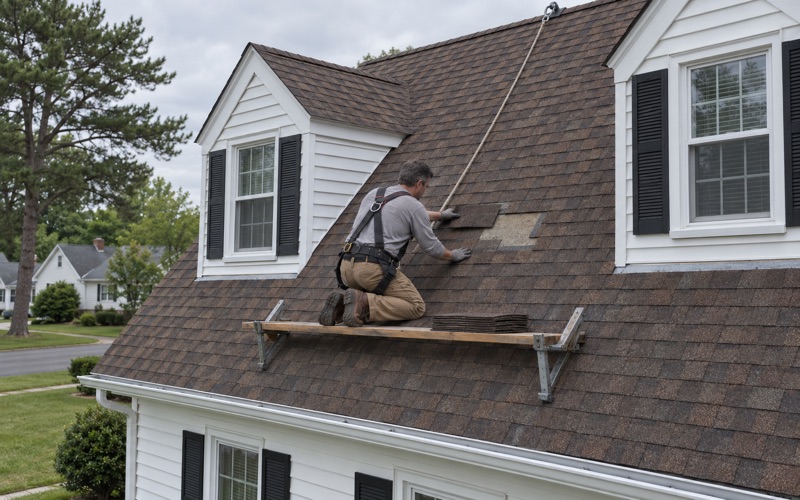
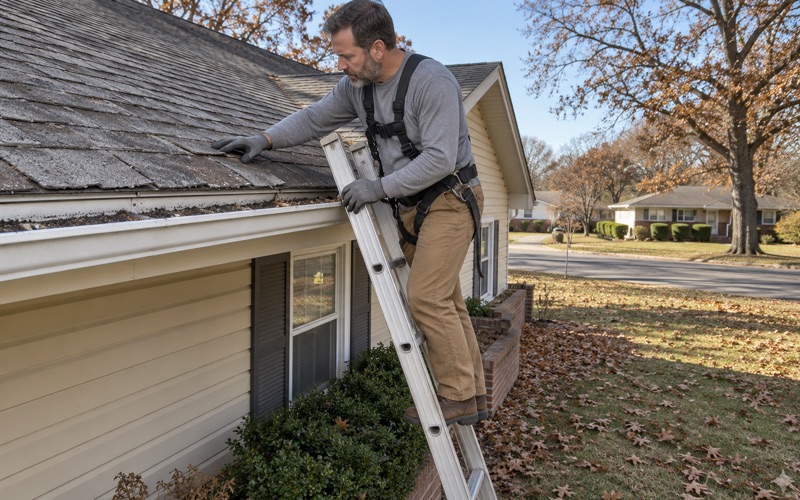
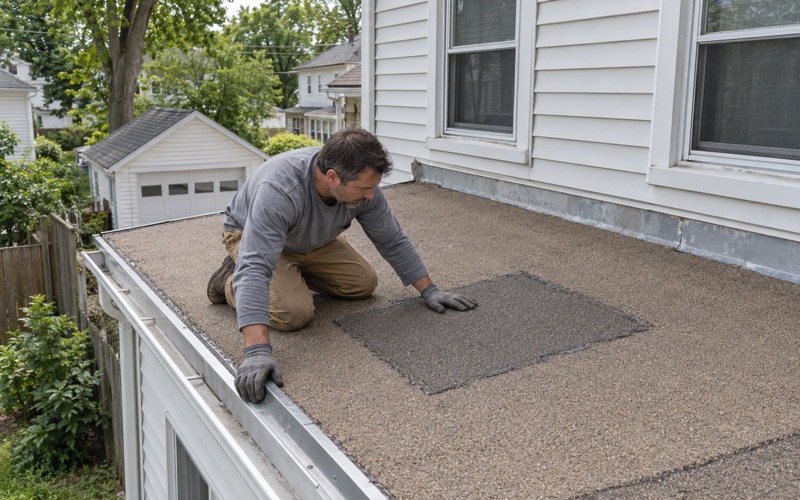
Every visit starts with an honest read of the roof you already have. When there is a leak, we go into the attic as well as up on the shingles, so the water is followed back to the spot where it actually gets in before a price is written. If a repair will hold, we tell you that plainly, and replacement only comes up when the roof has genuinely run out of life.
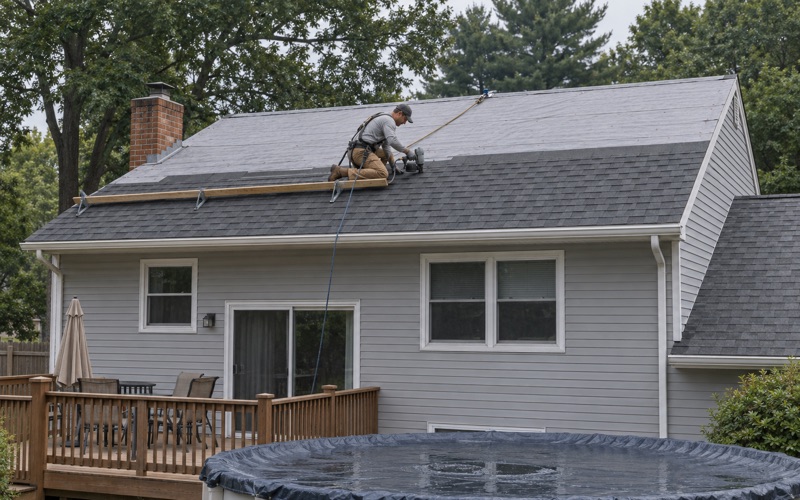
When a new roof is the right call, the estimate breaks the job apart. Tear-off, decking, underlayment, flashing, ventilation and gutters each get their own line, so you can set our number beside anyone else’s and compare item by item. The contract follows New Jersey’s home improvement rules, written out in full and carrying the three-day cancellation notice.
Franklin Township’s Open Farmland and Its Wind
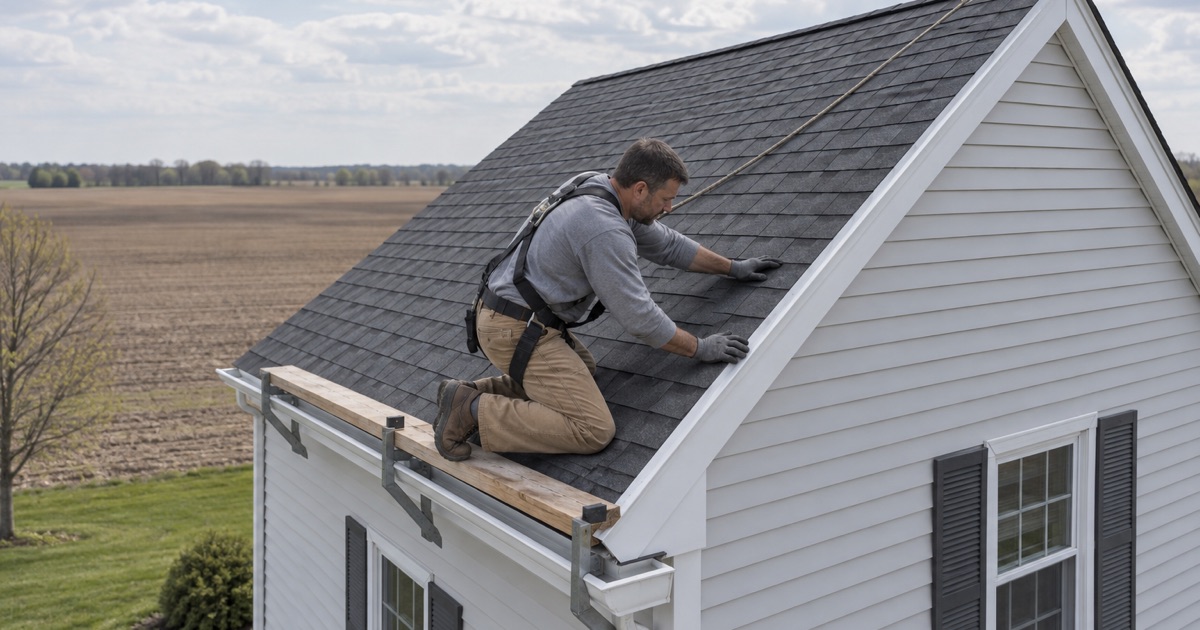
A township that keeps its fields open
Franklin Township covers 55.83 square miles of land in Gloucester County, and a large share of it is still worked ground. By November 2022 the township had preserved or helped preserve about 3,245 acres of farmland, according to Resolution R-197-22. In September 2025 it added the 135-acre Martorana farm, which Resolution R-159-25 describes as the largest single farm ever preserved through its municipal program.
Preserved land stays open by design, which is the point of the program and also the reason it matters to a roofer. Those fields will not fill in with houses and tree lines over the life of a new roof. A home that faces open acreage today will most likely still face it when that roof is due again, so the wind it sees now is the wind the next roof has to be built for.
Why open ground matters to a roof
Wind slows down as it drags across houses, woods and fences. Across a flat field there is very little to slow it, so it reaches the first house on the far side with more of its speed intact. The roof covering on that house, especially along its edges and at the ridge, carries more of that push and pull than a roof sitting deeper in a neighborhood.
That is why we look past the house itself when we size up a Franklin roof. Around Malaga, Iona, Porchtown and the open country between them, one property can back onto a cornfield while another a short drive away sits under mature oaks. Both may want the same shingle color, but they are not the same wind job.
Sheltered lots and exposed lots side by side
Of the township’s 6,057 housing units, 5,607 are detached houses, according to the Census Bureau’s 2024 five-year estimates. Detached homes spread across open land are exactly the setting where exposure varies from one address to the next. A house in a cluster of homes off Route 47 can have shelter on every side, while a farmhouse-style lot nearby has fields running off to the horizon.
We do not assume either case. We walk the property, note which sides face open ground and which face buildings or woods, and look at the direction storms tend to arrive from. That read goes into the written scope, so you can see why one edge or slope gets more attention than another.
Looking for roofing closer to Laurel Lake? See Roofing in Laurel Lake.
How Terrain Changes the Wind Load on a Roof
Surface roughness in the residential code
The International Residential Code does not treat wind as a single number. It sizes the wind load on a roof covering by wind speed and also by exposure, meaning the roughness of the ground upwind. Surface Roughness B covers urban and suburban areas, wooded areas and other ground with numerous closely spaced obstructions the size of a single-family house or larger.
Surface Roughness C is open terrain with scattered obstructions generally under 30 feet tall, which the code says includes flat, open country and grasslands. That description reads a lot like the view from many Franklin Township back porches. A home with a few scattered outbuildings and long open fields upwind fits the C description far better than the B one.
Where Exposure B stops and Exposure C begins
The 2015 code, as presented in Connecticut state training material from May 2018, applies Exposure B only where roughness B prevails upwind for at least 1,500 feet, for houses with a mean roof height up to 30 feet. Exposure C applies wherever Exposures B and D do not. In practice, a house needs a long stretch of rough, built-up or wooded ground upwind to count as sheltered.
That is why we never treat every Franklin house as Exposure C. Exposure depends on the actual terrain upwind of each home, and the township does not publish a single design wind speed. A house in the middle of a subdivision may fall squarely in Exposure B, while one at the edge of that same subdivision, facing open field, may not.
What the height factors show
The same training material lists the Table R301.2(3) adjustment factors for Exposure C at 1.21 for a 15-foot roof height, 1.29 at 20 feet, 1.35 at 25 feet and 1.40 at 30 feet, against 1.00 for Exposure B. For a dwelling with a 30-foot mean roof height, it states that Exposure C loads are 40 percent higher than Exposure B.
Those are code factors from training on the 2015 edition, not a measurement taken on any Franklin roof and not a quote from New Jersey’s adopted code. We use them to explain the direction and rough scale of the difference. The practical lesson is simple: an exposed house deserves more care at the places where wind pulls hardest on a roof.
Edges, Ridges and Fastening for Open-Country Wind
Eaves and rakes take the first hit
The code ties component loads on a roof covering to location on the dwelling, along with wind speed, exposure, roof height, pitch and effective wind area. Edges and corners are where shingles tend to lift first. On an exposed Franklin house we pay close attention to drip edge at the eaves and rakes, a properly set starter course and sealed first rows.
We also look at the rakes on gable ends that face open ground, since wind coming across a field can get under a loose edge and peel back several courses at once. A tight rake edge costs little at installation and saves a great deal of trouble after a hard storm. It is one of the lines you will see itemized in our written scope.
Ridges and ridge vents
The ridge is the other high-stress line on a roof, and it is also where many homes vent their attics. A ridge vent paired with soffit intake keeps the attic moving air, but the vent and its cap shingles have to be fastened to stand up to the wind the house actually sees. We size the net free area to the attic and pick a ridge product suited to an open site.
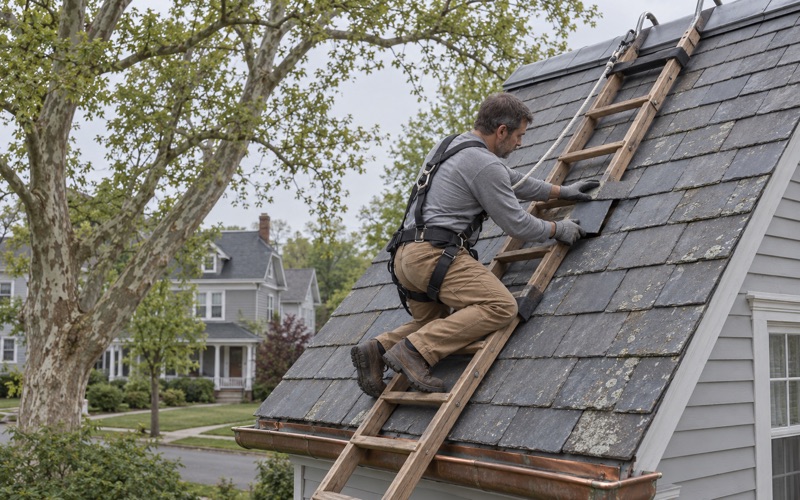
When the old roof comes off, we check the decking along the ridge and eaves, where nails do the most work. Any damaged decking we find is photographed and shown to you before it is replaced, at the per-sheet price written into the contract. Nothing gets swapped out behind your back, and nothing is left in place that cannot hold a nail.
Flashing and fastening details
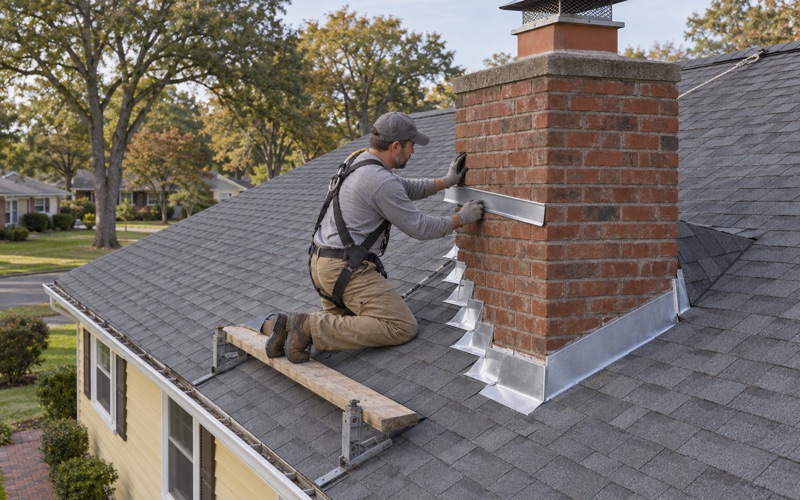
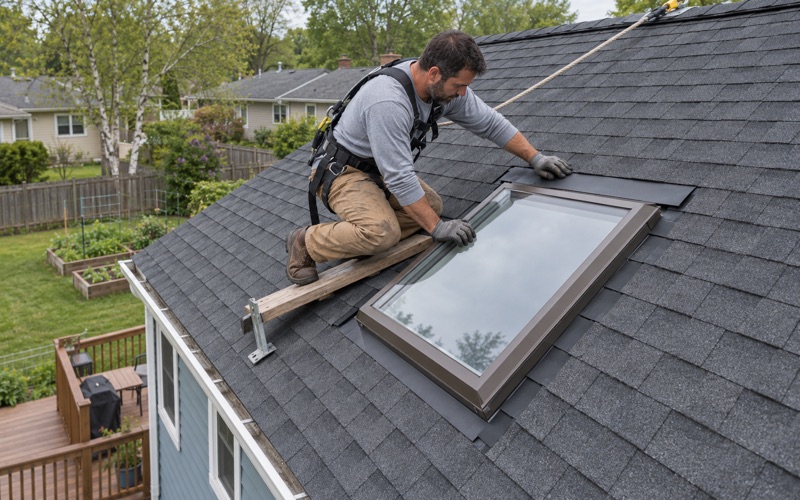
Wind-driven rain finds weak flashing faster than calm rain does. On a re-roof we replace the flashing at chimneys, walls, skylights and anywhere two roof planes meet rather than smearing caulk over the old metal. Step flashing, counter flashing set in a reglet, apron flashing and kick-out flashing at the base of walls are all part of that work.
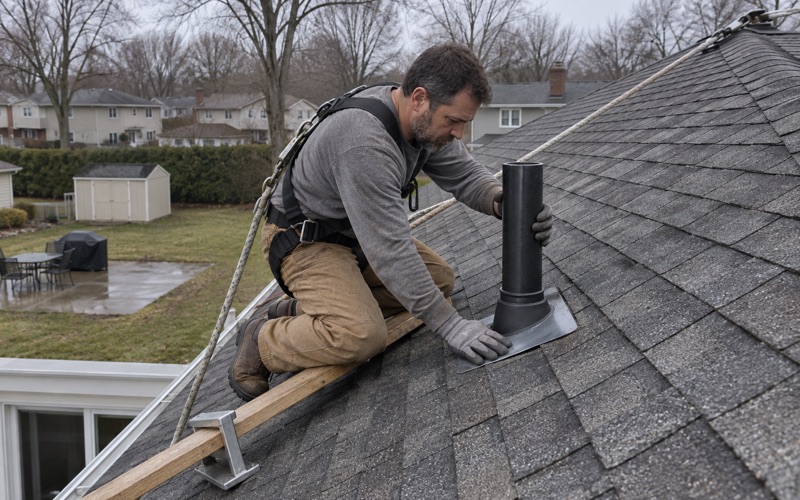
Fastening follows the shingle maker’s high-wind instructions for the product chosen, with nails placed in the correct zone so the shingle’s sealant strip and nail line work together. Pipe boots get the same scrutiny, since a cracked boot on an exposed slope lets in water long before a shingle gives way. Each detail appears on the estimate so you can see what you are paying for.
Choosing a Shingle Wind Rating in Franklin
What Class F and Class H mean
Shingle wind performance is tested to recognized standards. ASTM D3161 Class F and ASTM D7158 Class H are the two classifications you will see printed on many architectural shingle wrappers. Both describe how a shingle held up in a standardized wind test, which gives you a fair way to compare one product against another before it goes on the roof.
For a house with open fields upwind, we lean toward products that carry the higher classifications and a manufacturer’s high-wind installation method. That is a judgment about exposure, not a rule that every house in the township needs a particular rating. A sheltered home in a subdivision can do well with a different choice, and we will tell you so.
Architectural shingles and metal options
Architectural, or laminated, shingles are the usual choice on Franklin homes, and lines such as GAF Timberline HDZ, Owens Corning Duration and CertainTeed Landmark are common on South Jersey roofs. Their heavier, layered build and wider sealant zones suit an exposed site better than older flat, single-layer styles. We walk you through the wind classification, fire rating and impact rating on each option.
Some owners of open-field homes ask about standing seam metal roofing, which has no exposed fasteners and long panels with few edges for wind to grab. It costs more up front and changes the look of the house, so we lay it out beside a shingle option with both priced line by line. The decision stays with you.
Color, solar and a clean site
Shingle color is chosen on the house itself, with samples held up against your brick, stone or siding in daylight rather than picked from a small chip. If your roof carries solar panels, the removal and reinstall go into the schedule from the start, so the work is planned rather than discovered on the morning of tear-off.
At the end of every work day we clean the yard, the driveway and the gutters and run a magnet sweep for roofing nails. On a rural lot along Route 40 or Route 55, that sweep covers lawn, gravel drives and field edges alike. You should be able to walk your property barefoot the evening the crew leaves, and that is the standard we hold ourselves to.
- 20+ Years in Roofing
- Attic-First Leak Checks
- Line-Item Written Scopes