
Vineland Elite Roofing provides emergency roof repair in Vineland, NJ, serving surrounding cities including Buena, Millville, Buena Vista, Rosenhayn and Pittsgrove. After more than 20 years of storm calls, we know that an open roof or an active leak has to be dealt with in two stages: stop the water now, and repair the roof properly once it is safe. Rushing the second stage in bad weather is how temporary problems become permanent ones.
South Jersey storms can do serious damage quickly. During the June 2012 derecho, storm reports logged a 64 mph gust in Vineland and described structural wind damage in the city, along with trees down overnight. Events like that leave roofs with lifted shingles, open flashing and holes from falling limbs, all of which need covering before the next rain.
On every emergency call, we photograph the damage before anything changes, cover what needs covering and give you a written price for the permanent fix. If the storm damage will be part of an insurance claim, our photos and notes are written for your own claim, and the crew will meet the adjuster on site when you ask.
Stopping the Water First
Emergency Tarping
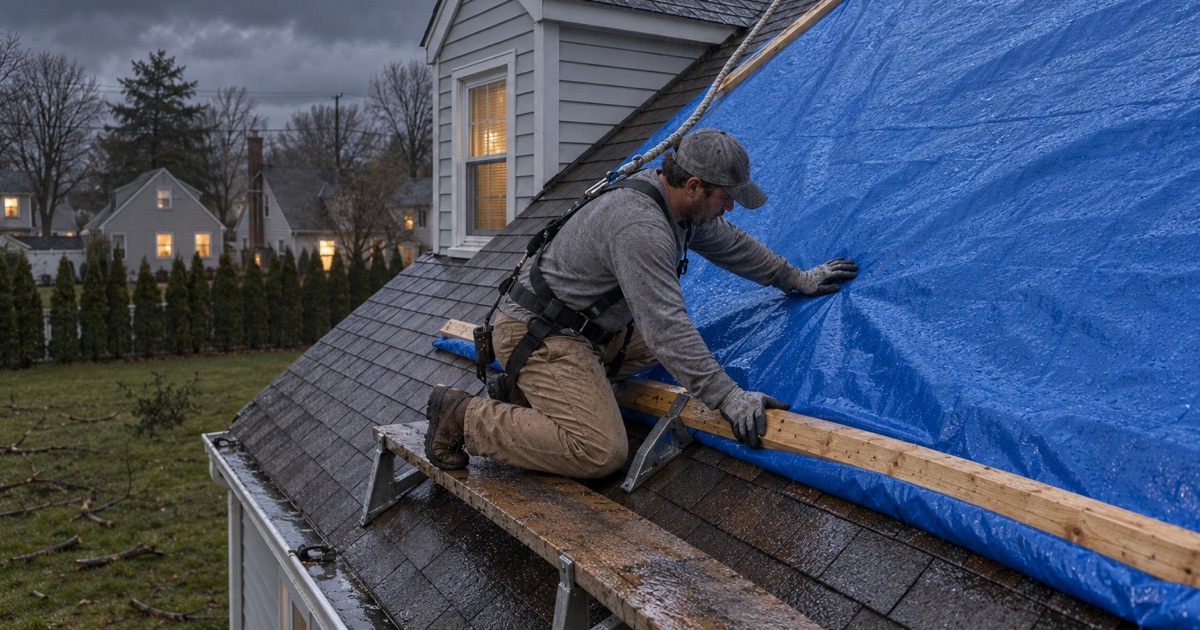
When a roof has been opened by wind or a falling limb, the first job is keeping more water out. We cover the damaged area with a heavy tarp extended well past the damage and fastened to the framing with battens, rather than nailed into loose shingles that will tear out in the next gust. The tarp is lapped so water runs over it, not under it.
Before the tarp goes on, we photograph the damage from the roof and inside the attic. Once the tarp is down, those photos are the only clear record of what the roof looked like, so they matter for any claim. We also note the condition of the decking and framing we can see.
Temporary Leak Stops
Not every emergency needs a tarp. A blown-off section of shingles, a pipe boot that has split or flashing pulled loose by wind can sometimes be secured temporarily with matching materials until a proper repair is scheduled. On flat roofs, a temporary patch over a puncture or open seam can stop an active leak.
We explain what was done and how long it can be expected to hold. Temporary repairs are listed separately from the permanent repair in our written price, so you know exactly what you paid for during the emergency and what remains to be done.
Protecting the Inside of the House
Water that has already come through the ceiling can keep spreading through insulation and drywall. While on site, we look at the attic to see how far it has traveled and point out wet insulation that should be removed or dried. Wet insulation left in place holds moisture against the decking and ceiling.
If a ceiling is sagging with water, keep people and pets out from under it and move belongings away. We do not do interior drywall or water mitigation work, but we can tell you what we saw in the attic, which helps whoever handles the inside of the house.
Storm Damage and Insurance
Documenting the Damage
Good documentation starts before cleanup. We photograph the roof, the flashing, any fallen limbs and debris, and the attic, and note the date and time of the visit. Those records are written up for your own claim and describe what we found clearly, separating fresh storm damage from older wear.
Keep your own photos of the inside of the house and receipts for any emergency work or supplies. If you hire someone to dry out the interior, keep their paperwork too. A complete record makes it easier for an adjuster to see what happened and when.
Meeting the Adjuster
When you ask, our crew will meet the insurance adjuster on site and walk the roof with them, pointing out the damage we documented. Seeing it in person, with the person who photographed it, often answers questions that photos alone cannot. We describe storm damage as storm damage and wear as wear.
In New Jersey, a roofer can document damage and meet the adjuster, but negotiating the settlement on your behalf is reserved for a licensed public adjuster under N.J.S.A. 17:22B. The claim and its settlement stay between you and your insurer, or a public adjuster if you choose to hire one.
Claim Timing in New Jersey
New Jersey sets timelines for insurers handling property claims under N.J.A.C. 11:2-17. An insurer must acknowledge a claim within 10 working days, and pay within 30 calendar days of a properly executed proof of loss or explain in writing why more time is needed.
Those timelines make it worth reporting damage promptly and keeping copies of everything you send. Our written damage report can be part of what you submit. Once the claim is settled, the permanent repair or replacement is priced and scheduled with you.
The Permanent Repair
Repair or Replacement After a Storm
Once the weather clears, we return to inspect the roof fully. Sometimes the damage is limited to a section that can be repaired with matching shingles and new flashing. Sometimes a falling limb has damaged decking or rafters, or the storm has exposed a roof that was already near the end of its life.
We give you a straight answer on whether the roof can be repaired before replacement is discussed. The written price lists the repair work, any decking at a per-sheet price shown to you before it is replaced, and the flashing and materials being used.
When Framing Is Damaged
A heavy limb or tree can crack rafters or break decking across a large area. That is no longer ordinary roof covering work, because it affects the structure of the house. Under New Jersey’s rules, work affecting structural safety falls outside the ordinary-maintenance exemption for roof covering, so it needs a permit.
We stop and show you any framing damage we find, and explain what the repair involves. Structural repairs are planned and permitted before the roof covering goes back on, so the work is done in the right order and the paperwork matches the job.
Cleaning Up After the Storm
Storm damage often leaves branches, shingles and nails scattered across the yard. Once the repair is complete, we clean the yard, driveway and gutters and run a magnet across the ground for roofing nails. Gutters clogged with debris from the storm are cleared so they drain properly.
If gutters were bent or pulled loose by falling limbs, we include their repair or replacement as a separate line. That way the whole drainage system is working again before the next rain, not just the roof surface.
- 20+ Years in Roofing
- Attic-First Leak Checks
- Line-Item Written Scopes