Vineland Elite Roofing has spent more than 20 years on roofing in East Greenwich and across South Jersey, and much of the work here starts with a simple question: whose roof is this, and where does it end? A good share of homeowners in the township live in attached houses, where one person’s roof is a single stretch of a longer one. That changes how a repair is scoped, how a replacement is staged and what has to be checked before anyone climbs a ladder.
We start every leak call in the attic as well as on the shingles, because water on a ceiling rarely enters directly above the stain. Once we know where it gets in, you hear from us whether the roof can be repaired before replacement ever comes up. On a townhouse that order matters even more, since a targeted repair keeps the work inside your section instead of reaching into a neighbor’s.
Our written scopes break tear-off, decking, underlayment, flashing, ventilation and gutters into separate lines. That lets you set our estimate beside anyone else’s and compare one item at a time, which is the only fair way to judge two prices for the same roof.
East Greenwich’s owner-occupied townhouses
A township where owners live in their homes
The American Community Survey’s 2024 five-year figures count 4,323 occupied homes in East Greenwich Township, and 4,263 of them are lived in by their owners. That makes the person calling us almost always the person who will live under the finished roof, and often the one who will be living with it for a long time to come.
The same survey counts 3,755 detached houses and 568 single-family attached houses, and 544 of those attached homes are owner-occupied. In practice that means hundreds of households own a townhouse that shares a roofline, a wall and sometimes a gutter run with the family next door, and each of them needs to know where their own part of that roof begins.
What a listing’s fee covers, and what it leaves out
In Mount Royal, the Greenwich Crossing development holds rows of townhouses alongside an apartment community, Royal Crescent, that advertises itself as nestled among the development. One listing for a 2009 interior row townhouse in Greenwich Crossing describes an association fee that includes common area maintenance, lawn maintenance and snow removal. The roof does not appear on that list.
A second Mount Royal listing, on Evergreen Court, reads much the same way: common area, lawn, snow and trash. Neither listing mentions the roof. That absence is worth noticing, but a real estate listing is a summary written to sell a house, not the governing document for the community, so it cannot settle the question by itself.
Read the declaration before roof work is priced
The document that decides who maintains a townhouse roof is the association’s declaration and its rules, not a listing and not a roofer’s assumption. Before we price work on an attached home in East Greenwich, we ask the owner to check those papers, or to ask the association directly, so that everyone knows who is paying and who must approve the job.
That check also tells you whether the community restricts shingle color, product lines or work hours. We have no relationship with any association in the township, so we work from whatever the owner gets in writing. Settling it first avoids the worst outcome on a row: a half-finished roof waiting on a decision nobody made in advance.
Looking for roofing closer to Woolwich? See Woolwich Roofing.
One roofline over several owners
Where your section starts and stops
On an interior row townhouse, your roof is usually one section of a continuous roofline, with a neighbor’s section on each side. The shingle courses, underlayment and ridge all run across the property lines, so a replacement has to begin and end cleanly at the neighbors’ edges without loosening or tearing the shingles that belong to them.
We mark those boundaries before tear-off and plan the cut lines so the new underlayment laps correctly onto the old. Where your section meets a neighbor’s, the transition gets the same attention as a valley or a wall. Done carelessly, that seam becomes the next leak, and on a shared roof it may show up first in the house next door.
Matching shingles across neighboring units
A townhouse row reads as one building from the street, so a new section in a mismatched color stands out on every pass. We bring physical samples of architectural shingles such as GAF Timberline HDZ, Owens Corning Duration or CertainTeed Landmark and hold them up against the neighbors’ roofs and your brick or siding on site.
Weathered shingles never match new ones exactly, and we say so plainly before you choose. What we can do is pick the closest line and color in daylight, at the house, rather than from a brochure. If the association has an approved color, that choice is already made, which is one more reason to read the rules before ordering anything.
Flashing where the units meet
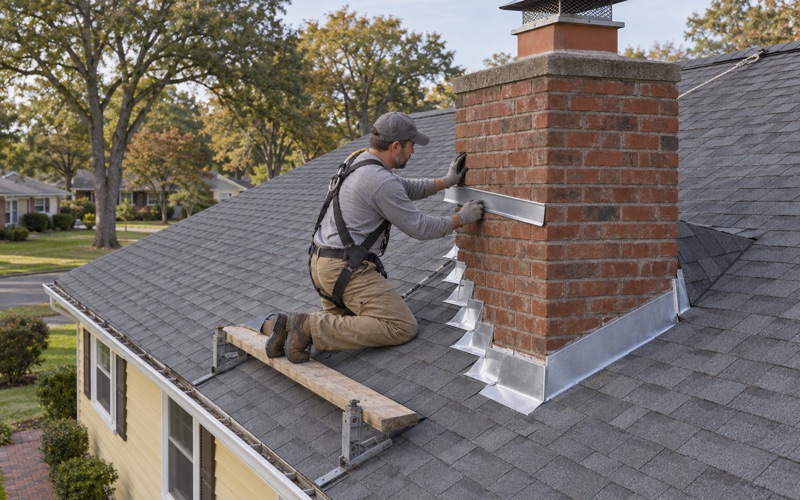
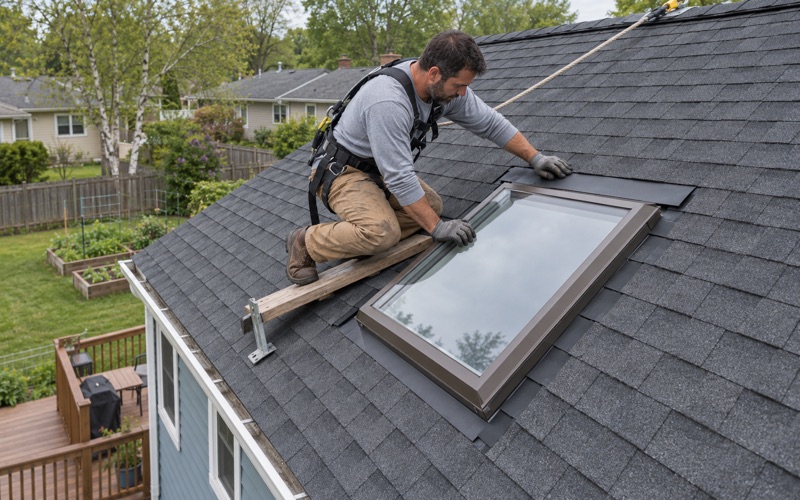
Attached homes often have walls that rise above the roof between units, plus chimneys, skylights and step-downs where one section sits lower than the next. Each of those joints relies on step flashing, counter flashing and kick-out flashing to send water past the wall rather than into it.
When we redo a section, that flashing is replaced, not caulked over and left for the next storm. A bead of sealant can hide a gap for a season, but on a shared roofline a failure at the party wall can wet two homes at once. New metal, set properly in the shingle courses, is the repair that lasts.
Replacing one section of a townhouse roof
Tracing the leak before anything is priced
Water moves along rafters and decking before it drips, so on an attached home the stain on your ceiling may start on your neighbor’s side of the line. That is why we go into the attic as well as onto the roof, following the trail to the actual entry point before we write up a single line of the estimate.
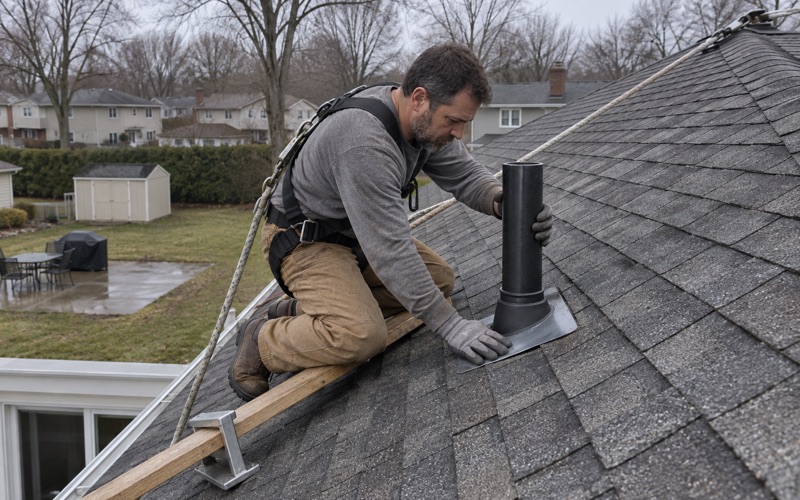
Sometimes the answer is a cracked pipe boot, a lifted shingle or a failed flashing joint that a repair fixes for a modest cost. When the fix belongs on the adjoining section, we tell you so, and you can take that to your neighbor or the association with photos rather than a guess. You hear whether repair will do before replacement is ever raised.
Decking and underlayment on a single section
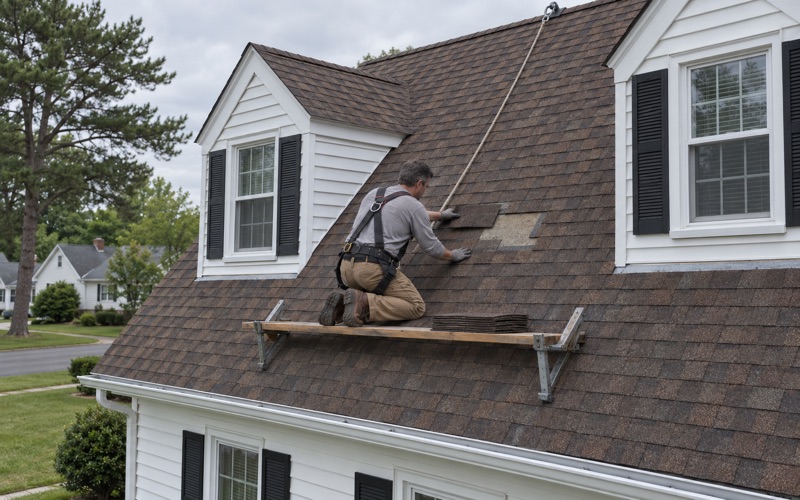
When a section does need replacing, the old shingles come off and the decking underneath is exposed for the first time in years. Any damaged sheets are photographed and shown to you before they are replaced, at the per-sheet price written into the contract, so a soft spot never turns into an open-ended charge.
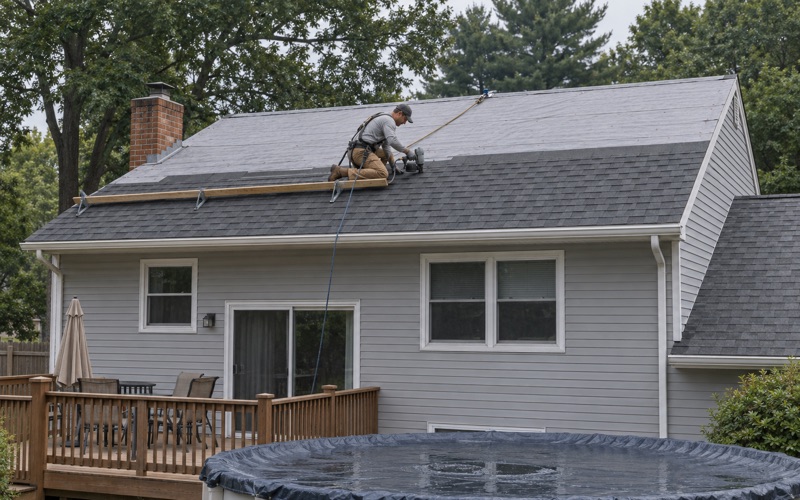
New underlayment usually includes a self-adhering ice and water barrier meeting ASTM D1970 at the eaves and valleys, with a synthetic underlayment rated to ASTM D8257 across the field. New drip edge goes on at the eaves and rakes, and the ridge vent is balanced against soffit intake so the attic can breathe once the roof is closed up.
Working on a tight row
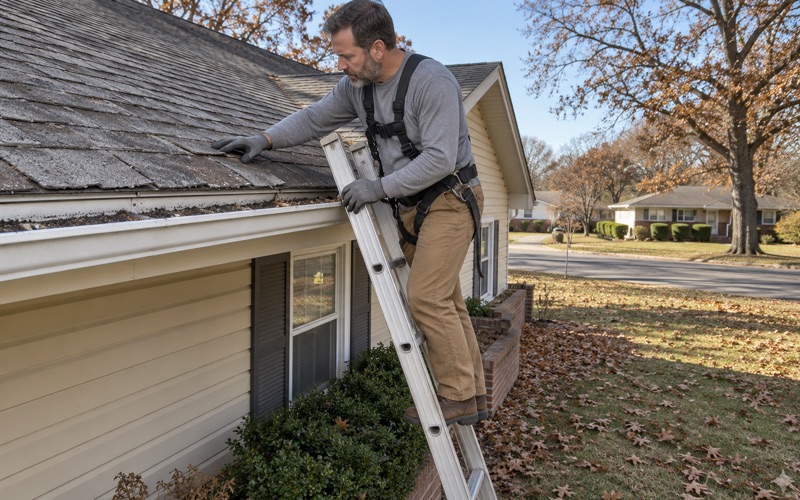
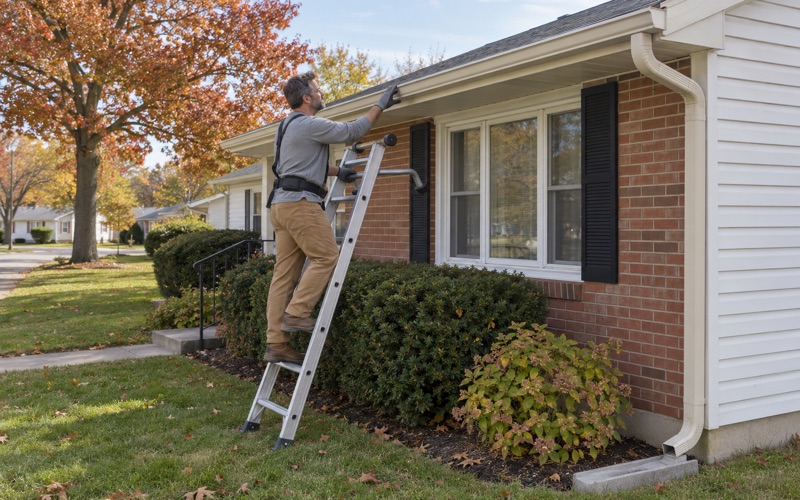
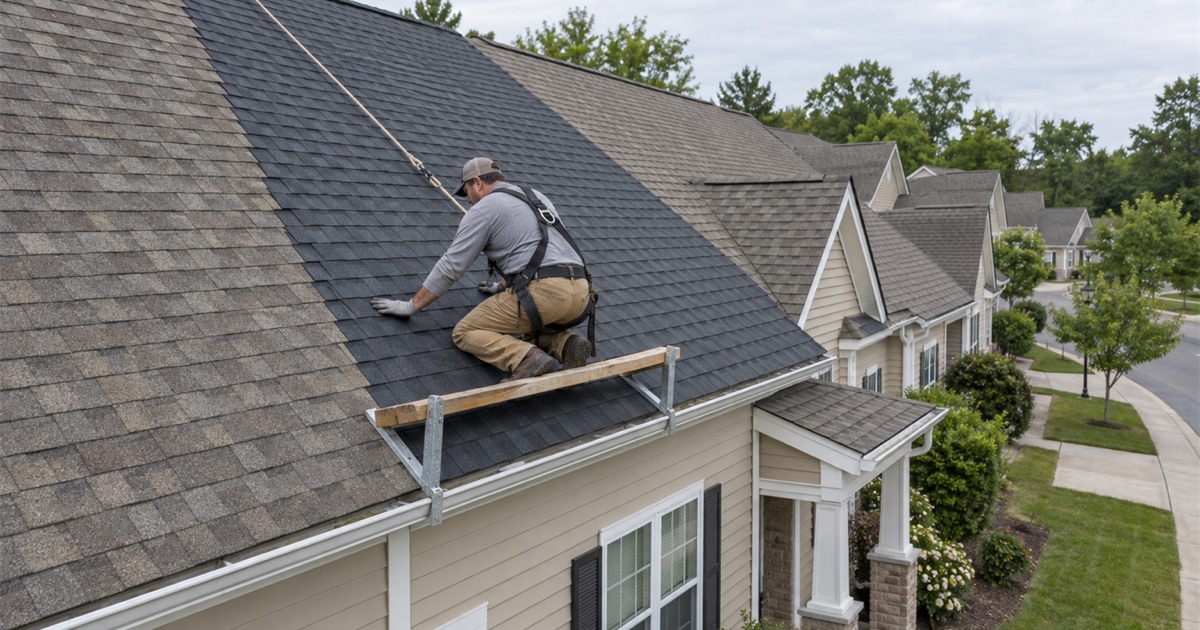
Townhouse rows sit close together, with shared walks, small yards and cars parked tight to the front door. We plan the dumpster, the ladder positions and the material drop with that in mind, and our crew follows OSHA fall protection rules for residential roofing work at 6 feet and above.
At the end of every work day the yard, the walk, the driveway and the gutters are cleaned, and a magnet sweep picks up loose roofing nails. On a row, that cleanup covers the neighbors’ frontage too, because a stray nail in their driveway is as much our problem as one in yours.
A written contract before work starts
Our contracts follow New Jersey’s home improvement rules, including a written contract and the three-day cancellation notice. That written scope is also what you can show an association or a neighbor who wants to know exactly what will happen at the shared edge of the roof.
If solar panels sit on your section, removal and reinstall are built into the schedule from the start, not discovered on the morning of tear-off. Coordinating that in advance keeps the roof open for the shortest possible time, which matters when an exposed section sits right beside a neighbor’s finished one.
Mount Royal, Mickleton and Clarksboro homes
Detached houses across the township
East Greenwich Township was created by the Legislature on February 10, 1881, from parts of Greenwich and Mantua Townships, and it covers 14.922 square miles in Gloucester County. Mount Royal, Mickleton and Clarksboro are among the places inside it, and most of the township’s homes outside the townhouse rows are detached single-family houses.
On a detached house the boundary question disappears, but the same approach holds. We trace leaks from the attic, give a repair answer first, list each part of the job on its own line, and replace chimney, wall and skylight flashing instead of sealing over it. Shingle color is chosen against your siding, brick or stone with samples held up at the house.
Storm damage and your own claim
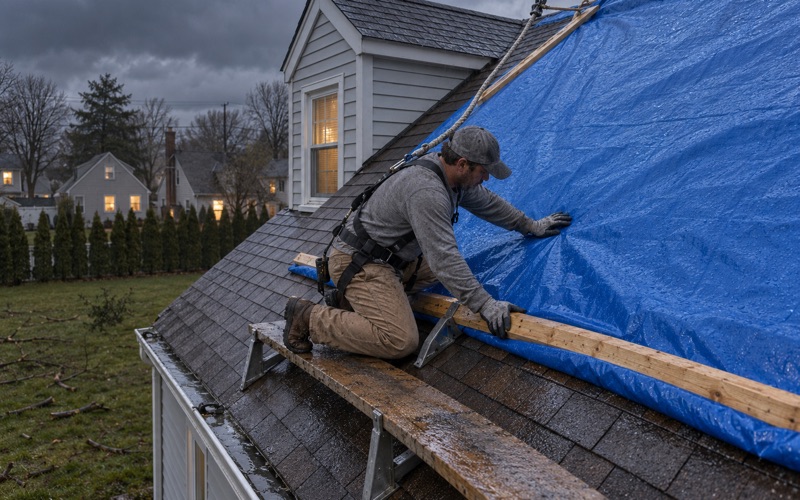
The National Weather Service office in Mount Holly covers East Greenwich under forecast zone NJZ017, Gloucester. When a storm passes through and lifts shingles or tears flashing, we photograph the damage and write it up for your own insurance claim, whether the home is a townhouse in Mount Royal or a detached house off Kings Highway.
If you would like us there, our crew will meet the adjuster on site and walk the roof with them. On an attached home, our photos also show where your section ends and the next one begins, which helps when two owners on the same row are filing about the same storm.
Barns, sheds and outbuildings
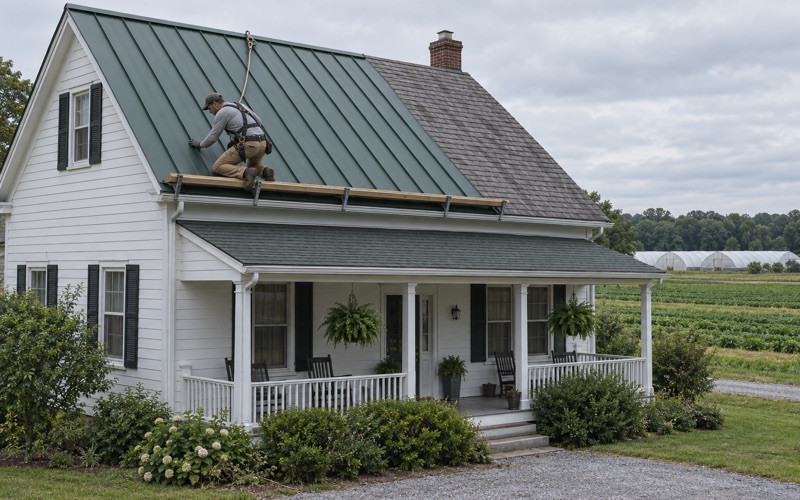
If your property includes a barn, a detached garage or a shed alongside the house, we can look at those roofs on the same visit. We quote and schedule those outbuildings around the working season, so a roof over equipment or storage goes on when the building can spare the downtime rather than in the middle of a busy stretch.
- 20+ Years in Roofing
- Attic-First Leak Checks
- Line-Item Written Scopes