Vineland Elite Roofing brings more than 20 years in the trade to roofing in Collings Lakes, and the first thing we check on any job here is what is growing over the house. A small roof with sound shingles can still be in trouble if limbs hang across it or needles pack its valleys every fall. We judge the trees around a roof as carefully as the roof itself.
When a homeowner calls about a leak, we go into the attic as well as up on the shingles. Water often shows on a ceiling several feet from where it actually enters, and pricing a fix before finding that entry point is guesswork. Once we know the source, you get a plain answer on whether a repair will hold before anyone mentions a new roof.
This page covers what we see on the houses in this community: how old they are, how the pines change the way a roof wears, what the May 2025 storm showed about overhead limbs, and what a replacement on one of these small homes involves. If your roof needs a look, the details below explain how we approach it.
Small Lake Houses From the 1950s and 1960s
What the housing count shows
The Census Bureau’s ACS 2024 five-year estimates count 739 homes in the Collings Lakes census-designated place, and 478 of them, or 64.7%, were built between 1950 and 1969. That splits almost evenly, with 242 from the 1950s and 236 from the 1960s. The same estimates record no homes built after 1989.
The estimates also show 672 detached houses and 67 attached units, with every occupied home owner-occupied. For roofing, that means nearly every job here is a single-family house whose owner makes the call. It also means most roofs sit on framing that has been carrying shingles, and possibly patches, for more than half a century.
Ranch roofs on West Colton Lane
Parcel records along West Colton Lane give a sense of the scale. One 1956 ranch there is listed at about 800 square feet, and a 1960 ranch on Block 113 Lot 1 is 952 square feet on a 0.2583-acre lot. A 1967 split-level on the same street runs about 1,320 square feet, which counts as large by local standards.
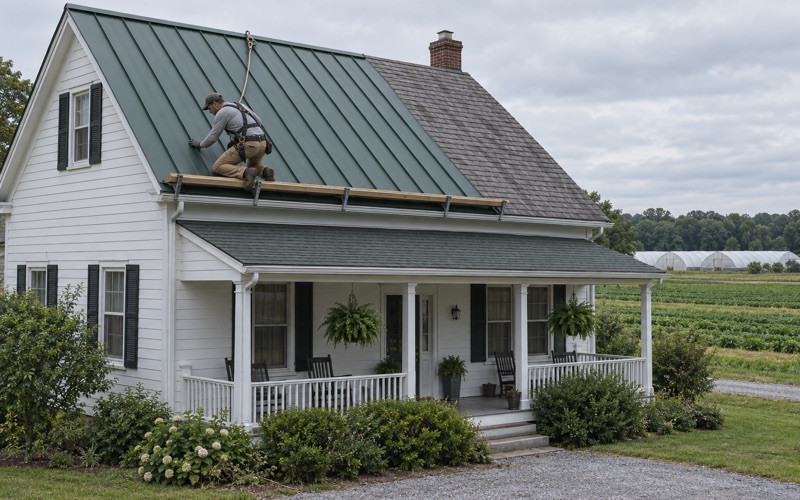
Small ranch houses usually carry simple gable or hip roofs with low eaves and few penetrations. That keeps material quantities modest, but it also puts the whole roof within reach of nearby trees. On a one-story house, a limb that would clear a taller roof can rest directly on the shingles.
Who oversees the work
Collings Lakes is not a municipality; it sits inside Buena Vista Township in Atlantic County. Construction code enforcement for the township is handled by the NJ DCA Office of Local Code Enforcement Southern Regional Office in Hammonton. Whether a given job is ordinary maintenance of a roof covering under N.J.A.C. 5:23-2.7 or needs a permit is something we confirm with that office before work starts.
The community is also a named Pinelands Area Village under N.J.A.C. 7:50-5.13(f)1, part of the Pinelands Comprehensive Management Plan administered by the New Jersey Pinelands Commission. Every contract we write follows New Jersey’s home improvement rules, including a written agreement and the three-day cancellation notice. You know what is being done, by whom, and under which rules before the first shingle comes off.
Looking for roofing closer to Olivet? See Olivet Roofing.
Pine Needles, Shade and Moss on a Collings Lakes Roof
Living under pitch pine
The Pinelands Commission describes upland pine-oak forests as stands where pitch pine covers 30 percent or more of the ground and makes up at least half of the stems over an inch thick. That is the forest type this village grew up inside. Nobody has measured the canopy over individual lots, so we do not assume anything about a roof until we stand in the yard and look up.
Some houses sit in open sun with a few trees at the lot line. Others have pines leaning over the ridge from two sides. The same shingle can last very differently on those two roofs, which is why we inspect each one on its own terms rather than going by its age alone.
Needles in gutters and valleys
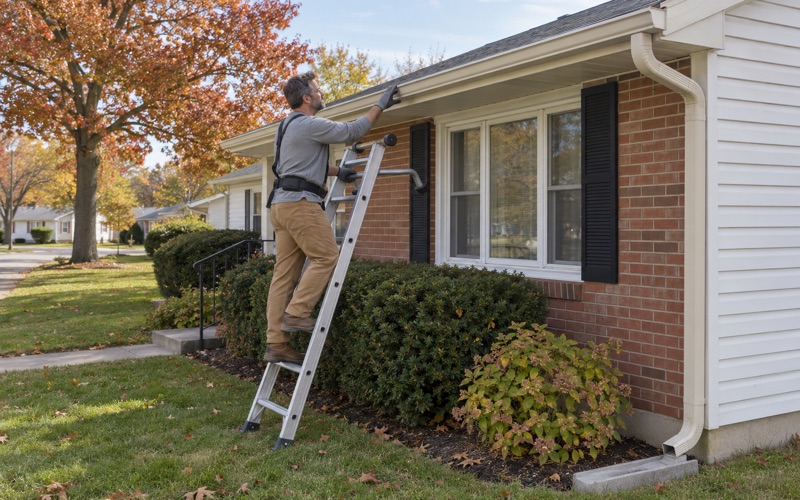
Pine needles are light, but they mat together once they get wet. They collect in valleys, behind chimneys and along the back of gutters, where they hold moisture against the shingle edges and slow drainage. A valley packed with needles can push water sideways under the shingles during a hard rain.
We clear what has built up during an inspection and tell you where it keeps returning. Seamless aluminum gutters and leaders sized to carry the runoff help, and so does keeping the outlets open. On valleys that fill every season, an ASTM D1970 self-adhering ice and water barrier underneath gives the roof a second line of protection when needles do get ahead of you.
Shade and moss
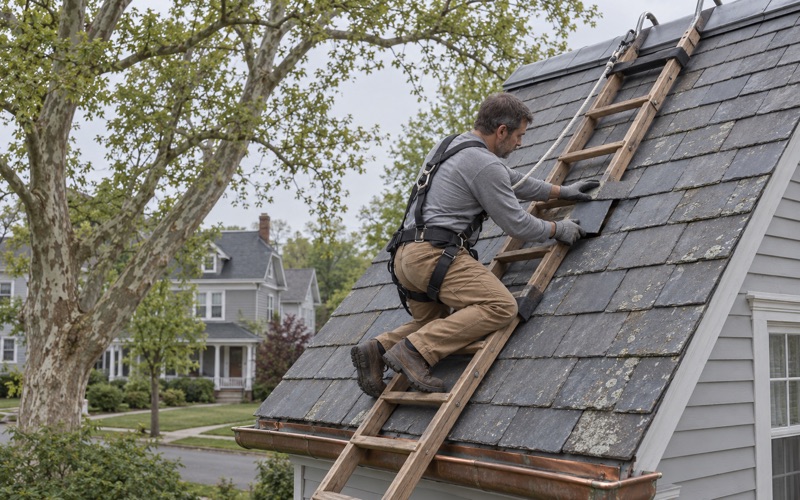
A roof slope that stays in pine shade dries slowly after rain and dew. That damp surface is where moss and algae take hold, and moss growing along shingle edges can lift them and hold water underneath. Not every shaded roof has a problem, but a north-facing slope under trees deserves a closer look.
We do not pressure wash shingles, because that strips the granules that protect them from sunlight. If moss has worked under the edges, we check the attic side of that slope for damp or stained sheathing. That tells us whether the shingles are simply discolored or actually letting water through.
Branches, Limbs and the May 16, 2025 Tornado
What the storm did here
On May 16, 2025, the National Weather Service in Mount Holly rated the Williamstown-Collings Lakes tornado an EF-1 with peak winds of 90-95 mph. It ran 8.6 miles from Williamstown at 12:42 p.m. and ended in Collings Lakes at 12:53 p.m. The survey noted large branches down along Malaga Road and near Cains Mill Road and Colton Lane, with the last damage near Cloverdale Lane and Wiltshire Drive.
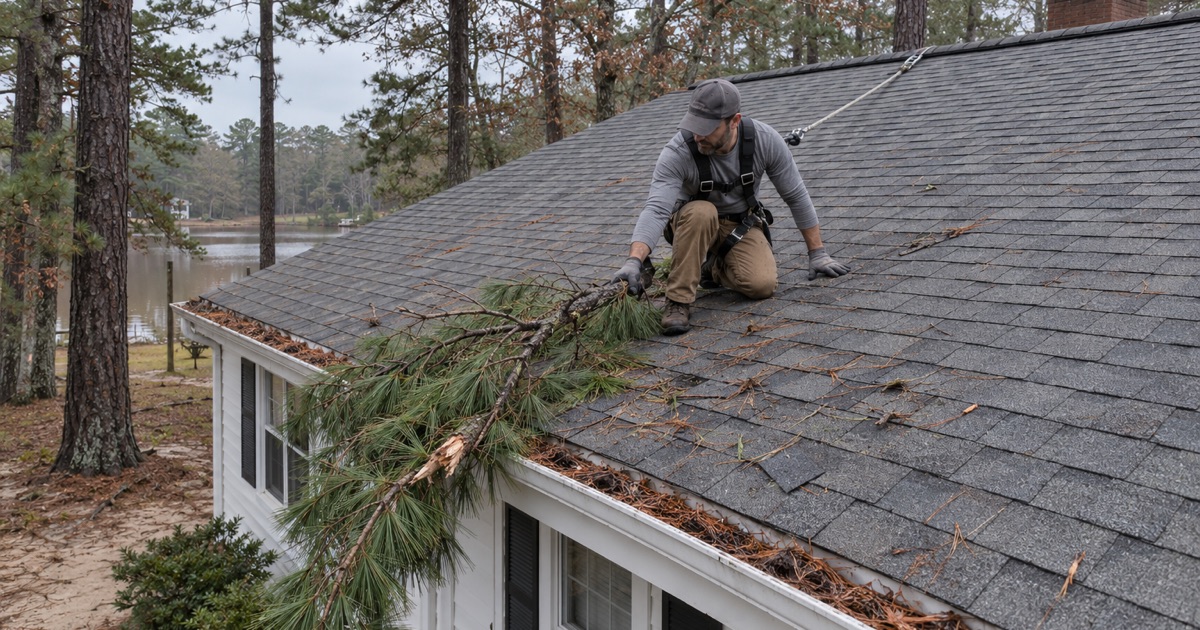
The roof damage the Weather Service recorded in Collings Lakes was metal roof sheeting peeled off an outbuilding on Malaga Road. News coverage of the same storm reported a tree crashing onto a roof near Cains Mill Road and Colton Lane. Both point to the same lesson: in a wooded community, wind damage to a roof often arrives through the trees.
Limbs over the roof
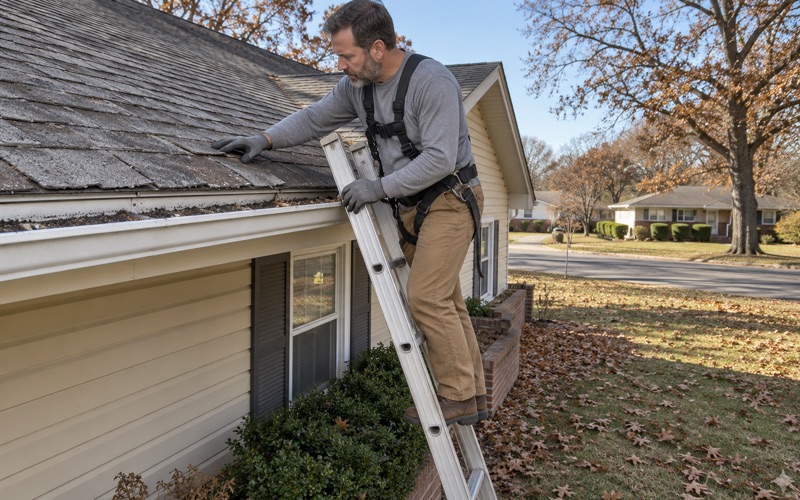
A limb that rests on or brushes the shingles scrapes away granules every time the wind moves it. Dead branches overhead are a different risk, because they can drop in an ordinary storm, not just a rare one. When we inspect, we point out any limbs that touch the roof or hang over it so you can decide what to do about them.
We are roofers, not tree surgeons, so trimming or removal belongs to an arborist. What we can do is tell you which limbs are causing wear, and time a replacement so the tree work happens first. Putting new shingles under a branch that is about to come down wastes money.
Writing up storm damage and outbuildings
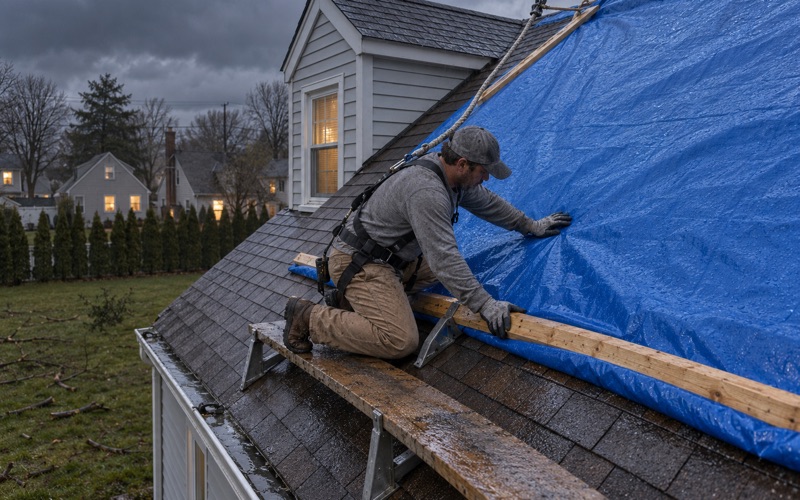
After a storm, we photograph the damage and write it up so you have a clear record for your own insurance claim. If you ask, our crew will meet the adjuster on site and walk the roof with them. New Jersey sets claim settlement deadlines under N.J.A.C. 11:2-17, so starting the paperwork early matters.
Sheds, detached garages and other outbuildings get the same attention as the house. Many carry exposed-fastener ribbed metal panels, and those are what the May 2025 storm peeled off on Malaga Road. We quote outbuildings as their own line and can schedule them alongside the house or on their own.
Replacing a Roof on a Small Ranch by the Lake
Repair first, if it will hold
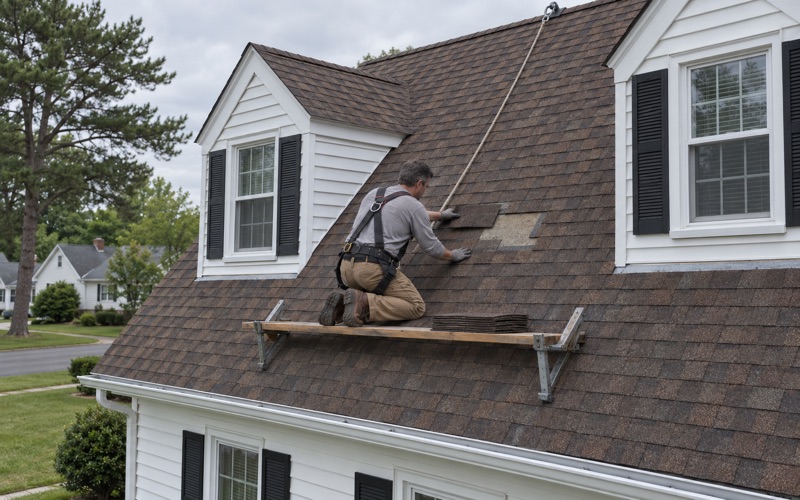
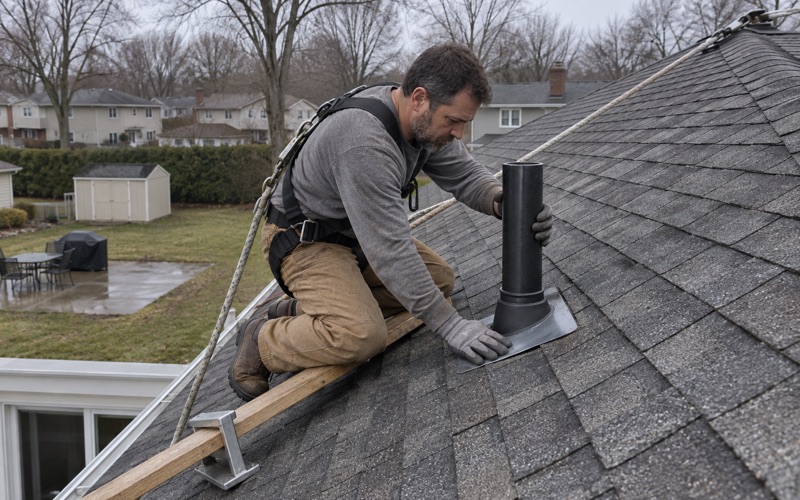
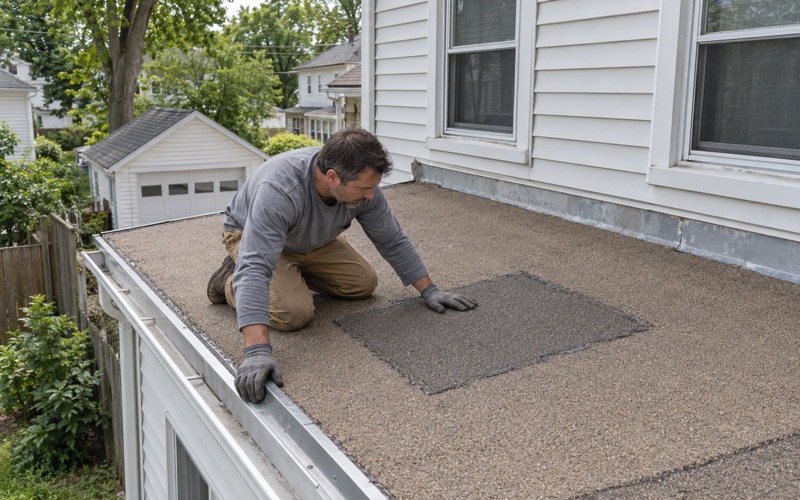
A lot of the roofs we see here have a localized problem: a cracked pipe boot, a lifted shingle under a branch, or a valley that has been holding needles for years. Those can often be repaired. We say so plainly and price the repair before replacement comes up at all.
When a roof is past repair, we explain why in terms you can check yourself. Widespread granule loss, brittle shingles that crack when lifted, and leaks from several unrelated spots usually mean patching will only buy a season or two. You decide with the evidence in front of you.
What a new roof includes
Our written scopes break tear-off, decking, underlayment, flashing, ventilation and gutters into separate lines, so a second estimate can be compared item by item. Most ranch homes here take architectural shingles such as GAF Timberline HDZ, Owens Corning Duration or CertainTeed Landmark. We can point you to options tested to ASTM D3161 Class F or ASTM D7158 Class H for wind resistance.
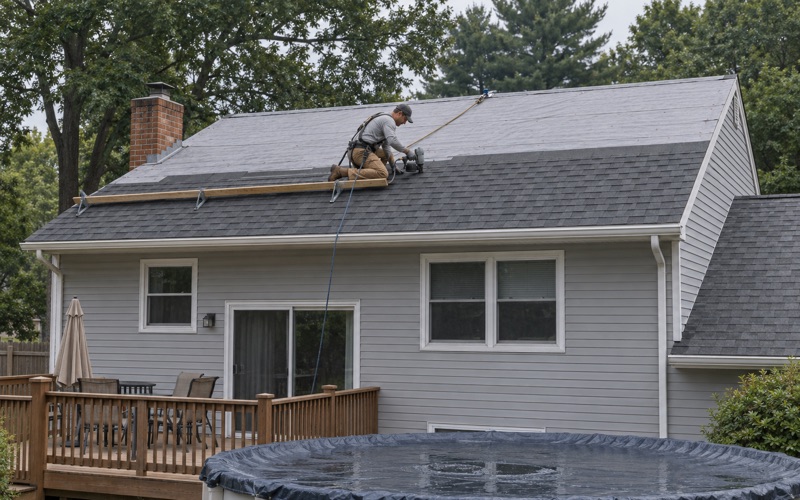
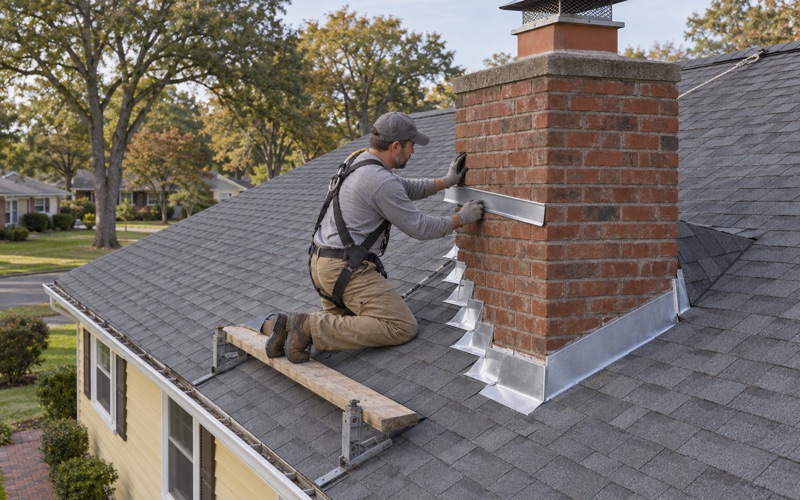
Drip edge goes on at the eaves and rakes, and valleys get an ice and water barrier before the shingles. Flashing at chimneys and walls is replaced rather than caulked over. Where the attic allows it, a ridge vent paired with soffit intake keeps air moving under the deck, which helps a shaded roof dry out from the inside.
Color, cleanup and homes by the water
Shingle color is chosen against the siding, brick or trim on your actual house, with samples held up on site rather than picked from a brochure. On a small ranch, the roof is a large share of what you see from the street. A color that looks fine on a screen can look very different next to painted siding under the pines.
Homes near Lake Albert and Lake George often sit on compact lots with the yard close to the water. We clean the yard, driveway and gutters at the end of every work day, including a magnet sweep for roofing nails. Nothing from the job should end up in your lawn, your driveway or the lake.
- 20+ Years in Roofing
- Attic-First Leak Checks
- Line-Item Written Scopes