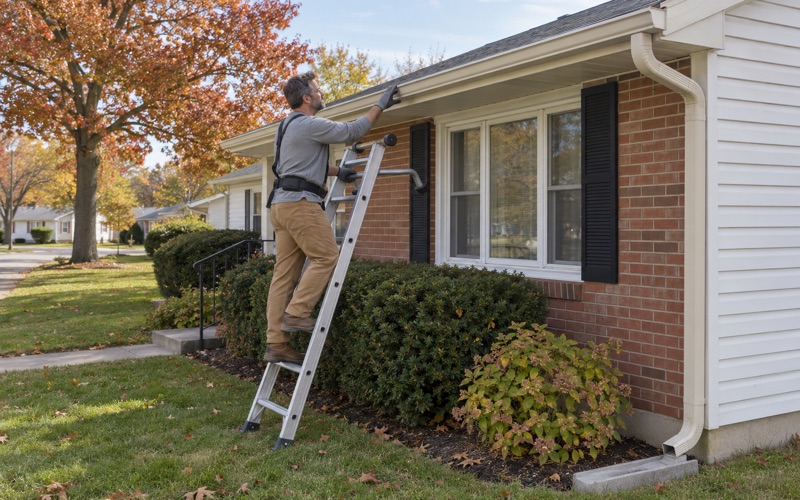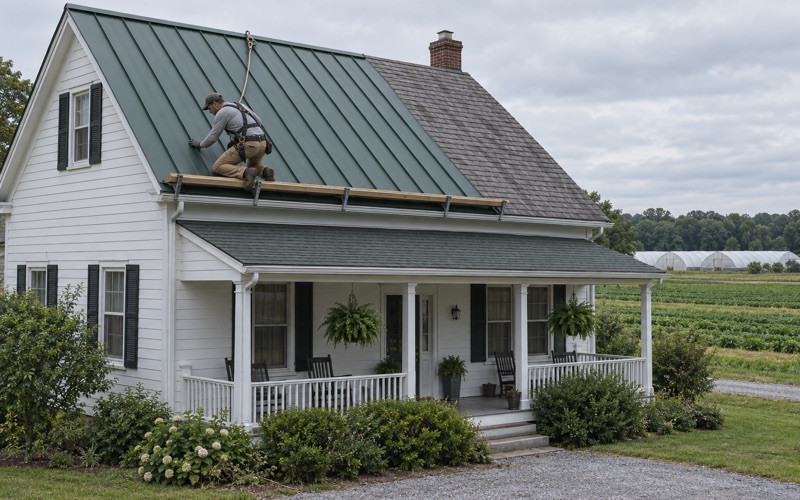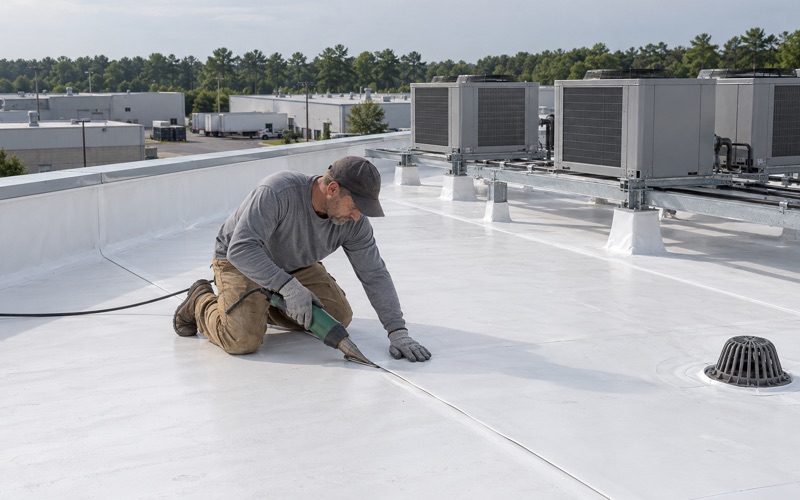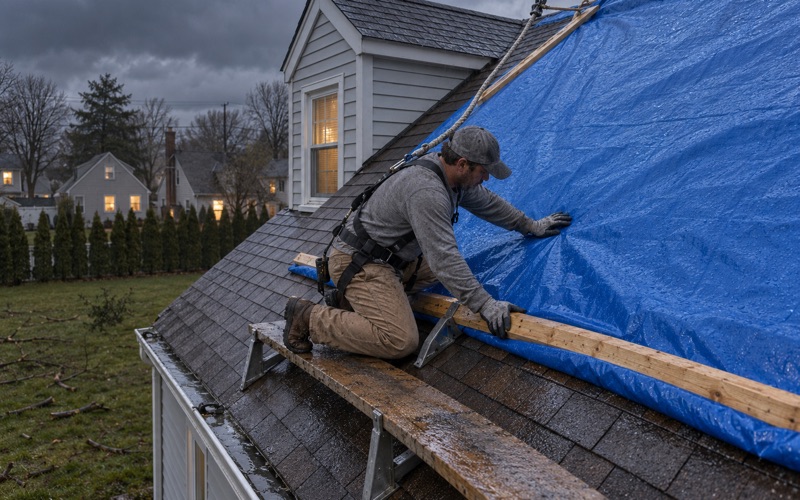
Vineland Elite Roofing has spent more than 20 years on roofing in Buena Vista and the townships around our Vineland base, and a fair share of the roofs we are asked to look at here were never framed by a site crew. A manufactured home roof is engineered in a plant, carried on a chassis and set on a lot, and that changes what can safely go on top of it and who reviews the work.
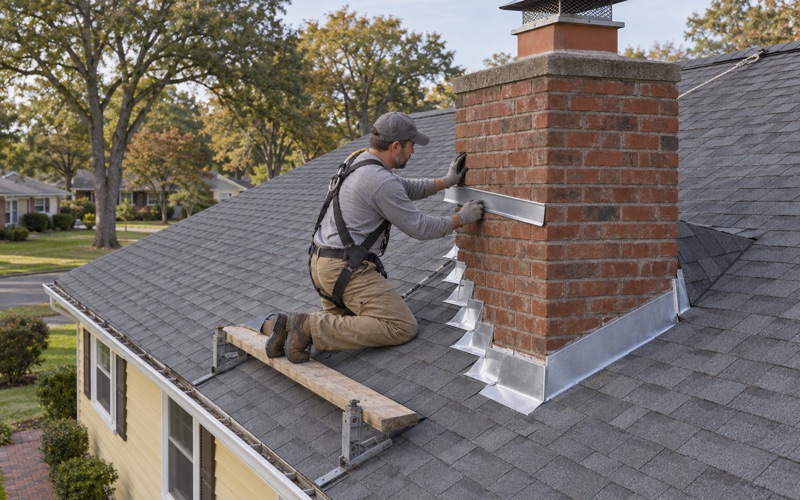
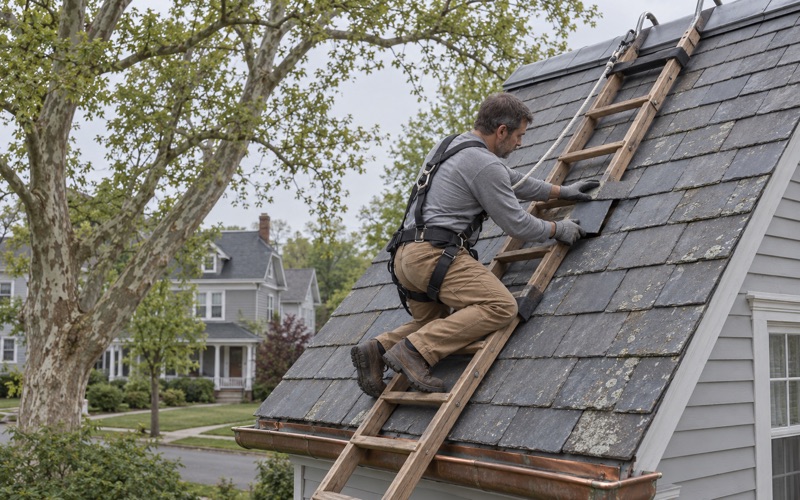
We handle both kinds of roof in the township: the site-built house with architectural shingles and a brick chimney, and the single-wide or multisection home with a shallow pitch and factory trusses. On every leak call we look inside as well as on top, at the attic or whatever ceiling space can be reached, so the water is followed back to where it really enters before anyone talks about price.
You also hear a direct answer first on whether the roof can be repaired. Replacement only enters the conversation when a repair stops making sense, and when it does, the written scope prices tear-off, decking, underlayment, flashing, ventilation and gutters as separate lines you can hold against another estimate.
Manufactured Homes in Buena Vista Township
One home in ten
The Census Bureau’s 2024 five-year American Community Survey counts 3,042 housing units in Buena Vista Township, and 311 of them are mobile or manufactured homes. That is roughly one home in ten. It means a roofer here has to be ready for a low-slope metal roof on one call and a shingled ranch house on the next.
Of those 311 homes, 276 are owner-occupied, according to the same survey. For us that matters more than the raw count, because an owner is the one who decides between a coating, a roof-over and a full replacement, and who pays for the choice. We write the options so that decision can be made on the numbers rather than on a sales pitch.
Cranberry Run on Tuckahoe Road
One 55-and-over manufactured housing community in the township is Cranberry Run, at 120 Tuckahoe Road. Listing services describe it as a community of about 300 sites, built in 1972, with roughly 80 percent of its homes carrying peaked roofs and roughly 60 percent of them multisection homes. By that same listing, about a fifth of the homes do not have a peaked roof at all.
That mix is the reason a single price for a manufactured home roof does not exist here. A peaked multisection roof and a low-slope single-wide roof sit side by side, and they call for different materials and different labor. We have not read any community’s rules on roofing work, so we ask owners to check with their own management about notice, access or approvals before a date is set.
Other homes across the township
Cranberry Run is not the only place to find a manufactured home. Buena Family Manor sits at Route 54 and Leghorn Road, and other homes stand on their own lots. Most of the township is still detached houses, though: 2,558 of the 3,042 units, spread across places such as Richland, Milmay, Newtonville and New Kuban, along U.S. Route 40 and Route 54.
Those houses get the full range of our work, from asphalt shingle replacement to standing seam metal on an outbuilding. Barns and sheds on working properties are quoted and scheduled around the growing season rather than squeezed in after the house, so a roof on a building in use is not torn open at the worst week of the year.
Looking for roofing closer to Rosenhayn? See Roofing in Rosenhayn.
Peaked Roofs, Low-Slope Roofs and the Data Plate
Peaked roofs on multisection homes
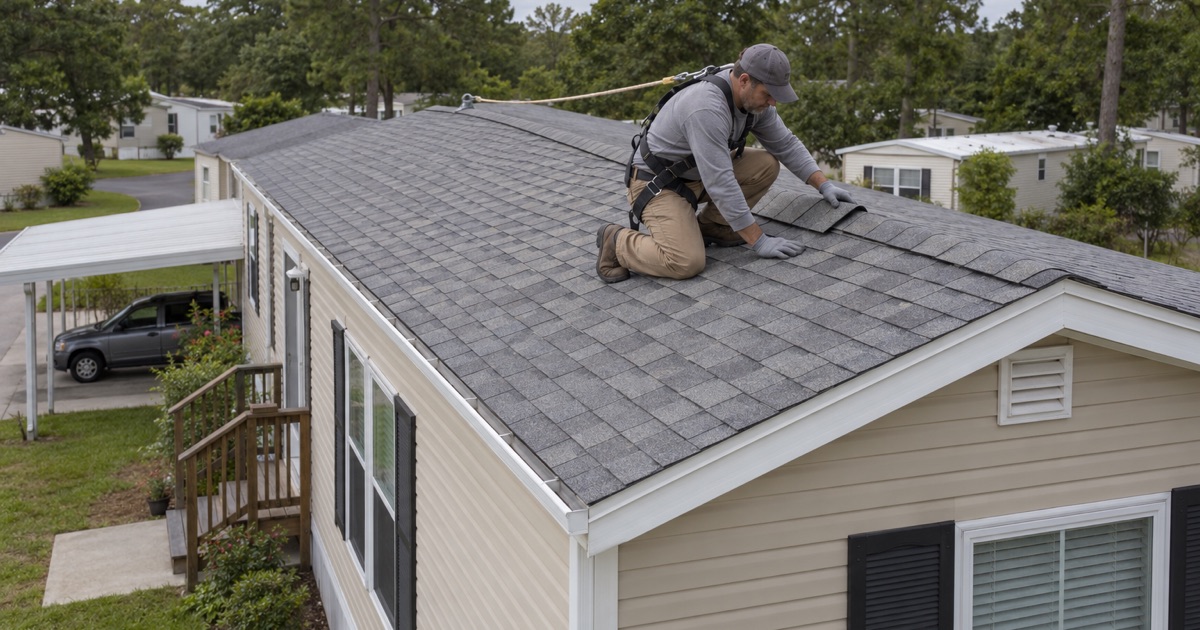
A peaked roof on a multisection home usually has enough pitch to take architectural shingles over a synthetic underlayment, much like a site-built house. The differences are in the framing underneath and the way the two halves meet at the marriage line along the ridge, where a poor seal is a common source of leaks. We check that seam from inside and out before quoting.
Shingle lines such as GAF Timberline HDZ, Owens Corning Duration and CertainTeed Landmark all come in colors that suit vinyl lap siding. We bring samples and hold them up against the siding on your actual home, since a color that looks right in a brochure can look very different beside a light gray or beige siding panel in afternoon sun.
Low-slope single-wide roofs
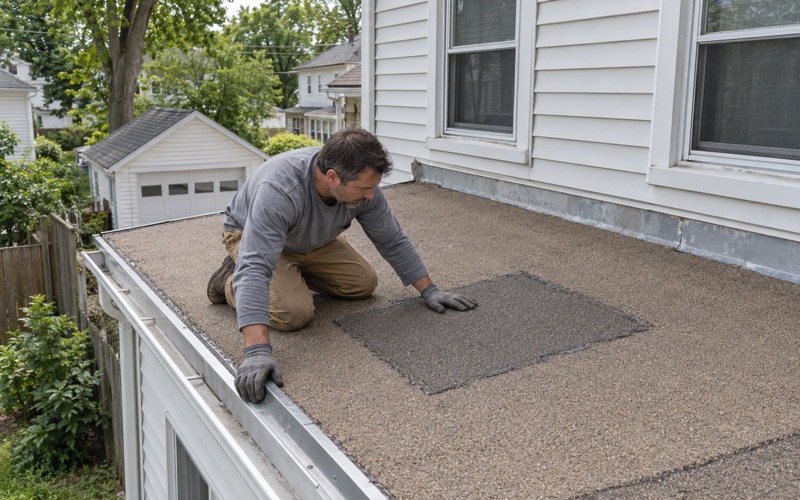
Many older single-wide homes carry a shallow, slightly crowned metal roof or a nearly flat one. Shingles are the wrong answer on a roof like that, because they rely on pitch to shed water. The workable choices are a roof coating, a single-ply membrane such as EPDM or TPO, or a roof-over system built for manufactured homes that adds pitch and insulation above the existing roof.
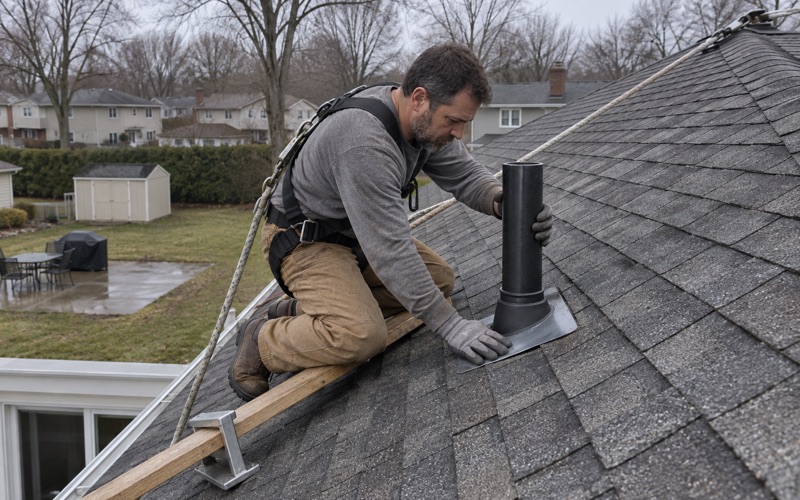
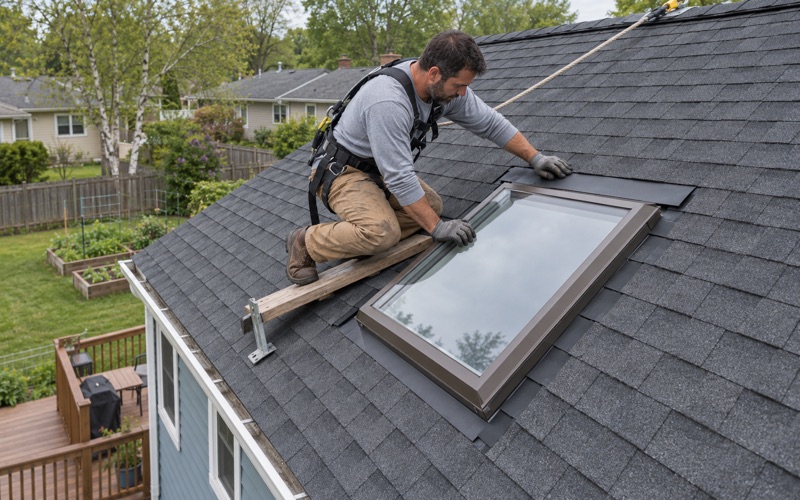
On a low-slope roof the details decide whether the job lasts. Vent stacks need fresh pipe boots, the edges need new drip edge, and any spot where a porch or carport roof ties into the home needs proper flashing. We replace that flashing rather than smearing sealant over the old joint, because sealant on a moving joint is usually where the next leak starts.
What the HUD data plate says about roof load
Every manufactured home built to the federal HUD code carries a data plate, usually found inside a kitchen cabinet, a bedroom closet or near the electrical panel. Among other things, it records the roof load zone and wind zone the home was designed for. We ask to see it before recommending anything that adds weight above the original roof.
Under 24 CFR 3280.305(c), the federal standard assigns every home a roof load zone and a wind zone, and the data plate shows which ones that home was built to. Those are federal design minimums assigned by zone. They are not a measured snow or wind figure for the township, and on their own they do not tell anyone whether a particular roof-over will or will not suit a particular home.
Roof-Overs, Coatings and Replacement on a Manufactured Home
Coatings and membrane repairs
When a low-slope roof is sound but tired, with surface rust or a few failed seams, a coating or a targeted membrane repair can buy real years. We say so when it is true. The work starts with cleaning, fastener and seam repair, and attention to every penetration, because a coating over a loose seam simply hides the problem for a season.
If the roof has soft spots, widespread rust-through or water already in the ceiling, we tell you a coating is the wrong spend. In that case the money is better put toward a roof-over or a replacement, and we explain why using what we found inside the home as well as on the roof, with photos of both.
Roof-overs on single-wide homes
A manufactured home roof-over adds a new framed or foam-based system above the existing roof, usually with added pitch and insulation, then a finished metal or membrane surface. It can solve chronic leaks on a flat single-wide roof without opening the home to the weather. It also adds weight, which is why the data plate and the home’s condition come first.
Our written scope for a roof-over lists the framing or insulation layer, the new surface, the edge metal, the vent and pipe work and any gutter changes as separate lines. If gutters are part of the job, we install seamless aluminum gutters and leaders sized to the new roof edge rather than reusing a section that no longer lines up.
Full tear-off and replacement
Sometimes the honest recommendation is to remove the old roof entirely. When decking turns out to be damaged once the old surface is off, we photograph it and show it to you before replacing it, at the per-sheet price written into the contract, so there is no surprise number at the end of the job.
Every contract follows New Jersey’s home improvement rules, including a written contract and the three-day cancellation notice. At the end of each working day the yard, driveway and gutters are cleaned and the ground is swept with a magnet for roofing nails, which matters on a tight lot where a car is parked a few feet from the home.
Who Reviews the Work in Buena Vista Township
The DCA Southern Regional Office
Buena Vista Township does not run its own construction office. The construction code here is enforced by the New Jersey Department of Community Affairs, Office of Local Code Enforcement, through its Southern Regional Office at 852 S White Horse Pike in Hammonton, (609) 567-3653. That office, not a township desk, is where questions about roofing work on a home in the township go.
Manufactured home rehabilitation under the UCC
New Jersey’s construction rules treat manufactured homes in a particular way. Under N.J.A.C. 5:23-2.2(a)2, homes built and installed under the federal HUD standards in 24 CFR Parts 3280 and 3285 sit outside the Uniform Construction Code’s own construction rules, while the rehabilitation of a manufactured home falls within the UCC’s scope.
How a specific re-roof on a specific home is treated under that rule is something we confirm with the Southern Regional Office before work is scheduled, rather than assuming either way. We would rather spend a phone call up front than have an owner find out after the fact that the paperwork did not match the work, and we put the answer in writing for you.
Weather and scheduling in Richland and beyond
For a tear-off or roof-over, a dry window matters more on a manufactured home than on most houses, because there is little attic space between the roof and your ceiling. The National Weather Service places a point near Richland in forecast zone NJZ022, covered by its Mount Holly office, and we watch that zone forecast when picking a start date.
That is a forecast zone, not a climate record, so we treat it as a planning tool and nothing more. If rain moves in mid-job, the roof is dried in and covered before the crew leaves. If storm damage is what brought us out, we photograph it and write it up for your own claim, and we will meet the adjuster on site when you ask.
- 20+ Years in Roofing
- Attic-First Leak Checks
- Line-Item Written Scopes